Healthcare
Outpatient Surgery and Day Procedures in China: A Preparation Guide
Prepare for outpatient surgery or a day procedure in China by confirming instructions, consent, payment, transport, medicines, records, and follow-up.
Rules and procedures can change. Check the linked official sources before acting on time-sensitive information.
Quick answer
What you need to know
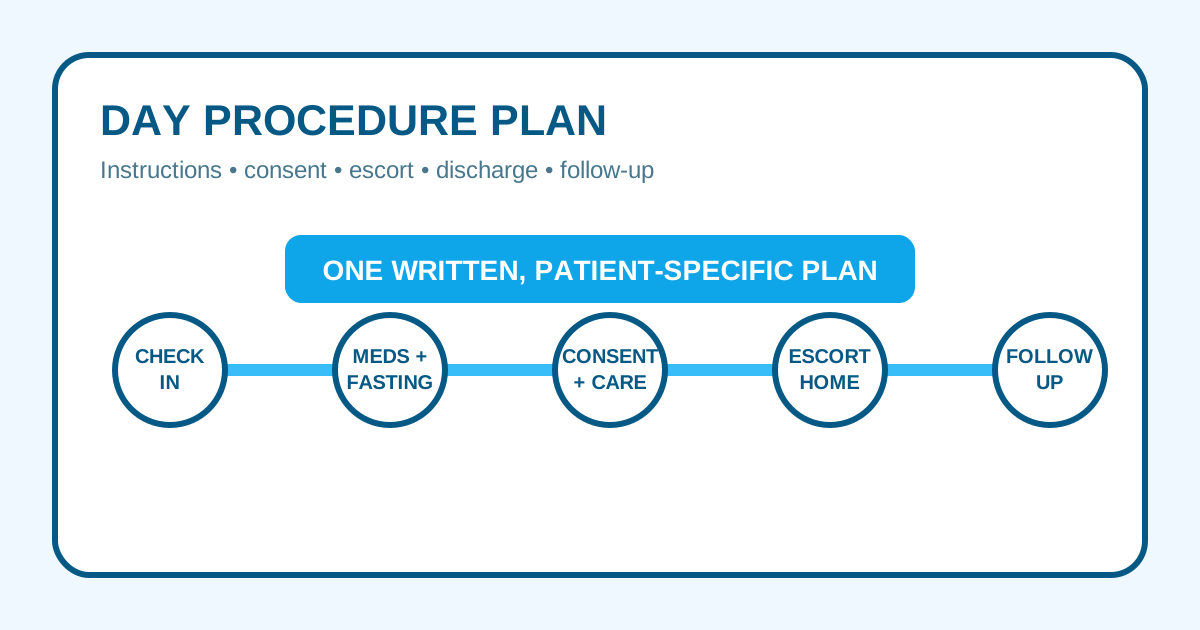
Turn verbal instructions into a written plan covering fasting, medicines, consent, costs, language support, discharge transport, warning signs, and follow-up.
- Confirm the procedure, clinician, location, arrival time, fasting rules, medicine instructions, anesthesia plan, and expected discharge in writing.
- Never stop or change a prescribed medicine based only on a generic checklist; ask the treating team for patient-specific instructions.
- Arrange an appropriate adult escort and safe transport when sedation, anesthesia, mobility limits, or hospital policy requires it.
- Leave with a discharge summary, medicine list, warning signs, emergency contact, results plan, and follow-up appointment.
An outpatient operation or day procedure may not require an overnight stay, but it still needs careful planning. Instructions can involve food and drink, medicines, tests, consent, anesthesia, payment, transport, home support, and time-sensitive follow-up.
This guide is educational, not medical advice. Your treating team must provide instructions for your procedure and health history. Seek urgent care when clinicians direct you to do so.
Confirm the procedure plan
Write down the hospital campus, department, floor, registration point, clinician, procedure name, body site where relevant, arrival time, expected discharge, and contact for delays. Ask which tests, consultations, imaging, or original reports must be completed first.
If language may affect consent or discharge instructions, arrange appropriate support in advance using the medical interpreter guide. A friend can help with logistics but may not replace qualified interpretation for a complex discussion.
Get patient-specific instructions
Ask the clinical team to provide fasting and drinking cutoffs, bathing or skin-preparation steps, clothing guidance, and instructions for every medicine, supplement, injection, inhaler, patch, glucose device, hearing aid, or other medical device you use.
Do not stop anticoagulants, diabetes medicine, or any other prescription because a general website says to. Confirm what to take, hold, or adjust, who made the decision, and when normal use should resume.
Plan consent and costs
Before signing, understand the planned procedure, anesthesia or sedation, expected benefit, material risks, alternatives, recovery, and circumstances that could change the plan. Ask questions until you can explain the plan back in your own words.
Request a cost estimate separating clinician, facility, anesthesia, tests, medicine, device or implant, pathology, and follow-up charges. Confirm insurance preauthorization and direct billing with both the hospital and insurer. The appointment preauthorization guide provides a records checklist.
Arrange discharge and home support
Ask whether an adult escort is required and what transport is safe. Do not plan to drive, cycle, or travel alone after sedation unless the treating team explicitly says it is appropriate. Prepare easy access to water, food allowed by the clinician, prescribed medicine, a charged phone, and the hospital contact.
If you care for a child, older relative, or pet, arrange coverage that does not depend on an exact discharge time.
Leave with a complete record
Collect the discharge summary, procedure note if available, medicine instructions, wound or activity guidance, diet instructions, sick-leave certificate if needed, payment documents, and follow-up appointment. Ask when and how pathology or other results will arrive and who will explain them.
Use the hospital discharge guide to organize the record. Confirm the warning signs that require a call, return to hospital, or emergency response, rather than relying on a generic list.
Day procedure checklist
- Hospital, clinician, procedure, site, and arrival point confirmed.
- Required tests and original records prepared.
- Fasting and medicine instructions obtained from the treating team.
- Allergies, conditions, medicines, and devices disclosed.
- Language support arranged for consent and discharge.
- Estimate, insurance authorization, and payment method checked.
- Escort, transport, dependants, and home support arranged.
- Discharge documents, warning signs, and contact received.
- Results owner and follow-up appointment confirmed.
If fever, new symptoms, a medicine error, or a missed fasting instruction occurs before arrival, contact the treating team and follow its advice; do not hide the change to avoid rescheduling.
Frequently asked questions
Common questions
Can I take my usual medicines before a day procedure?
Ask the treating clinician or anesthesia team about every prescription, nonprescription medicine, supplement, injection, and device. Do not make a change from general online advice.
Can I travel home alone after sedation?
That depends on the procedure, sedation, your condition, hospital policy, and clinician instructions. Confirm escort and transport requirements before the appointment.
How should I check the cost?
Request an estimate that separates clinician, facility, anesthesia, tests, medicines, devices, pathology, and follow-up. Confirm insurance authorization and direct-billing limits separately.
What if I do not understand the consent form?
Pause and request an explanation or qualified language support before signing. Ask about the planned procedure, material risks, alternatives, and what may change during treatment.