Healthcare
Home Nursing and Rehabilitation in China: A Guide for Foreign Residents
Arrange post-discharge home nursing or rehabilitation in China with clinician instructions, provider checks, medicine records, equipment, payments, and escalation plans.
Rules and procedures can change. Check the linked official sources before acting on time-sensitive information.
Quick answer
What you need to know
Begin with a clinician-led care plan, verify each provider's scope and credentials, prepare the home and records, and define symptoms that require urgent escalation.
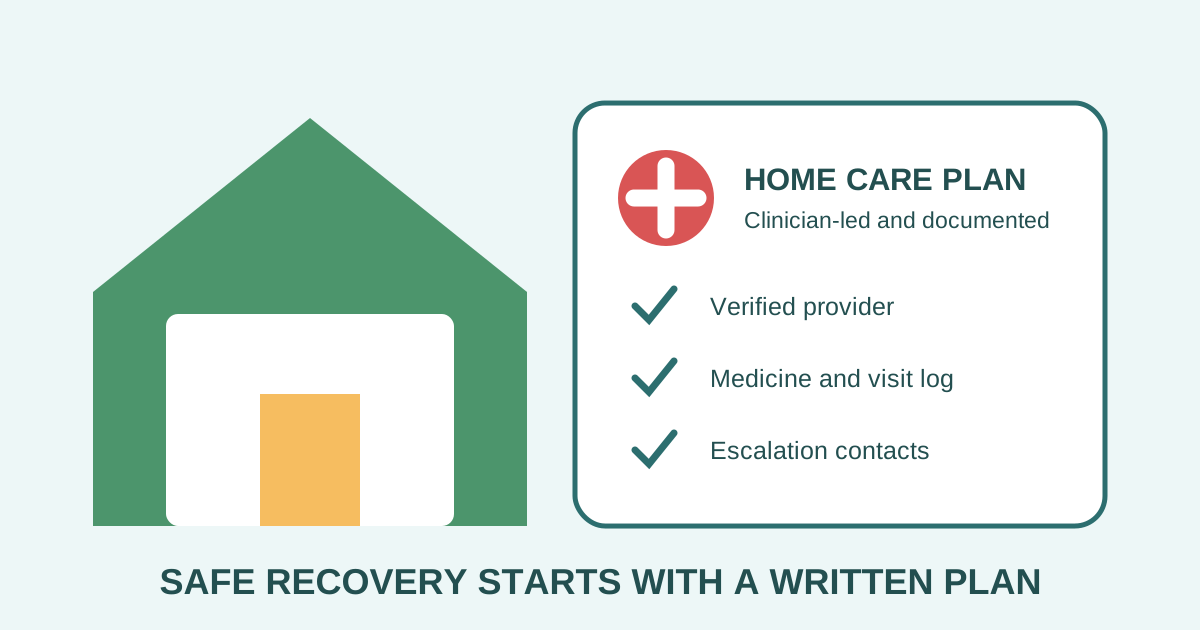
- Ask the treating clinician for a written discharge and rehabilitation plan before booking home services.
- Verify the provider, individual practitioner, permitted scope, supervision, fees, records, and complaint route.
- Keep one current medicine list and daily care log; do not change medicines or exercises based only on informal advice.
- Know which symptoms require the care team, an urgent hospital visit, or emergency services before the patient arrives home.
Home care after surgery, injury, stroke, childbirth, or a serious illness should extend the clinical plan, not replace it. The safest starting point is a written discharge plan from the treating team and a provider whose scope is clear.
Leave hospital with an actionable plan
Before discharge, ask the doctor, nurse, pharmacist, or therapist to reconcile diagnoses, medicines, wound care, diet, mobility restrictions, exercises, equipment, follow-up appointments, and warning signs. Request the plan in a language the patient and principal caregiver can reliably understand. Use a professional interpreter for high-stakes instructions when needed.
The hospital discharge and medical records guide covers documents to collect. China’s National Health Commission provides national health information, but the treating team must tailor advice to the individual patient.
Verify the home-care provider
Start with the hospital’s discharge office or a licensed medical institution. Ask for the provider’s full legal name, service location, booking channel, clinician name and qualification, permitted scope, clinical supervisor, infection-control process, record format, after-hours contact, and complaint route. Confirm whether a requested procedure can be performed at home and what happens if the clinician decides it is unsafe.
Get a written quote covering assessment, each visit, supplies, equipment, transport, cancellation, urgent calls, reports, and invoices. Ask the insurer about referral, network, preauthorization, visit limits, exclusions, and claim documents before care begins.
Prepare the home and one source of truth
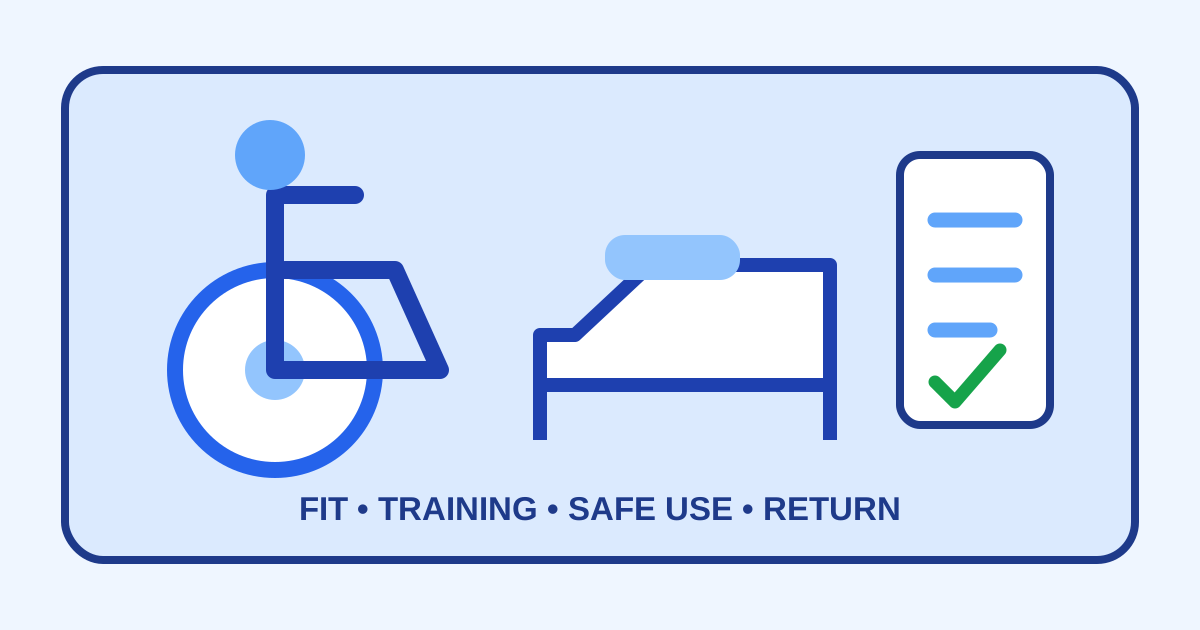
Create a clean, well-lit care area with safe access to a bathroom, charging, water, and emergency exit. Remove trip hazards and confirm whether the building can accommodate a stretcher or wheelchair. Follow professional advice for equipment selection and installation; the home accessibility guide provides a housing checklist.
Keep one current folder containing:
- discharge summary and diagnoses;
- medicine name, dose, time, purpose, and prescriber;
- allergies and relevant medical history;
- care orders and permitted exercises;
- visit notes, measurements, symptoms, and questions;
- clinician, hospital, insurer, and emergency contacts;
- bills, fapiao, prescriptions, and payment records.
Do not let multiple handwritten medicine lists drift apart. Record each clinician-approved change with date and source. Store medicines and sharps as instructed, away from children and heat.
Define escalation before the first visit
Ask the treating team to distinguish routine questions, same-day concerns, urgent hospital review, and immediate emergencies. Put the instructions beside the care log in Chinese and the family’s preferred language. Confirm the hospital destination, transport option, building entry route, and who will bring identification, records, medicines, and payment information.
Home-care setup checklist
- Obtain a written, translated-when-needed discharge plan.
- Verify provider, practitioner, scope, and supervision.
- Get insurance authorization and a full written quote.
- Test equipment, building access, and backup power needs.
- Reconcile medicines and schedule follow-up appointments.
- Start a daily care and symptom log.
- Post escalation contacts and patient-specific warning signs.
- Review progress with the prescribing clinician.
This guide is not medical advice. Do not change medicines, wound care, diet, activity, or rehabilitation exercises without the responsible clinician. Call 120 or seek urgent medical care when there is an immediate threat.
Frequently asked questions
Common questions
Can a nurse or therapist visit my home in China?
Services exist in many cities, but availability, eligibility, permitted procedures, and booking channels vary. Ask the hospital and licensed provider what can safely and lawfully be delivered at home.
Will insurance cover home care?
Coverage varies by policy, network, referral, service, and documentation. Obtain written preauthorization where possible and ask for an itemized bill, medical records, and compliant invoice.
Can a family member manage medicines after discharge?
Only according to the treating clinician's instructions. Ask for a reconciled medicine list, dosing schedule, storage rules, missed-dose guidance, and a contact for questions.
When should we call emergency services?
Ask the clinical team to write patient-specific warning signs. For severe or rapidly worsening symptoms, impaired consciousness, breathing difficulty, major bleeding, or another immediate threat, seek urgent help and call 120 as appropriate.