Healthcare
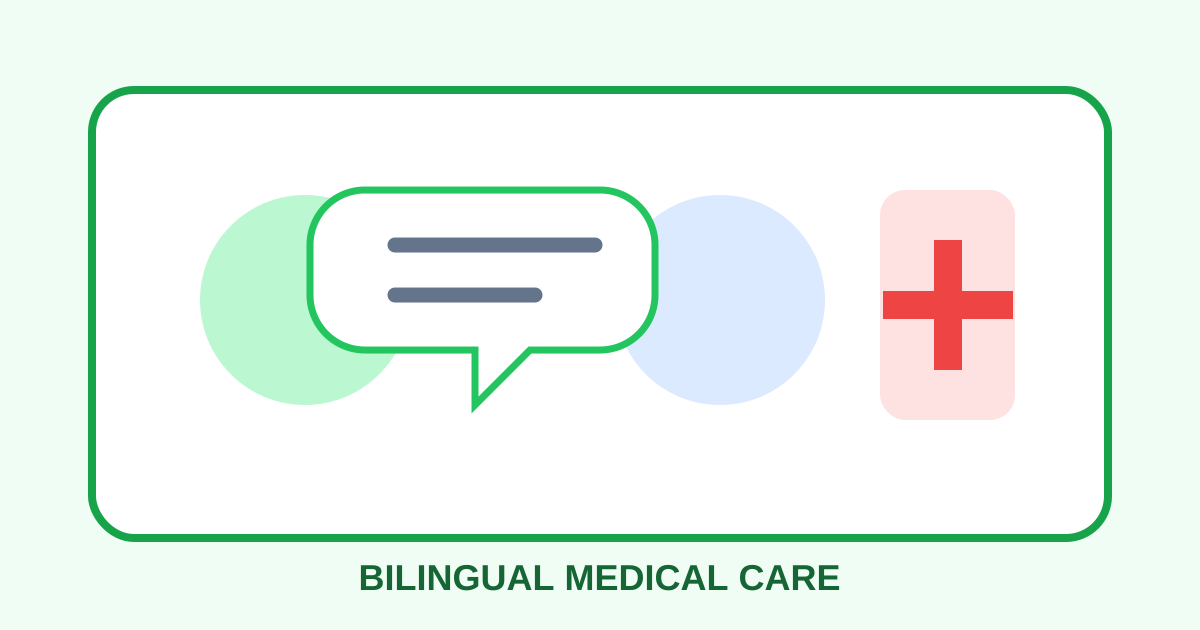
Medical Interpreters and Bilingual Care in China: A Patient Guide
How foreigners in China can arrange medical interpretation, prepare a bilingual health summary, confirm consent and costs, and reduce communication errors before and after care.
Rules and procedures can change. Check the linked official sources before acting on time-sensitive information.
Quick answer
What you need to know
Arrange language support before the visit, bring a concise bilingual health record, speak directly with the clinician, use teach-back for critical instructions, and obtain written follow-up details.
- Ask the hospital and insurer whether professional interpretation is available, bookable, and chargeable.
- Prepare names, symptoms, medicines, allergies, diagnoses, and questions in a concise bilingual format.
- Use a qualified interpreter for consent, complex diagnoses, procedures, and high-risk decisions where possible.
- Confirm medicine, warning signs, results, follow-up, and payment in writing before leaving.
Language gaps in healthcare are not merely inconvenient: they can affect symptoms, consent, medicine use, payment, and follow-up. A little preparation makes even a bilingual appointment more reliable because medical vocabulary and stressful decisions challenge everyone.
Arrange language support before arrival
When booking, ask whether the specific department and appointment time offer English-speaking clinicians, bilingual coordinators, or professional interpretation. Confirm how to reserve the service, its fee, whether it is in person or remote, and whether insurance recognizes the charge.
For complex diagnoses, procedures, mental health, reproductive care, consent, or major financial decisions, request a qualified medical interpreter where available. A friend can help with navigation but may omit, soften, or misunderstand clinical detail. Children should not carry the burden of interpreting adult care.
Prepare a one-page health summary
List your name as shown in the passport, date of birth, emergency contact, allergies and reactions, current medicines with dose and schedule, important diagnoses, previous procedures, relevant test results, and the question you need answered. Add insurer and preauthorization details if applicable.
Translate key terms carefully, keeping both languages together. Bring medicine packaging or clear photos rather than relying on brand names from memory. The doctor visit guide explains registration and payment flow.
Communicate in short loops
Speak to the clinician, not only to the interpreter. Use short sentences and pause for complete interpretation. Describe when a symptom began, where it is, what changes it, and measurable facts such as temperature or frequency. Avoid idioms.
For important instructions, use teach-back: explain in your own words what will happen next and ask the clinician to correct you. Confirm the medicine’s generic or active name, purpose, dose, timing, duration, interactions, missed-dose plan, and serious warning signs. Do not start, stop, or change treatment based only on a machine translation.
Leave with a written plan
Before departure, collect prescriptions, itemized charges, results available now, the expected date and channel for pending results, follow-up department and timing, and instructions for urgent deterioration. Ask how to request records and whether translations are available.
Coordinate significant care with the insurance preauthorization checklist and confirm claim-document requirements before originals are surrendered.
Bilingual care checklist
- Confirm department, clinician, language support, booking, and interpretation fee.
- Prepare a bilingual one-page health and medicine summary.
- Bring passport, insurance details, prior records, and medicine packaging.
- Use professional interpretation for complex or high-risk discussions where possible.
- Speak in short segments and use teach-back for critical instructions.
- Confirm consent, price, medicine, follow-up, and warning signs in writing.
- Save results, invoices, prescriptions, and interpreter or coordinator contacts.
- Seek emergency help promptly rather than delaying for perfect language support.
Official reference points
This guide is general preparation, not medical advice. Services and clinical needs vary; confirm arrangements with the hospital and insurer and follow the treating clinician’s advice. Seek urgent professional care for an emergency.
Frequently asked questions
Common questions
Do hospitals in China provide English-speaking staff or interpreters?
Availability varies by hospital, department, city, shift, and appointment type. Ask the hospital directly and reserve language support when possible.
Can a friend interpret at a medical appointment?
A trusted adult may help with simple logistics, but complex, sensitive, consent, or high-risk discussions are safer with qualified professional interpretation where available. Avoid using children as interpreters.
Are translation apps enough for medical care?
They can help with basic phrases or labels but can misread context, dosage, anatomy, or nuance. Do not rely on an app alone for emergencies, consent, diagnosis, or medication changes.
What should a bilingual health summary include?
Include identity details, emergency contact, allergies, current medicines with doses, major diagnoses and procedures, pregnancy status where relevant, insurer details, and the purpose of the visit.