Healthcare
Hospital Appointments and Insurance Preauthorization in China: A Practical Guide
How foreign residents can book hospital care in China, confirm direct billing or preauthorization, prepare documents, and keep usable claim records.
Rules and procedures can change. Check the linked official sources before acting on time-sensitive information.
Quick answer
What you need to know
Confirm the department, doctor, location, payment route, and insurer approval before a planned visit; carry a fallback payment method and retain the complete medical and billing file afterward.
- A hospital appointment and an insurer authorization are separate confirmations.
- Ask the insurer and hospital direct-billing desk to identify the exact documents and approval scope.
- Keep registration, clinical, prescription, invoice, payment, and insurer records together.
- Do not delay urgent care solely to complete insurance administration.
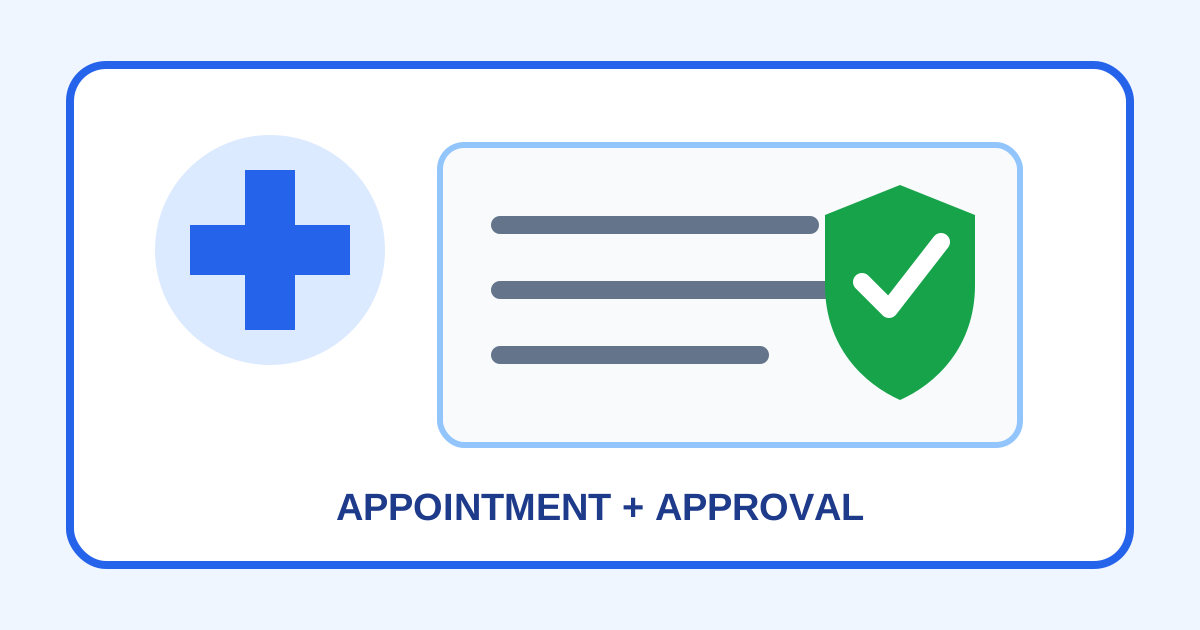
Planned medical care in China often has two parallel workflows: the hospital books the clinical service, while the insurer decides how payment or reimbursement will work. Treating one confirmation as proof of the other is a common source of delays.
Book the correct service
Ask for the hospital campus, building, department, doctor, date, registration time, and whether tests require fasting or other preparation. Confirm the name and passport number stored in the patient record. For the broader visit process, see Seeing a Doctor in China.
If you need language support, ask whether interpretation is available and whether it costs extra. Do not rely on a child to interpret sensitive medical information.
Separate coverage from payment
Call the insurer through its official channel and ask whether the provider is in network, whether direct billing is available, and whether the proposed consultation, scan, procedure, medicine, or device needs preauthorization. Record the case number, approved amount or scope, validity period, exclusions, and named contact.
Then contact the hospital’s insurance or direct-billing desk. Send documents only through a verified address or portal. An insurer card alone may not replace an approval letter.
Prepare a fallback
Carry your passport, patient card, policy details, appointment confirmation, approval letter, current medication list, relevant records, and a working payment method. Ask whether a deposit is required. If you self-pay, confirm what invoice and itemized statement the insurer needs before leaving.
For emergencies, prioritize appropriate medical attention. Administrative requirements and network rules should be clarified as soon as practical, but they should not be treated as medical triage advice.
Close the record after the visit
Compare the treatment received with the authorization. Request the clinical note, results, prescription, itemized bill, official invoice, payment receipt, and any follow-up plan. The medical insurance claims guide explains how to assemble a reimbursement file.
Appointment checklist
- Correct hospital campus, department, doctor, date, and arrival time confirmed.
- Passport name and number match the patient and insurance records.
- Preparation, interpretation, accessibility, and companion needs checked.
- Network status, direct billing, limits, exclusions, and preauthorization confirmed separately.
- Approval reference, scope, validity, and written evidence saved.
- Deposit or self-payment fallback available.
- Clinical notes, results, itemized charges, invoice, and receipt collected.
- Follow-up date and insurer submission deadline recorded.
Official reference points
Coverage and hospital procedures vary. Confirm medical decisions with the treating clinician and payment requirements with the hospital and insurer.
Frequently asked questions
Common questions
Does direct billing mean every treatment is covered?
No. Direct billing is a payment arrangement, while coverage still depends on the policy, provider, treatment, limits, exclusions, and any required approval.
What should I send for preauthorization?
Insurers commonly request a doctor note, diagnosis or symptoms, proposed treatment, estimate, provider details, and policy information, but you should follow your insurer's current checklist.
What if approval is not ready on appointment day?
Ask the hospital and insurer about rescheduling, a guarantee of payment, or self-payment followed by a claim. For urgent symptoms, seek appropriate care rather than waiting only for paperwork.
Should I keep paper records?
Yes. Keep originals when required and make clear scans of medical notes, test results, itemized charges, invoices, payment proofs, prescriptions, and insurer correspondence.