Healthcare
Hospital Discharge and Medical Records in China: A Guide for Foreign Patients
A practical guide to leaving a hospital in China with discharge instructions, medication, itemized bills, medical records, insurance documents, and follow-up plans.
Rules and procedures can change. Check the linked official sources before acting on time-sensitive information.
Quick answer
What you need to know
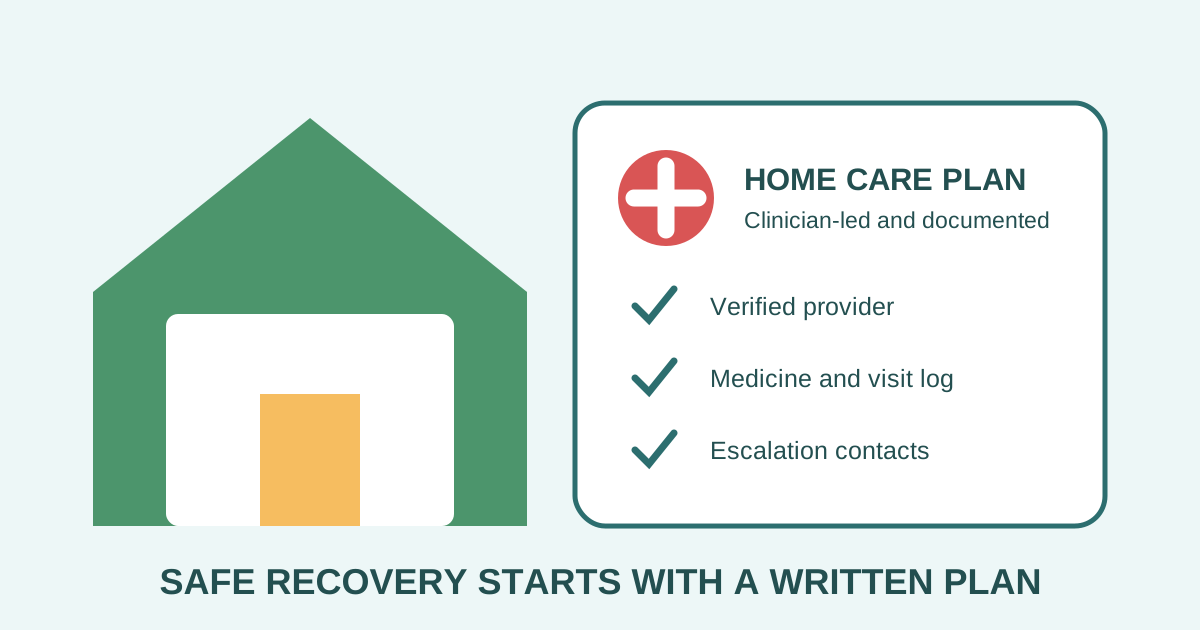
Before leaving hospital, reconcile instructions, medicines, warning signs, follow-up, records, invoices, and insurance evidence while staff can still correct missing details.
- Ask for a written discharge summary, diagnosis and procedure information, medication list, and follow-up plan.
- Confirm which symptoms require urgent care and where to go after hours.
- Collect itemized charges, official invoices, payment proof, and insurer-specific forms before leaving.
- Arrange translation and record sharing without relying on machine translation for clinical decisions.
Discharge is a handoff from hospital care to home, another facility, or an outpatient team. A calm ten-minute review can prevent confusion about medicines, warning signs, insurance documents, and follow-up appointments.
This article offers administrative planning, not medical advice. Follow your treating clinician’s instructions and seek urgent care for serious or worsening symptoms.
Review the care summary before leaving
Ask staff to explain the diagnosis, procedures, important results, unresolved questions, activity or diet restrictions, wound or device care, and expected recovery. Request written instructions and note the department’s contact route.
If language is a barrier, use a qualified interpreter for consequential decisions. The doctor visit guide can help you prepare a bilingual information sheet.
Reconcile every medicine
Compare pre-hospital medicines, medicines stopped during admission, new prescriptions, dose, timing, duration, storage, and refill plan. Ask about duplicated ingredients and what to do after a missed dose.
Do not change treatment based on translation software or this guide. Take unclear labels back to a pharmacist or clinician. For longer plans, see the prescription refill guide.
Make the follow-up actionable
Record the department, clinician, date window, booking channel, tests needed before the visit, and documents to bring. Ask which warning signs mean “contact the department,” “return today,” or “seek emergency care now.”
Save the hospital name and address in Chinese for a taxi or emergency contact.
Collect the clinical record
Ask where and when you can obtain the discharge summary, test results, imaging report and images, pathology, procedure or operation note, and inpatient record if needed. Some records may be available only later or through a separate medical-records office.
Check your name, passport identifier, dates, and contact details. Keep the original files plus encrypted backups.
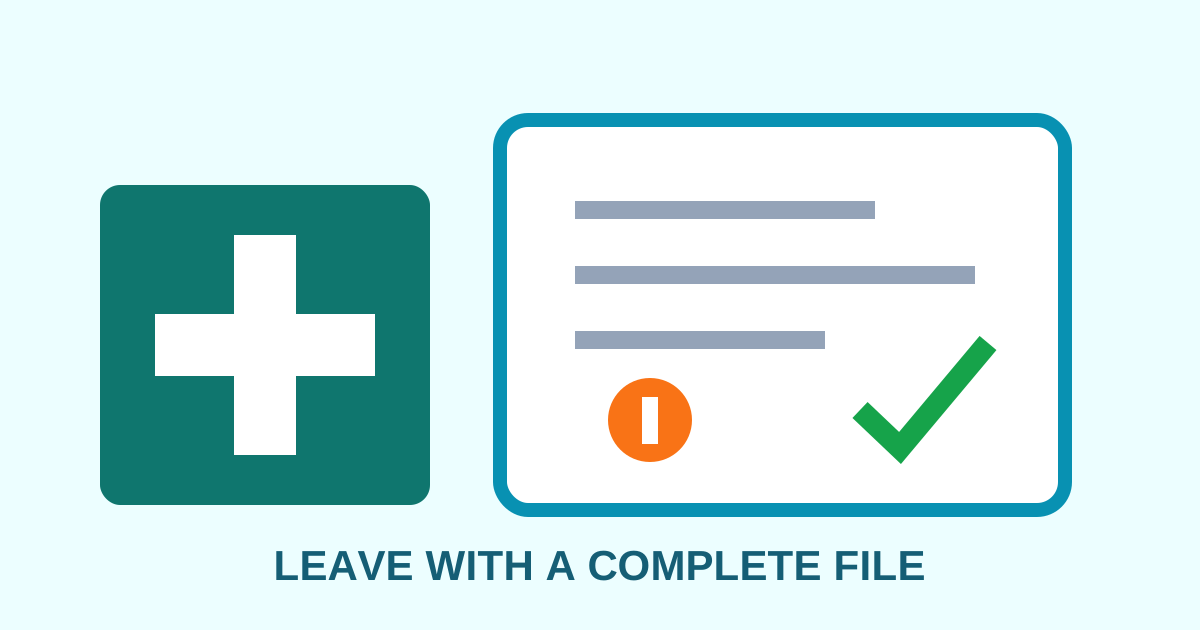
Collect billing and insurance evidence
- Itemized charge list and final account statement.
- Official invoice or accepted electronic invoice.
- Payment receipts and deposit reconciliation.
- Discharge certificate or summary.
- Prescriptions and pharmacy receipts.
- Insurer claim form or hospital stamp if required.
- Prior-authorization and guarantee-of-payment records.
- Contact details for later record requests.
Compare the folder with the medical insurance claims guide before leaving the cashier area.
Official reference points
- National Health Commission
- National Healthcare Security Administration
- China emergency and public service information
Hospital release rules, record formats, and insurer requirements vary. Confirm them directly with the hospital and insurer while your case is still easy to locate.
Frequently asked questions
Common questions
What records should I request when leaving a hospital in China?
Commonly useful records include the discharge summary, diagnoses, procedure notes, test and imaging reports, medication instructions, follow-up plan, itemized charges, invoices, and payment proof. Availability and release procedures vary.
Can a family member collect medical records for me?
Hospitals have their own identity, consent, and authorization rules. Ask the medical-records office what authorization and identification it requires.
Should I translate my discharge summary?
Translation can help an overseas clinician or insurer, but clinical decisions should use a qualified medical interpreter or professional translation when accuracy matters.
What if I feel worse after discharge?
Follow the hospital's written warning-sign instructions. For urgent or severe symptoms, seek emergency care or call the local emergency service; do not rely on an online guide.