Healthcare
Using Community Health Centers in China: A Guide for Foreign Residents
A practical guide to community health centers in China for foreign residents, including services, registration, language planning, records, referrals, and payment.
Rules and procedures can change. Check the linked official sources before acting on time-sensitive information.
Quick answer
What you need to know
Learn how to identify, contact, and use a local community health center in China while planning language support, records, payment, and escalation.
- Check whether the nearby center accepts foreign patients and offers the service you need before visiting.
- Bring passport identification, contact details, medication information, and relevant medical records.
- Ask how registration, payment, insurance, test results, prescriptions, and referrals work locally.
- Use emergency services or an appropriate hospital for urgent or severe symptoms.
Community health service centers and stations can be a convenient first contact for some routine health needs in China. Their services, hours, staffing, eligibility rules, and language capacity vary considerably, so a little preparation matters.
This article offers navigation advice, not medical guidance. A clinician should assess symptoms and treatment. For severe or rapidly worsening problems, use an appropriate hospital or emergency service rather than delaying care.
Find the center serving your neighborhood
Search the official district health commission, local government service platform, map app, property-management notice, or neighborhood committee information for “社区卫生服务中心” or “社区卫生服务站.” A center and a smaller station may offer different services.
Call ahead or ask a Chinese-speaking helper to confirm the address, hours, registration cutoff, foreign-patient acceptance, age restrictions, required identification, and whether the specific clinic, vaccine, test, medicine, rehabilitation service, or follow-up program is available.
Prepare a compact health file
Take your passport or accepted identification, phone number, local address, insurance details, and a payment backup. Bring a short bilingual summary of allergies, diagnoses, medicines with generic names and doses, pregnancy status when relevant, previous procedures, and the reason for the visit.
Include only relevant reports, images, vaccination records, or discharge summaries. Medical Interpreters and Bilingual Care offers language-planning ideas, while Transferring Medical Records explains record organization.
Understand registration and payment
At reception, ask how to create or update a patient record and how your name will be entered. Keep spelling and passport number consistent. Confirm consultation, test, treatment, medicine, and follow-up charges before proceeding when possible.
Private insurance may not treat every community center as an eligible provider. Ask the insurer about network status, direct billing, referrals, itemized receipts, fapiao, diagnosis records, prescriptions, and claim deadlines. Save payment confirmations and printed documents.
Use the visit effectively
Describe when symptoms began, how they changed, what makes them better or worse, and what medicine you already used. Ask the clinician:
- what assessment is being made;
- whether testing or observation is needed;
- how and when to take any medicine;
- which warning signs require urgent care;
- when to return; and
- whether a hospital or specialist referral is recommended.
Do not rely on an automated translation for a high-risk consent or medication instruction you do not understand. Request interpretation or written clarification.
Coordinate ongoing care
For chronic conditions, ask whether the center can support routine monitoring while a hospital specialist manages more complex decisions. Keep a single medication list and share material changes between providers. Do not change prescription medicine merely because brands or packaging differ; confirm the active ingredient and plan with a clinician or pharmacist.
If referred, ask which hospital department to book, what urgency applies, what records to carry, and whether the center can provide a referral note. See Specialist Referrals and Follow-Up Care.
Community clinic checklist
- Official address, hours, and service scope confirmed.
- Foreign-patient acceptance checked.
- Passport, phone, address, and payment ready.
- Bilingual allergy and medication list prepared.
- Relevant medical records organized.
- Insurance and claim documents confirmed.
- Diagnosis, instructions, and warning signs understood.
- Test-result and follow-up method recorded.
- Referral pathway clear.
- Emergency backup plan kept available.
Official resources
- National Health Commission of the People’s Republic of China
- National Government Service Platform
- State Council health services information
Local health commissions and providers are the best sources for current service details. Confirm clinical decisions with a licensed professional and insurance questions with your insurer.
Frequently asked questions
Common questions
Can foreigners use community health centers in China?
Many centers provide local primary-care and public-health services, but registration, language support, service scope, and eligibility can differ. Call or ask the center directly before relying on it.
What services might a community health center provide?
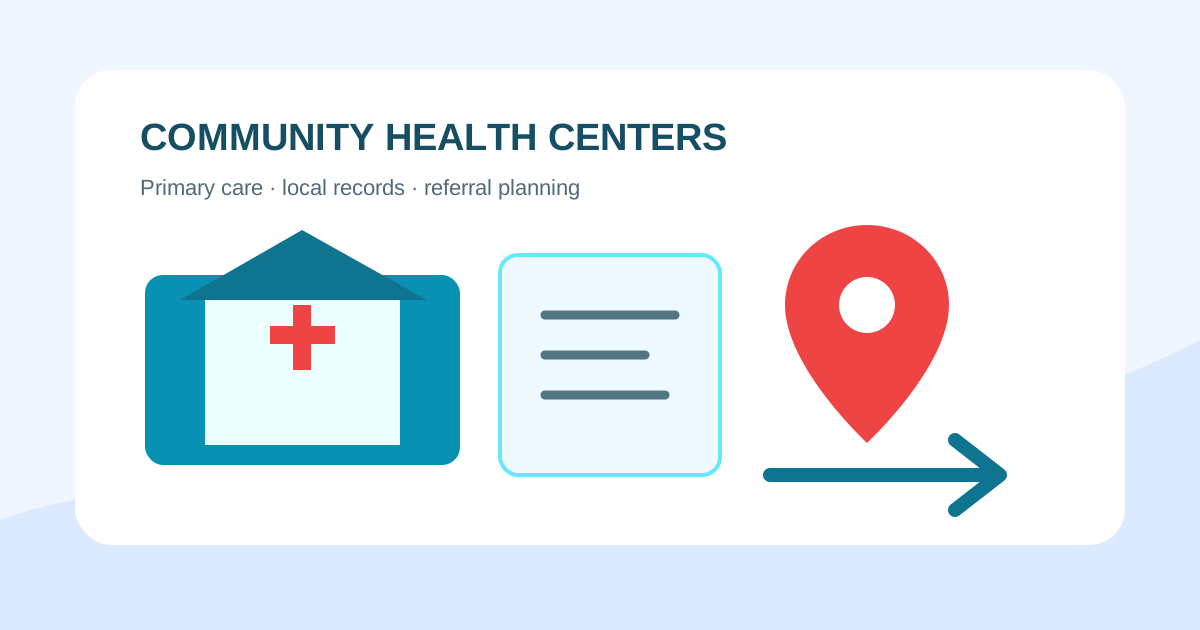
Depending on the locality, services may include general outpatient care, basic tests, vaccination, chronic-condition follow-up, rehabilitation, maternal or child health, health education, and referrals. Confirm availability.
Will private insurance cover a community clinic visit?
Coverage depends on the policy and provider network. Ask the insurer whether the specific center and service are eligible, what documents are required, and whether direct billing is available.
When should I go directly to a hospital?
For severe, rapidly worsening, or potentially life-threatening symptoms, seek appropriate urgent or emergency care. Call 120 when necessary and follow medical advice.