Working in China
Workplace Emergency Contacts in China: A Next-of-Kin Plan for Foreign Employees
Create a practical workplace emergency-contact record in China, covering consent, language, family abroad, medical limits, document updates, and annual review.
Rules and procedures can change. Check the linked official sources before acting on time-sensitive information.
Quick answer
What you need to know
Give HR a current, consent-based contact chain with clear language and time-zone notes, while limiting sensitive information to what the employer genuinely needs.
- Choose primary and backup contacts who have agreed to the role and can answer across relevant time zones.
- Record names, relationships, languages, country codes, and the order in which contacts should be tried.
- Ask HR how emergency data is stored, accessed, used, updated, and removed.
- Review the record after moves, phone or passport changes, family changes, and at least annually.
An emergency-contact field is easy to complete and easy to forget. For a foreign employee, an old country code, language mismatch, or unannounced time-zone problem can make the record useless when HR actually needs it.
Build a two-level contact chain
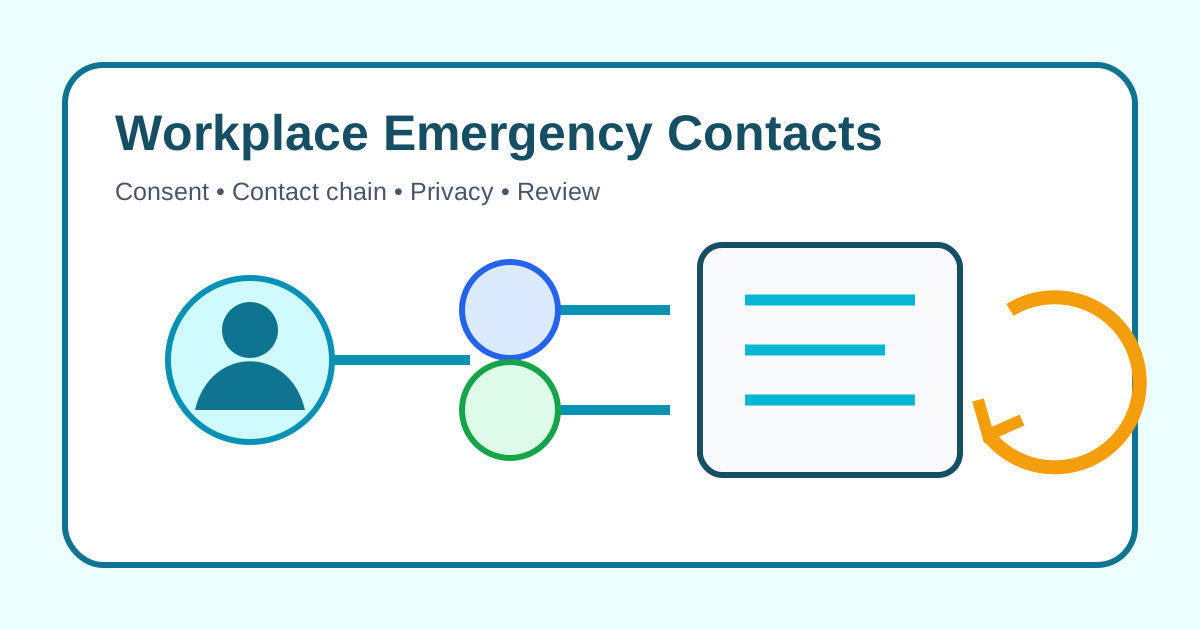
Choose a primary contact and at least one backup where the employer’s process permits. A trusted person in China can assist with immediate language and logistics; a family member abroad may be essential for major decisions or family communication. Neither role should be assumed—obtain each person’s agreement.
Record the name exactly, relationship, mobile number with country code, messaging method if accepted by the employer, languages, location, time zone, and typical availability. State the order in which contacts should be tried. Do not put passwords, banking credentials, or document scans in a general contact field.
Understand the employer’s process
Ask HR what counts as an emergency, who can see the data, how contact identity is checked, where records are stored, and how an employee updates or removes them. Confirm whether the office, worksite, business-travel team, and insurer use the same record or separate systems.
For shifts, site work, or travel, ensure the relevant manager knows the official escalation path. Pair this record with the workplace evacuation guide and the business travel guide.
Keep medical information proportionate
If a health condition, allergy, disability, or medication is relevant to workplace support, use the employer’s confidential occupational-health or HR process. Share only what is appropriate and current. Ask how instructions reach first responders and whether a separate medical card is more suitable.
The workplace health-support guide explains how to document functional needs. A clinician should advise on medical action; HR should clarify workplace procedures.
Review every dependency
Test the numbers with your contacts and tell them the employer’s name and likely caller. Update HR after a new phone number, address, passport, legal name, relationship, or worksite. If a contact withdraws consent, replace them promptly. Review the chain at least annually and before extended business travel.
Emergency-contact checklist
- Primary and backup contacts have agreed.
- Country codes, languages, locations, and time zones recorded.
- Call order and unreachable-contact fallback clear.
- HR access, use, retention, and update route understood.
- Worksite, travel, insurer, and family plans aligned.
- Sensitive medical information handled separately where appropriate.
- Calendar reminder set for periodic review.
China’s emergency numbers and local procedures should be verified for your location; the general emergency-contact guide provides a household starting point. Employment, privacy, and medical handling depend on the employer and circumstances, so confirm questions with HR, a clinician, or a qualified professional.
Frequently asked questions
Common questions
Should my emergency contact live in China?
A reachable local contact can help with immediate logistics, while a family contact abroad may remain important. Ask HR whether the form supports a primary and backup chain.
Can I list a colleague without asking?
Ask first. Explain what information will be shared, when they may be called, and how to stop serving in the role.
Should I give HR my complete medical history?
Provide only information requested through an appropriate confidential process and relevant to workplace safety or support. Discuss sensitive disclosures with HR, occupational health, a clinician, or qualified adviser.
When should I update the record?
Update it after a new phone number, move, passport or name change, relationship change, contact withdrawal, or new relevant workplace arrangement, and review it periodically.