Daily Life
Emergency Contacts and Safety in China: Phone Numbers, Address Cards, Hospitals, and Insurance
A practical English guide for foreign residents preparing emergency contacts and safety records in China, including phone numbers, address cards, hospitals, employer contacts, embassy details, and insurance.
Rules and procedures can change. Check the linked official sources before acting on time-sensitive information.
Quick answer
What you need to know
Foreign residents should save China emergency numbers, a Chinese address card, employer and landlord contacts, embassy details, insurance information, and nearby hospital options. The goal is to make help easy to reach even when language, stress, or phone battery becomes a problem.
- Save key emergency numbers, including police, ambulance, and fire services.
- Keep your Chinese address, passport copy, visa or residence permit copy, and emergency contact card available offline.
- Add employer, landlord, compound management, embassy or consulate, and insurance contacts.
- Know nearby hospitals and how to share your location clearly.
- Prepare backup access if your phone battery, payment app, or internet connection fails.
China is generally practical to navigate day to day, but emergencies are not the moment to search for numbers, addresses, insurance files, or translated medical notes.
Build a simple emergency folder on your phone and keep one offline copy. It should answer three questions quickly: who can help, where are you, and what documents or medical facts matter.
1. Save emergency numbers
Save key local emergency numbers in your phone: police, ambulance, fire, your local hospital, property management, landlord, employer HR, and a trusted local contact.
For medical treatment steps, read Seeing a Doctor in China.
2. Keep a Chinese address card
Your address should be saved in Chinese, not only English. Include city, district, street, compound, building, unit, room number, nearby gate, and property-management phone if available.
This also helps with deliveries and official mail. See Receiving Official Documents in China.
3. Prepare offline documents
Keep offline copies of your passport ID page, visa or residence permit, insurance card, emergency contact list, allergy notes, current medicines, and employer contact.
Do not rely only on cloud storage. In emergencies, mobile data, app login, or battery can fail.
4. Share location clearly
Learn how to send your map location and how to describe the nearest gate or landmark. In large compounds, malls, office parks, and railway stations, the exact entrance can matter.
For map habits, read Maps and Navigation in China.
5. Add payment and communication backup
Keep a backup payment method and a way to call someone if your main app fails. A small amount of cash, a power bank, and a written emergency card are simple but useful.
Practical checklist
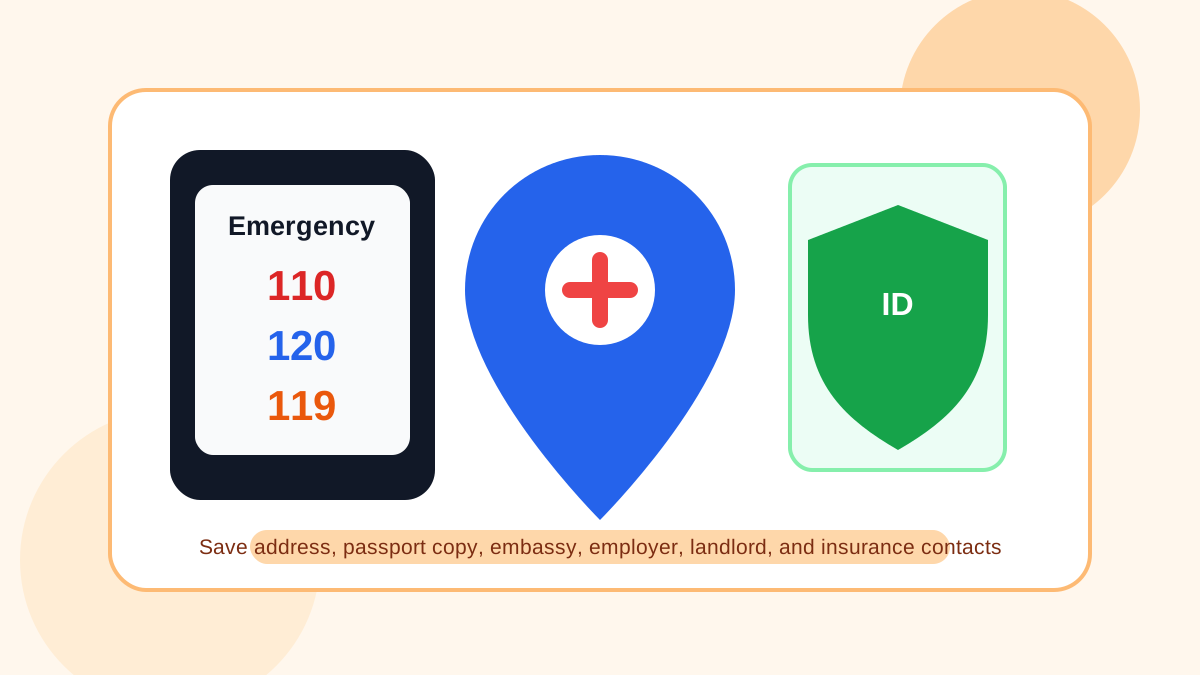
- I saved 110, 120, 119, nearby hospitals, employer, landlord, and property management.
- I have my Chinese address saved and available offline.
- I keep passport, permit, insurance, allergy, and medicine notes offline.
- I know how to share my location and nearest gate.
- I have payment and battery backup.
Official sources
- State Council: A Guide to Working and Living in China as Business Expatriates
- Ministry of Commerce: Guide for Business Expatriates
Frequently asked questions
Common questions
What emergency numbers should foreigners know in China?
Common emergency numbers include 110 for police, 120 for ambulance, and 119 for fire. Save them with your local address and nearby hospital information.
Should I keep a Chinese address card?
Yes. A Chinese address card helps taxi drivers, delivery staff, hospitals, police, and neighbors understand where you live.
What documents should I keep offline?
Keep passport, visa or residence permit, insurance card, emergency contacts, address, employer contact, and important medical notes available offline.
Who should be on my emergency contact list?
Include a local colleague, HR contact, landlord, compound management, embassy or consulate, insurer, family contact, and nearby hospital.
How can I prepare for medical emergencies?
Save nearby hospitals, insurance details, allergy notes, current medicines, passport copy, and payment backup before you need them.