Working in China
Workplace Support for Disability or a Long-Term Health Condition in China
A practical guide for foreign employees discussing workplace support in China, with a needs-focused request, medical privacy, written agreements, review dates, and escalation planning.
Rules and procedures can change. Check the linked official sources before acting on time-sensitive information.
Quick answer
What you need to know
Foreign employees managing a disability or long-term health condition can prepare a focused workplace-support request by documenting functional needs, choosing what medical information to share, proposing workable adjustments, and recording decisions with HR.
- Describe the work barrier and requested support, not more medical detail than necessary.
- Ask HR what documentation and process the employer uses before sharing sensitive records.
- Propose specific options such as schedule, equipment, access, communication, or emergency-plan changes.
- Record agreed measures, owners, start dates, privacy boundaries, and review dates.
- Seek local professional advice if safety, discrimination, leave, pay, or employment status is disputed.
A workplace-support conversation is easier when it starts with the job barrier and a practical solution. You can protect medical privacy while giving the employer enough information to assess safety and feasibility.
This is general planning information, not legal or medical advice.
1. Define the functional need
Write down which essential task, environment, schedule, communication method, or access route creates difficulty. Note whether the issue is permanent, episodic, or temporary and what would reduce the barrier.
2. Ask HR about the process
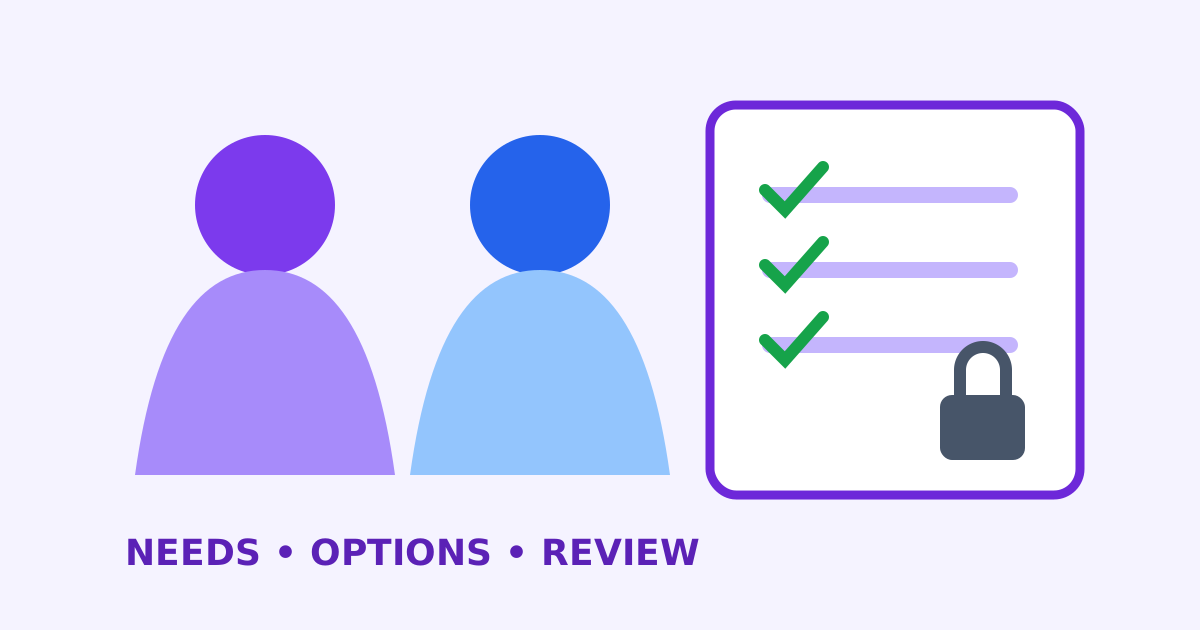
Before sending records, ask who handles requests, what documentation is required, who can see it, how it will be stored, and how decisions are reviewed. Use a private channel rather than a group chat.
Your work permit, contract, company policy, and local practice may affect options. For general contract records, see Employment Contracts in China.
3. Offer concrete options
Depending on the role and clinical advice, options might include:
- Accessible entrance, workstation, restroom, or parking route
- Ergonomic equipment or screen and hearing tools
- Written instructions, captioning, or quieter communication
- Adjusted start time, breaks, shift pattern, or travel
- Temporary task modification or agreed remote days
- Medication storage and an emergency-contact plan
Give more than one workable option when possible. Do not propose a measure that conflicts with your clinician’s advice or a safety requirement.
4. Share information deliberately
Ask a licensed clinician to describe relevant functional restrictions, expected duration, and review timing. Avoid circulating a complete medical history unless it is truly needed and you understand why.
For ongoing care organization, read Building a Chronic Condition Care Plan in China.
5. Record and review the arrangement
After the meeting, send a factual summary: the agreed measure, responsible person, start date, duration, privacy boundary, safety steps, and review date. Note what happens during travel, office moves, emergencies, or a manager change.
If a request is refused, ask for the reason in writing and whether an alternative was considered. For serious concerns involving discrimination, safety, leave, pay, or termination, consult the relevant local authority or a qualified employment professional.
Practical checklist
- I identified the task or access barrier.
- I asked HR for the process and privacy rules.
- I prepared two or three workable options.
- Clinical documentation is limited to relevant needs.
- The agreement has owners, dates, and a review point.
- I know the internal and professional escalation routes.
Official sources
- National People’s Congress: Law on the Protection of Disabled Persons
- Supreme People’s Court: Employment Promotion Law
Employment and medical circumstances are fact-specific. Confirm important decisions with HR, your doctor, the competent local authority, or a qualified adviser.
Frequently asked questions
Common questions
Do I need to tell my employer my full diagnosis?
Not every request requires a full history. Ask HR what information is necessary and discuss functional restrictions with your clinician, while recognizing that safety-sensitive roles may require specific evidence.
What workplace support can I request?
Possible requests include accessible routes, ergonomic equipment, modified communication, breaks, schedule changes, task adjustments, remote-work arrangements, or an emergency plan, subject to the role and employer process.
Should an agreement be written?
Yes. Record what was approved, who will arrange it, when it starts, who can access medical information, and when the arrangement will be reviewed.
Can my doctor write a support note?
Ask the employer what format it accepts, then ask a licensed clinician to describe relevant functional limits and duration without unnecessary detail.
Where can I get help with a dispute?
Speak with HR, a staff representative if available, the relevant local authority, or a qualified employment adviser. Rules and remedies depend on the facts and location.