Working in China
Annual Leave Work Handover in China: A Guide for Foreign Employees
Prepare a practical annual-leave handover in China with approvals, ownership, deadlines, access controls, emergency contacts, and return-day checks.
Rules and procedures can change. Check the linked official sources before acting on time-sensitive information.
Quick answer
What you need to know
Separate leave approval from operational handover, assign named owners, share minimum necessary access, define genuine emergencies, and review changes promptly after returning.
- Obtain leave approval through the employer's required channel before making a handover plan or travel commitments.
- List active work by deadline, status, next action, named owner, dependencies, and escalation route.
- Do not share passwords or personal accounts; arrange delegated access through approved company controls.
- Agree what counts as an emergency and whether contact during leave is expected with the manager and HR.
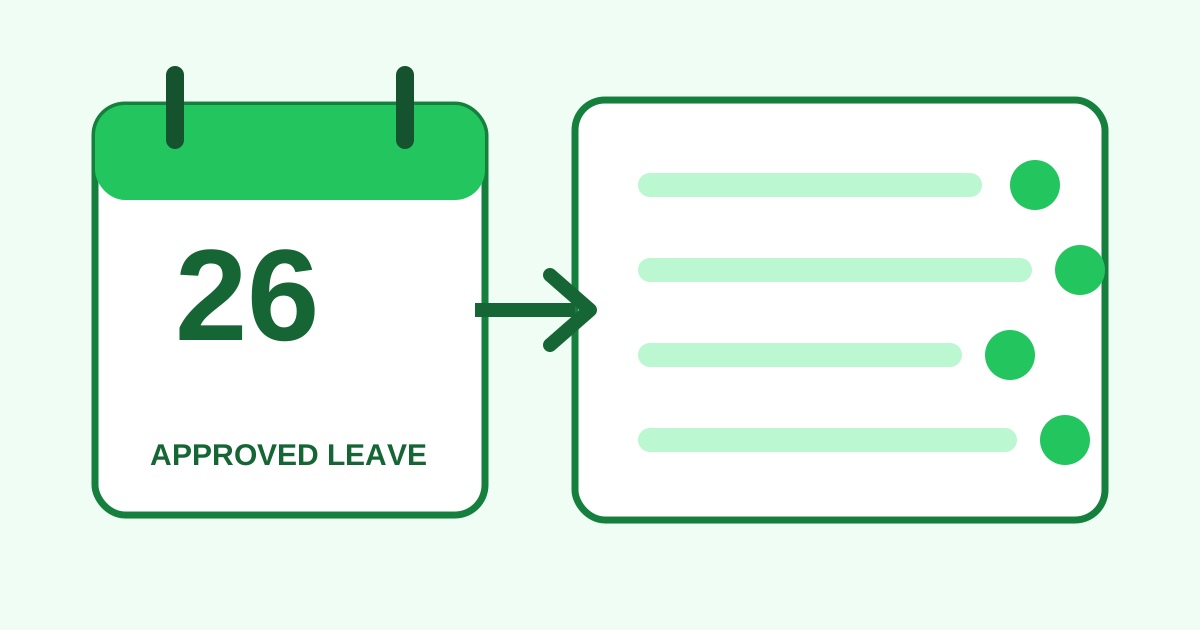
Leave approval and work handover solve different problems. Approval confirms when you may be away; handover ensures that customers, colleagues, deadlines, and controlled systems still have a clear owner. Treating them separately makes the process easier to verify.
Confirm the leave before handing over work
Use the employer’s required system and keep the approval record. Check how weekends, statutory holidays, adjusted working days, travel days, and partial days are treated. The annual leave and time records guide explains a practical record trail, while the adjusted workday guide helps avoid calendar mistakes.
Tell the manager early about deadlines that cannot be moved. Do not promise a colleague as cover before the manager confirms capacity and authority. If leave overlaps a payroll, filing, renewal, customer delivery, or permit deadline, name the accountable owner in writing.
For policy or entitlement questions, consult HR and the employer’s current written rules. China’s Ministry of Human Resources and Social Security publishes national labor and social-security information, but the application to a specific employee can depend on facts and local practice. Seek professional advice for a dispute.
Build a handover people can use
Create one short table or document with:
- work item and business purpose;
- current status and last completed action;
- next action and exact deadline;
- named primary owner and backup;
- customer, vendor, or internal contact;
- document or system location;
- approval limit or decision boundary;
- known risk, dependency, and escalation route.
Link to the current source of truth rather than attaching many versions. Mark confidential material and share it only with people who need it. Close or label stale drafts so that the cover owner does not act on the wrong file.
Hold a brief review with the cover owner. Ask them to explain the next action back to you; this exposes missing context better than asking whether everything is clear. Record any decision the manager makes about changed scope, priority, or authority.
Arrange access without sharing credentials
Never hand over a password, one-time code, personal payment account, digital signature, or passport-linked personal login. Ask IT or the system owner for approved delegation, a shared mailbox, temporary role access, or reassignment. Set an expiry where possible and record who approved it.
For physical items, list keys, badges, company cards, tokens, devices, and files. Sign them over if company procedure requires it. The work device security checklist covers updates, storage, phishing, and incident reporting.
Define communication during leave
Set an out-of-office reply with the dates, alternate contact, and a safe description of availability. Avoid advertising unnecessary travel or personal information externally. Agree with the manager what constitutes a genuine emergency, which channel will be used, and whether any response is expected.
Before leaving:
- update calendars, project boards, and customer-facing owners;
- cancel or reassign meetings and recurring approvals;
- submit expenses and time records due during the absence;
- secure paper files and company equipment;
- test delegated access with the cover owner;
- schedule a short return briefing.
On return, review incidents, decisions, promises, new deadlines, and access changes. Explicitly reclaim ownership so two people do not act on the same task. Thank the cover owner and update the template while the gaps are still fresh.
This guide is operational, not legal advice. Confirm leave rights, contact expectations, overtime treatment, information security, and approval authority with HR, the manager, IT, and a qualified adviser where needed.
Frequently asked questions
Common questions
Is an out-of-office message enough for annual leave?
Usually not for active work. A useful handover also assigns owners, records decisions and deadlines, and gives internal colleagues an escalation path.
Should I share my password with a colleague?
No. Use approved delegation, shared mailboxes, role-based access, or manager and IT support. Keep passwords and authentication codes private.
Must I answer work messages while on leave?
Expectations depend on the employer's policy, approval, role, and applicable rules. Clarify availability and emergency definitions with the manager and HR before leave.
What should I do on my first day back?
Meet or message the cover owner, review decisions and incidents, reclaim ownership explicitly, update priorities, and close temporary access where appropriate.