Working in China
Employee Assistance Programs in China: A Guide for Foreign Employees
Use an employee assistance program in China with clearer expectations about confidentiality, language, booking, urgent support, fees, and workplace boundaries.
Rules and procedures can change. Check the linked official sources before acting on time-sensitive information.
Quick answer
What you need to know
Check what the employer's EAP actually provides, ask how confidentiality and records work, choose appropriate language support, and use clinical or emergency services when the need exceeds the program.
- Ask HR or the provider about services, eligibility, session limits, languages, booking, fees, and whether family members are included.
- Confirm confidentiality, record handling, and the limited circumstances in which information may be disclosed before sharing sensitive details.
- An EAP may help with short-term support and referrals but does not replace ongoing clinical care or emergency response.
- Use a private device and space where practical, and keep workplace performance discussions separate from counseling conversations.
An employee assistance program, often called an EAP, can provide short-term counseling, practical consultations, or referrals paid for by an employer. The label does not guarantee a standard package, so learn the boundaries before you need help.
Check what the benefit includes
Find the current provider through the HR portal, benefits guide, insurer, or official provider contact. Confirm eligibility for employees, spouses, partners, and children; the number and length of sessions; available languages; video, phone, and in-person options; operating hours; locations; and any fee. Ask whether legal, financial, manager, or crisis consultations are included or merely referred elsewhere.
Use the provider’s official booking route rather than sending personal details through a manager. If an employer referral is required, ask what information the manager receives and whether self-referral is possible.
Ask about privacy before the session
Request a plain-language explanation of:
- what identity and session records are collected;
- where records are stored and for how long;
- what the employer receives, including aggregate reports;
- who may access notes or recordings;
- whether sessions are recorded or AI tools are used;
- the exceptions for imminent safety, safeguarding, or legal duties;
- how to request correction, access, or deletion where applicable.
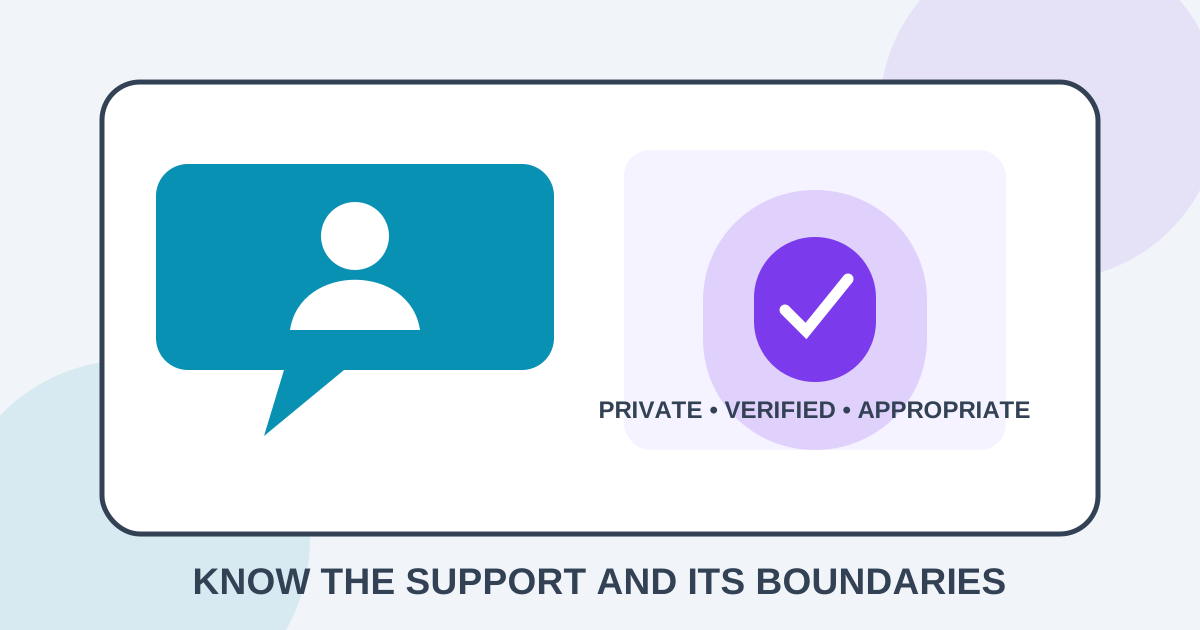
Do not assume that “confidential” means no information can ever be disclosed. Ask the provider to explain exceptions and obtain qualified advice if privacy has a material workplace or legal consequence. Use a private device, headphones, and a place where colleagues or household members cannot overhear.
Match the service to the need
EAPs are often designed for brief, goal-focused support: stress, adjustment, family pressure, bereavement, workplace conflict, or referral to longer-term care. At the first session, ask about the practitioner’s qualifications, language fluency, approach, supervision, and how referrals work when the issue needs specialist or continuing treatment.
The mental health care guide explains provider and payment questions for ongoing care. China’s National Health Commission is a national health-information source, but an individual treatment decision belongs with a qualified clinician.
An EAP is not necessarily an emergency service. Ask for its crisis route, but for immediate danger, severe or rapidly worsening symptoms, or risk of harm, seek urgent medical help or contact local emergency services. The emergency contacts guide helps families prepare core numbers and addresses.
Keep counseling and performance processes distinct
A counseling conversation should not become an informal substitute for a workplace grievance, accommodation request, sick-leave process, or performance response. If work changes are needed, ask HR which formal channel creates a record and what supporting documents are required. Share only information necessary for that process.
EAP access checklist
- Save the current provider number and official booking link.
- Confirm eligibility, languages, session limits, and fees.
- Read privacy terms and ask about employer reporting.
- Choose a private device, location, and calendar label.
- Ask the practitioner about scope and referral options.
- Keep urgent-care contacts available separately.
- Use formal HR channels for workplace changes or complaints.
This article provides general planning information, not medical, legal, or employment advice. Confirm benefits with HR and the provider, clinical needs with a qualified health professional, and urgent risk through appropriate emergency services.
Frequently asked questions
Common questions
Will my manager know that I used the EAP?
Practices vary. Ask the provider what individual information, if any, is shared with the employer and whether the employer receives only anonymous utilization data. Also ask about legal or safety exceptions.
Can I request counseling in English or another language?
Many programs offer multiple languages or interpreters, but availability varies. State the language, location, time zone, and preferred format when booking, and ask whether an interpreter affects privacy or fees.
Is an EAP suitable for a mental health emergency?
Do not assume it is an emergency service. For immediate danger, severe symptoms, or risk of harm, use local emergency services or urgent medical care and follow the provider's crisis instructions.
Can my spouse or child use my EAP?
Some plans cover household members and others do not. Check eligibility, age rules, consent, session limits, provider qualifications, and safeguarding arrangements directly with the program.