Healthcare
Hospital Referrals and Record Transfers in China: A Guide for Foreign Patients
How foreign patients can prepare referrals, imaging, lab results, prescriptions, and insurance documents when moving care between hospitals in China.
Rules and procedures can change. Check the linked official sources before acting on time-sensitive information.
Quick answer
What you need to know
Before changing hospitals, confirm whether a formal referral is needed and assemble a dated, clinician-reviewed record pack that the receiving team can use.
- Ask the receiving hospital what referral, registration, and record formats it accepts.
- Collect reports, images, lab results, prescriptions, and a concise clinical summary.
- Keep originals and preserve dates, units, facility names, and clinician identifiers.
- Confirm insurance authorization separately from the medical transfer process.
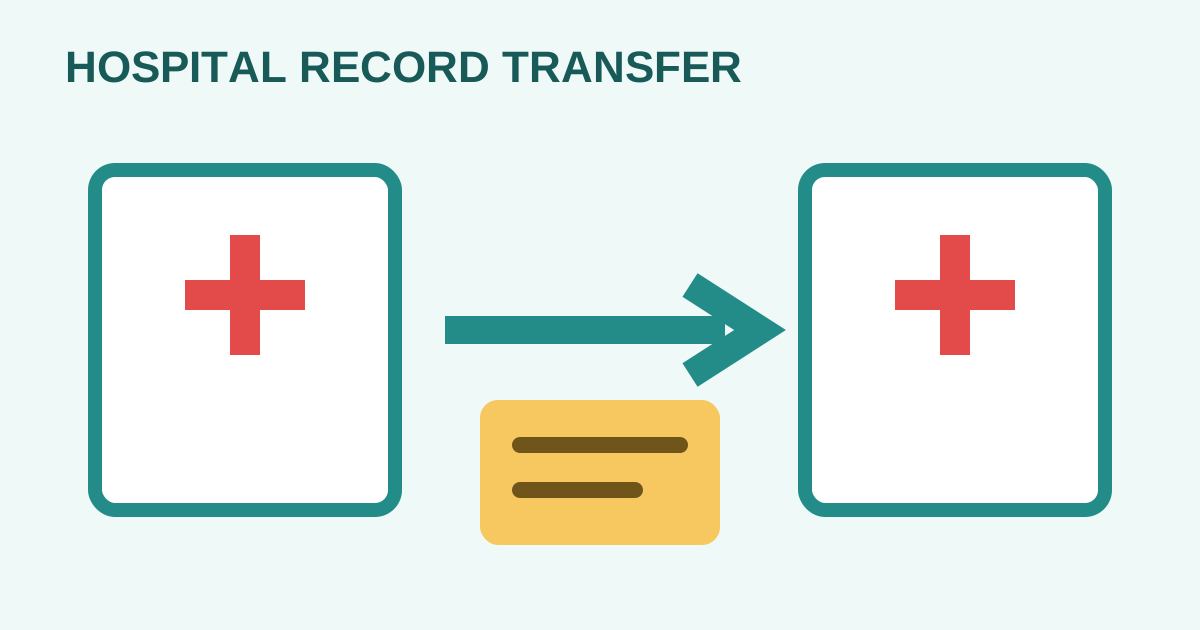
Moving care between hospitals can mean a new registration record, different appointment system, separate imaging viewer, and another insurance approval. Prepare the clinical and administrative handoffs as two related but distinct tasks.
Ask the receiving hospital first
Confirm the department, clinician level, appointment route, identity document, referral requirement, deposit, and accepted record formats. Ask whether outside imaging must be uploaded, brought on disc, or repeated, and whether laboratory results have a validity window.
For urgent or rapidly worsening symptoms, use appropriate urgent care rather than delaying for a complete file. This article supports organization and is not medical advice.
Request a usable record pack
Ask the current facility for a visit or discharge summary, diagnoses under consideration, procedure notes, medication and allergy list, lab reports with units and reference ranges, pathology, imaging reports and images, and follow-up plan. Preserve facility names, dates, clinician names, and document seals or verification data.
The hospital discharge records guide provides a broader collection checklist. Keep the original files unchanged and work from copies.
Add a one-page timeline
Create a factual timeline of symptom onset, appointments, major findings, treatments, response, adverse reactions, and pending tests. Use exact dates and medicine names. Ask a clinician or pharmacist to check clinical terminology and translations before anyone relies on them.
Do not combine conflicting results into your own diagnosis. Highlight discrepancies for the receiving clinician to interpret.
Separate insurance approval
A hospital accepting the appointment does not mean the insurer will reimburse it. Ask about network status, referral rules, preauthorization, direct billing, deposits, exclusions, and claim documents. Save case numbers and written responses. See the preauthorization guide.
Close the communication loop
Confirm who will review pending tests from the first hospital and how urgent results will reach you. After the new appointment, send the agreed report back to the original clinician if shared care continues. Maintain one current medication list instead of several conflicting versions.
Hospital transfer checklist
- Receiving department and appointment route confirmed.
- Referral and identity requirements checked.
- Clinical summary, reports, images, and prescriptions collected.
- Dates, units, facility names, and originals preserved.
- Translation needs confirmed with the receiving team.
- Pending-result owner and contact route documented.
- Insurance network and authorization checked separately.
- Urgent-care fallback understood.
The National Health Commission is an official health-policy source. Hospital and insurance procedures differ, so verify the case with the treating clinicians, receiving facility, and insurer.
Frequently asked questions
Common questions
Do I need a referral to see another hospital in China?
It depends on the facility, department, insurance plan, and care pathway. Ask both the receiving hospital and insurer before booking, without delaying urgent care.
Will another hospital accept photos of my records?
Photos can help orientation but may not meet clinical, administrative, or insurance requirements. Ask which originals, stamped copies, electronic images, or reports are required.
Should I translate my medical records?
Ask the receiving clinician which records need translation and what standard is acceptable. Do not rely on unreviewed machine translation for treatment decisions.
Can I move care while tests are pending?
Ask the current and receiving clinicians how pending results will be delivered, reviewed, and acted upon. Seek urgent care promptly if symptoms worsen.