Family & Education
Home Accessibility in China: A Mobility Planning Guide for Foreign Families
How foreign families can assess an apartment in China for reduced mobility, arrange safer access, coordinate building services, document modifications, and plan emergencies.
Rules and procedures can change. Check the linked official sources before acting on time-sensitive information.
Quick answer
What you need to know
Assess the full route from street to bedside, test lifts and bathrooms in person, obtain written approval for modifications, and build backup plans for outages, emergencies, transport, and daily support.
- Evaluate the complete route through the gate, entrance, lift, doorways, bathroom, bedroom, and nearby services.
- Test real dimensions and surfaces with the person's actual mobility equipment whenever possible.
- Get landlord and property-management approval before drilling, installing, or changing shared areas.
- Arrange backup help for lift outages, evacuation, medical visits, deliveries, and caregiver gaps.
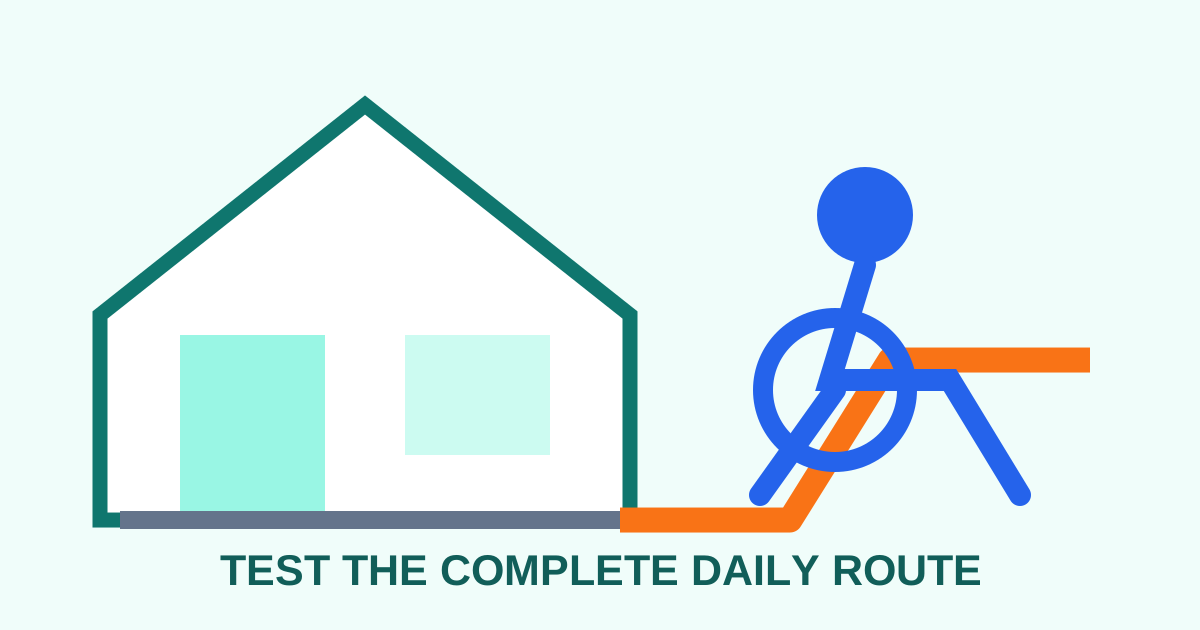
An apartment can look convenient in photos yet fail at one critical point: a step at the compound gate, a narrow lift, a heavy fire door, a bathroom threshold, or a street that is difficult to cross. For a person with reduced mobility, the useful unit of inspection is the complete daily route.
This guide supports housing and service planning. Individual equipment and modification decisions should be assessed by qualified health, rehabilitation, building, or installation professionals as appropriate.
Map the route from street to room
Inspect drop-off space, curb cuts, gate access, surface condition, ramps, entrance thresholds, door weight, lift dimensions, corridor width, apartment doorway, turning space, bedroom, bathroom, balcony, and emergency exit. Measure rather than relying on labels.
Test the route at busy times and after dark. Check whether access cards, facial recognition, security gates, delivery barriers, parked bikes, or waste stations obstruct the path. Use the apartment move-in inspection guide to record conditions.
Test the apartment around real routines
Consider transfers, bathing, toilet access, cooking, laundry, medicine storage, working, sleeping, charging equipment, and caregiver space. Check floor grip, lighting, sockets, water controls, bed height, furniture clearance, and whether doors can be opened from both sides in an emergency.
Ask a qualified rehabilitation professional about personal mobility equipment, transfer technique, and fall-risk reduction. The physiotherapy and rehabilitation guide explains how to organize an assessment without self-prescribing care.
Get permission before modifications
Before installing grab bars, ramps, rails, shower seats, alarms, brighter lighting, or smart access, obtain written landlord approval and consult property management where shared structures or fire routes are involved. Record design, installer, cost, maintenance, restoration, and ownership at move-out.
Do not improvise safety-critical equipment or block a fire door, corridor, stairwell, or evacuation route. For rental repair documentation, see the landlord and maintenance guide.
Build daily and emergency backups
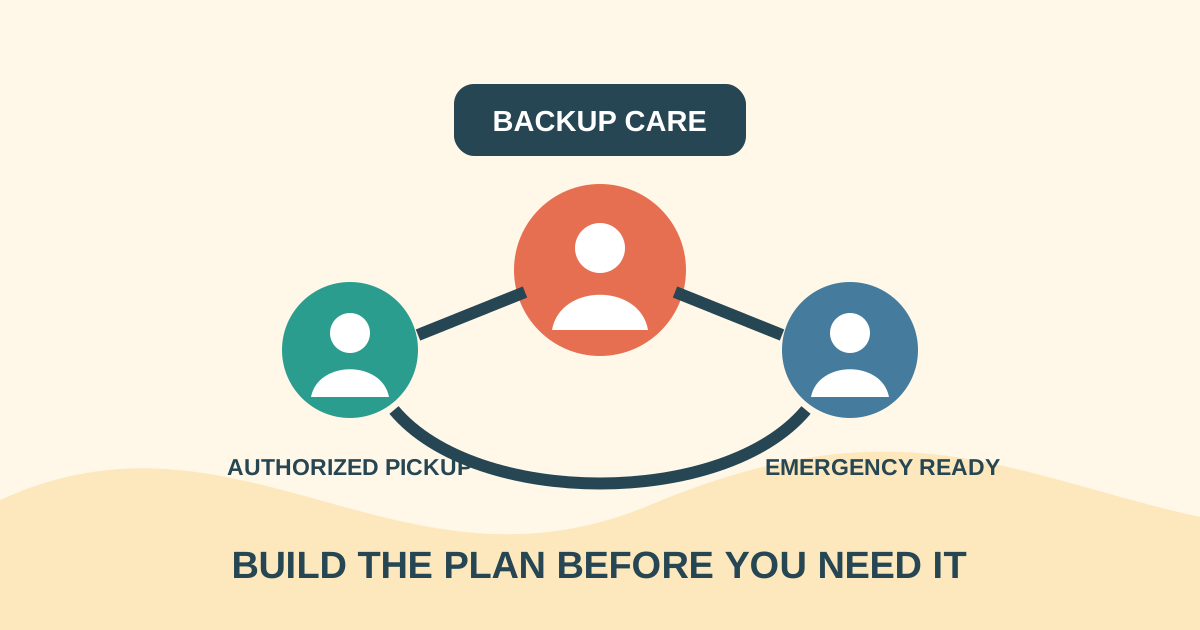
Save property management, lift maintenance, landlord, caregiver, clinic, insurer, accessible transport, and trusted-neighbor contacts. Ask how lift outages and emergency evacuation are handled. Plan for power or water interruption, severe weather, delivery access, equipment failure, and a caregiver who cannot arrive.
Keep the address in Chinese, key health information, medicines, charger, backup power where appropriate, and essential supplies accessible. Never use an unsafe manual-carry method on stairs without trained professional guidance.
Accessibility inspection checklist
- Street, drop-off, gate, entrance, lift, corridor, and apartment route are measured.
- Actual wheelchair, walker, stroller, or other equipment fits and turns safely.
- Bathroom, bedroom, kitchen, lighting, sockets, and floor surfaces support daily routines.
- Lift reliability, outage contact, backup route, and emergency procedure are known.
- Landlord and property-management approvals are written before modifications.
- Qualified assessors and installers are used for clinical or safety-critical decisions.
- Transport, deliveries, healthcare, caregiver coverage, and equipment repair are planned.
- Photos, measurements, permissions, invoices, warranties, and contacts are retained.
Official reference points
Building conditions and local services vary widely. Confirm personal health needs with qualified clinicians and physical changes with the landlord, property management, local authority, and competent professionals.
Frequently asked questions
Common questions
How can I find an accessible apartment in China?
Give agents a measurement-based checklist, visit in person, test the full route, and confirm lift, step, doorway, bathroom, parking, and building-management details rather than relying on an 'accessible' label.
Can I install grab bars or a ramp in a rental?
Ask the landlord and property management in writing before making changes. Confirm design, installer, cost, restoration, liability, and whether shared-area approval is required.
What if the lift stops working?
Ask property management about maintenance contacts, outage notices, rescue procedure, backup lift, and emergency support. Create a plan that does not depend on unsafe manual carrying.
Who should assess mobility equipment or home modifications?
Use qualified clinicians or rehabilitation professionals for individual health and equipment needs, and appropriately qualified installers or building professionals for physical modifications.