Healthcare
Storing and Disposing of Medicines at Home in China: A Foreign Resident's Guide
How foreign residents in China can store medicines safely, manage labels and expiry dates, protect children, handle cold-chain products, and ask about disposal.
Rules and procedures can change. Check the linked official sources before acting on time-sensitive information.
Quick answer
What you need to know
Keep medicines in original labeled packaging, follow product-specific storage instructions, separate household risks, review expiry dates, and ask a pharmacy or local authority about disposal.
- Heat, humidity, sunlight, freezing, and bathroom storage can damage some medicines.
- Original labels help prevent dosing mistakes and support emergency or travel questions.
- Child-resistant packaging is not childproof; locked storage is safer where children are present.
- Disposal options vary locally, so ask a pharmacy or authority instead of improvising.
A home medicine drawer often grows quietly: current prescriptions, travel supplies, children’s products, cold remedies, and items left after treatment. A simple inventory and storage routine reduces mix-ups and makes it easier to answer a clinician or pharmacist accurately.
Follow the product, not a general rule
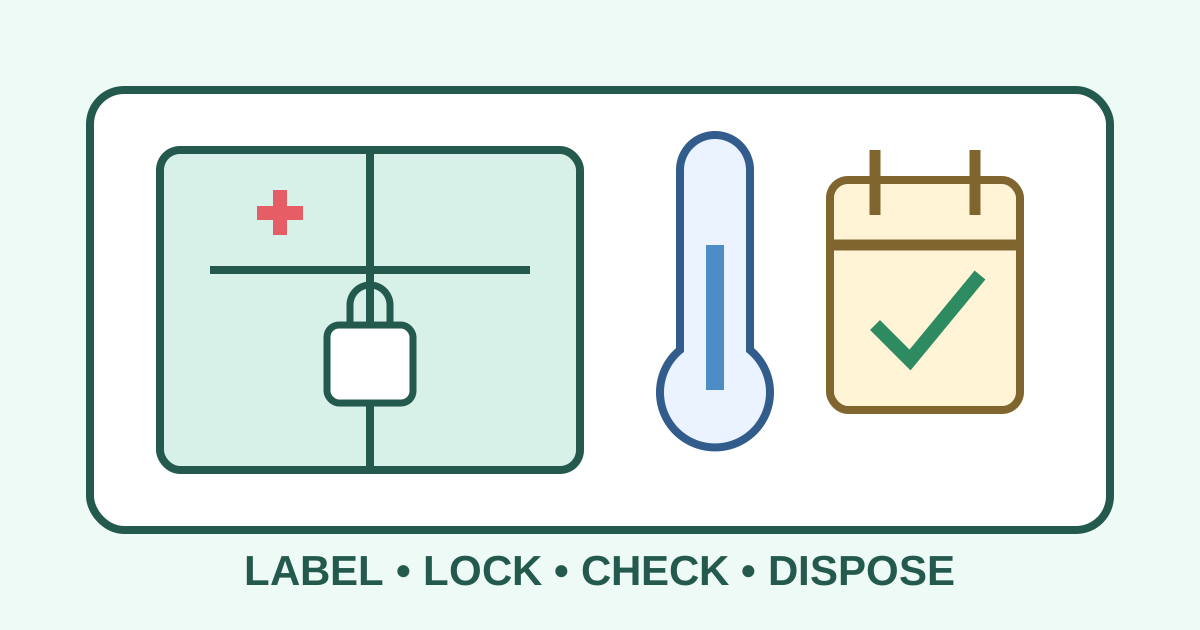
Read the label and leaflet for temperature, light, moisture, and freezing instructions. Do not refrigerate every medicine by default. Bathrooms, sunny windows, cars, balconies, and kitchens near heat or steam may be unsuitable.
For products requiring refrigeration, ask the dispensing pharmacy for the permitted temperature range, transport method, response to a power outage, and signs that replacement is needed. Do not rely on appearance alone. The prescription refill guide can help prevent last-minute shortages.
Preserve identity and instructions
Keep each medicine in its original container with the patient name where supplied, Chinese and English names if available, strength, directions, batch, and expiry date. Photograph the label and leaflet, but retain the physical packaging.
Separate medicines for different household members. Store look-alike packages apart and keep oral products away from topical chemicals. Maintain a current medicine and allergy list for appointments using the pharmacy and medicine guide.
Reduce household risks
Use a locked cabinet when children, visitors, cleaners, or cognitively impaired adults could access medicines. Keep products away from food and pet supplies. Return a dose to storage immediately rather than leaving it on a table or bedside surface.
If someone may have swallowed the wrong product or dose, seek urgent professional help. Bring the package, estimated amount, and time; do not induce vomiting unless a qualified professional directs it.
Review and dispose responsibly
Check the inventory every few months and before travel. Set aside expired, damaged, recalled, unidentified, or no-longer-needed products in a sealed, clearly marked container that remains inaccessible to children and pets.
Disposal and take-back arrangements differ by city and provider. Ask a pharmacy, hospital pharmacy, residential community office, or local market-regulation authority what it currently accepts. Do not give prescription medicine to another person.
Home medicine checklist
- Label instructions checked for every product.
- Heat, humidity, sunlight, and freezing risks controlled.
- Original packages and leaflets retained.
- Household members’ medicines separated.
- Locked storage used where access is a concern.
- Cold-chain temperature and outage plan confirmed.
- Medicine and allergy list kept current.
- Expired and damaged products quarantined securely.
- Local approved disposal route confirmed.
Official reference point
This article is general safety information, not medical advice. Storage, replacement, and disposal depend on the product and local services; confirm questions with a licensed pharmacist, treating clinician, manufacturer, or competent local authority.
Frequently asked questions
Common questions
Should medicines be kept in the refrigerator?
Only when the label, pharmacist, or clinician specifically requires it. Refrigeration can damage products that should remain at room temperature, and freezing can ruin some cold-chain medicines.
Can I use medicine after its expiry date?
Do not assume an expired or poorly stored product remains safe or effective. Ask a pharmacist or clinician for product-specific replacement advice.
How should I dispose of unused medicine?
Local collection options differ. Ask a nearby pharmacy, hospital pharmacy, community office, or local regulator about an approved return or disposal route and keep medicines secured until then.
Can I combine tablets in one container?
Mixing products can remove identity, batch, expiry, and storage information and increase errors. Keep original packaging unless a qualified professional provides a suitable dispensing system.