Healthcare
Prescription Refills in China for Foreigners on Long-Term Medication
Build a safe prescription-refill routine in China: identify medicines correctly, find a clinician, plan appointments, store records, and avoid gaps or unsafe substitutions.
Rules and procedures can change. Check the linked official sources before acting on time-sensitive information.
Quick answer
What you need to know
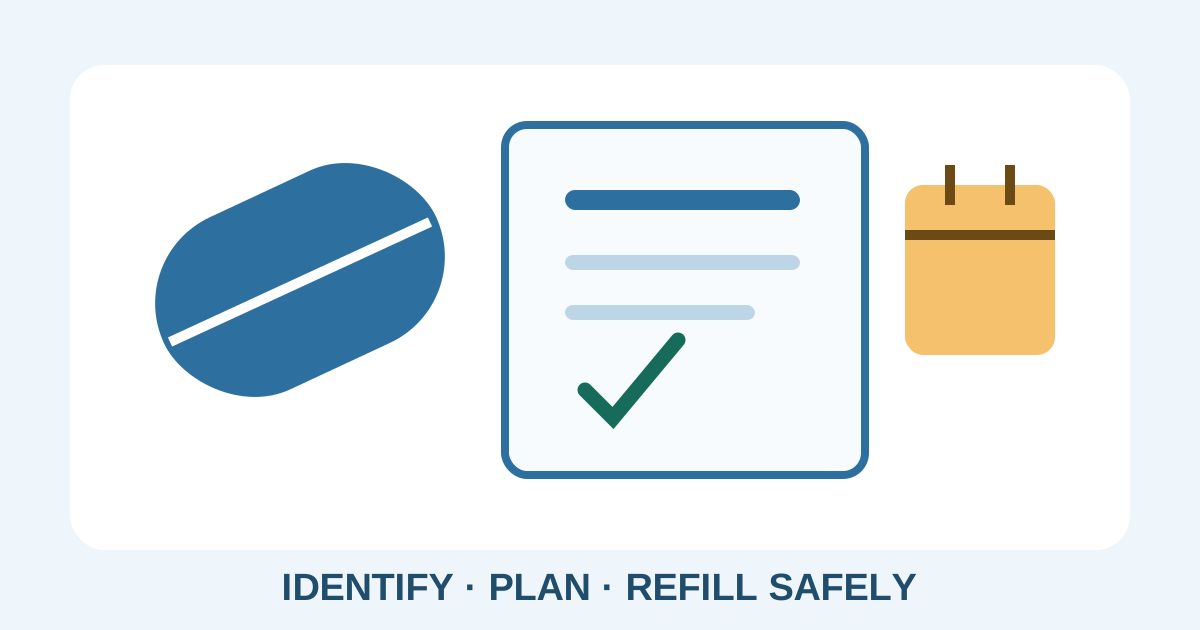
Create a clinician-led refill plan before supplies run low, using exact generic names, strengths, records, and a documented contingency route rather than brand-name guesses or informal sellers.
- Bring the generic name, strength, dosage form, schedule, indication, allergies, and prior prescription—not only a brand photo.
- Availability and prescribing controls differ by medicine, hospital, city, and current regulation.
- Do not switch, split, stop, or import medicine without guidance from a qualified clinician and the relevant authority.
- Keep an emergency buffer plan and know which symptoms require urgent care.
A long-term medicine can become an urgent problem when a familiar brand is unavailable, a hospital requires a new consultation, or an app account does not match your passport. Set up the refill route while you still have time to solve ordinary delays.
This article provides logistical information, not medical advice. A qualified clinician who knows your condition must guide prescribing, monitoring, substitutions, dose changes, and missed doses. Seek urgent medical care for serious or worsening symptoms.
Build a medicine identity sheet
For every medicine, record the generic active ingredient, brand, strength, dosage form, immediate- or extended-release form, schedule, indication, prescribing clinician, start date, and known allergies or reactions. Include clear photos of the box and leaflet, but do not rely on color or shape.
Translate for communication while keeping the original names. Similar-looking Chinese translations can refer to different salts or formulations. A bilingual clinician or licensed pharmacist should verify consequential details.
Find the correct prescribing route
Contact a hospital department appropriate to the condition and ask whether it can prescribe the medicine, what records are required, whether an appointment is needed, and how much can be dispensed. Controlled, refrigerated, injectable, psychiatric, and closely monitored medicines may have special processes.
Bring your passport, prior prescriptions, diagnosis summary, recent monitoring results, allergy list, and insurance details. Our doctor-visit guide explains registration and payment basics.
Plan before the supply becomes short
Count doses and set reminders well before the expected refill date. Allow time for appointment availability, laboratory monitoring, hospital stock, public holidays, insurance authorization, and delivery restrictions. Ask the clinician what to do if the medicine is temporarily unavailable.
Never stretch a supply by changing dose frequency, splitting a modified-release tablet, or stopping suddenly without clinical advice. If you are already running out, contact the treating service promptly rather than relying on a marketplace seller.
Evaluate substitutions carefully
A matching generic ingredient is only one part of equivalence. Strength, dosage form, release mechanism, combination ingredients, route, and storage can matter. Ask the clinician or pharmacist to write down the new plan and explain what should be monitored.
Use licensed hospitals and pharmacies. Keep the prescription, invoice, dispensing label, batch information, and product leaflet. The National Medical Products Administration is the national regulatory reference point, but a clinician and dispensing pharmacy handle the individual prescription.
Coordinate insurance and travel
Before paying, ask whether direct billing or preauthorization applies and whether the insurer needs a diagnosis note or itemized invoice. Our medical claims guide has a document checklist.
For travel, carry medicine in appropriate original packaging with a prescription or clinician letter. Confirm airline, destination, transit, customs, refrigeration, and controlled-substance rules. Do not mail prescription medicine casually across borders.
Prescription-refill checklist
- I recorded generic name, strength, form, schedule, and indication.
- I have the prior prescription, diagnosis summary, and monitoring results.
- A suitable local clinician confirmed the prescribing route.
- I started before my existing supply became short.
- A professional will approve any brand or formulation change.
- I know storage requirements and what to do during travel.
- I saved prescriptions, invoices, labels, and insurance approvals.
- I know whom to contact for missed doses, side effects, or urgent symptoms.
Reliable reference points
- National Health Commission of China
- National Medical Products Administration
- China Customs
- World Health Organization: medication safety
Rules and stock change. Confirm the current plan with the prescribing hospital, licensed pharmacy, insurer, and relevant customs authority.
Frequently asked questions
Common questions
Can a Chinese pharmacy refill my foreign prescription?
Acceptance depends on the medicine and current rules. Many medicines require assessment and a locally valid prescription. Ask a licensed hospital or pharmacy before your supply becomes short.
Will the same brand be available?
Not necessarily. A clinician or pharmacist should compare active ingredient, strength, dosage form, release mechanism, and instructions before any substitution.
Can I bring several months of medicine into China?
Import and controlled-drug rules vary. Check with China Customs, your airline, the Chinese embassy or consulate, and your prescriber before travel.
What if I miss a dose?
Follow the medicine-specific instructions from your prescriber or pharmacist. Do not double a dose unless a qualified professional has told you to do so.