Healthcare
Pharmacies and Medicine in China: Prescriptions, OTC Drugs, Translation, and Receipts
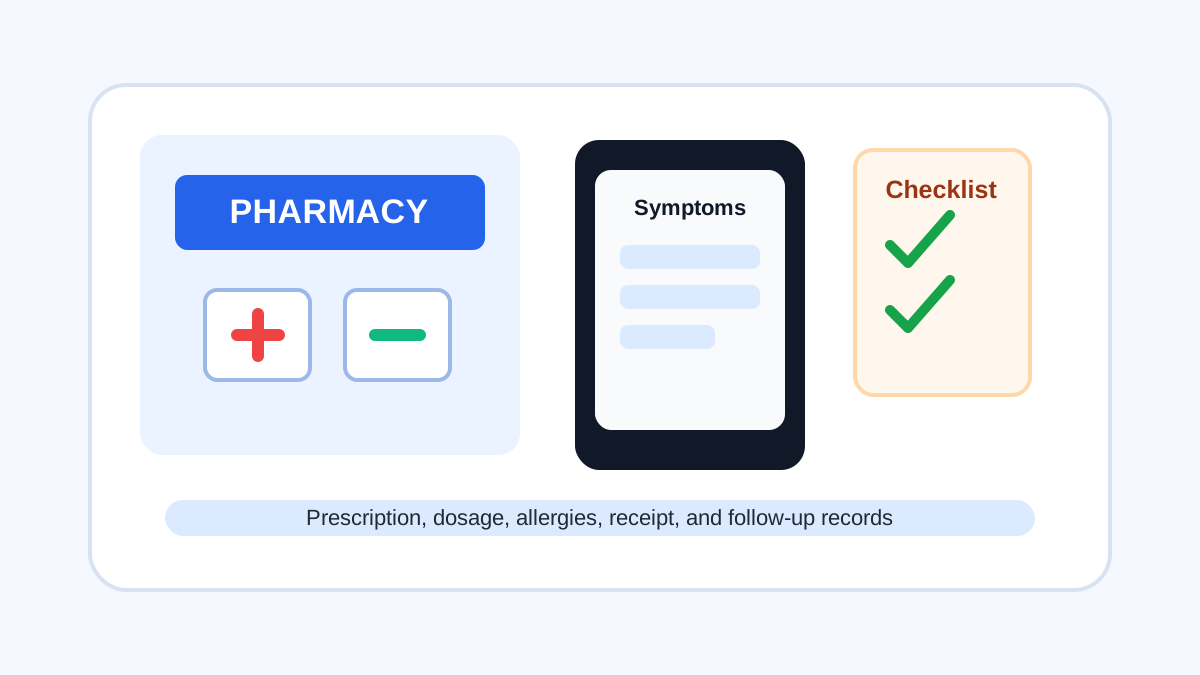
A practical English guide for foreign residents using pharmacies in China, including prescriptions, over-the-counter medicine, dosage translation, allergies, receipts, and follow-up records.
Rules and procedures can change. Check the linked official sources before acting on time-sensitive information.
Quick answer
What you need to know
Foreign residents can use pharmacies in China more safely by bringing the generic medicine name, prescription details, allergy notes, dosage instructions, and receipt records. For serious symptoms, chronic disease, pregnancy, children, or unclear dosage, use a hospital or qualified clinic instead of self-medicating.
- Use generic medicine names, active ingredients, and photos of previous packaging.
- Confirm dosage, timing, side effects, contraindications, and whether alcohol or driving should be avoided.
- Bring prescription records for controlled, chronic, or specialist medicines.
- Keep receipts and packaging for insurance, employer reimbursement, and follow-up care.
- Use hospitals or clinics for serious symptoms, children, pregnancy, chronic disease, or unclear diagnosis.
Pharmacies are easy to find in many Chinese cities, but buying medicine safely requires more than pointing at symptoms. Brand names, dosage habits, prescription rules, and package labels may differ from your home country.
Use pharmacies for simple needs, but treat medicine as a record-keeping task: write down what you bought, why you bought it, how to take it, and who advised you.
1. Bring the generic name
If you used a medicine before, bring the generic name and active ingredient, not only the brand name. A photo of the box, bottle, or prescription is useful, but packaging from another country may not match Chinese stock.
For healthcare access beyond pharmacies, read Seeing a Doctor in China.
2. Explain allergies and current medicines
Before buying anything, state allergies, pregnancy status, chronic conditions, and medicines you already take. This matters for antibiotics, painkillers, cold medicine, sleep aids, stomach medicine, and traditional products.
Keep this information in English and Chinese on your phone.
3. Confirm dosage in writing
Ask how many tablets, how often, before or after food, and for how many days. Also ask what to avoid, such as alcohol, driving, duplicate ingredients, or mixing with other medicine.
If the answer is unclear, do not guess. Use a hospital, clinic, or telehealth service.
4. Keep receipts and packaging
Receipts help with insurance, employer reimbursement, follow-up care, and checking exactly what you took. Keep the box until you finish the medicine because it includes batch, expiry, and instructions.
For expense tracking, read Daily Budgeting in China.
5. Know when a pharmacy is not enough
Use a hospital or qualified clinic for emergency symptoms, severe pain, breathing problems, allergic reactions, high fever, injuries, pregnancy, children, chronic disease, or medicine you do not understand.
Practical checklist
- I brought the generic name, active ingredient, or old packaging photo.
- I explained allergies, current medicines, and chronic conditions.
- I confirmed dosage, timing, side effects, and what to avoid.
- I kept the receipt and packaging.
- I used a hospital or clinic when the symptom or dosage was unclear.
Official sources
- State Council: A Guide to Working and Living in China as Business Expatriates
- Ministry of Commerce: Guide for Business Expatriates
Frequently asked questions
Common questions
Can foreigners buy medicine at pharmacies in China?
Yes. Many common over-the-counter products are available, but some medicines require a prescription or hospital visit.
What should I show at a Chinese pharmacy?
Show the generic medicine name, active ingredient, previous packaging, symptoms, allergies, current medicines, and any prescription record.
Should I rely only on translation apps for medicine?
No. Translation apps help with basic communication, but dosage and contraindications should be confirmed with a pharmacist, doctor, or clinic when risk is higher.
Can I get receipts for medicine purchases?
Usually yes. Ask for a receipt or invoice if you need reimbursement, insurance records, or proof of purchase.
When should I go to a hospital instead of a pharmacy?
Go to a hospital or qualified clinic for emergency symptoms, high fever, chest pain, breathing trouble, severe pain, pregnancy, children, chronic disease, or unclear medicine instructions.