Healthcare
Emergency Room Visits and Hospital Admission in China: A Guide for Foreigners
How foreigners in China can prepare for emergency care and hospital admission, including identification, medical summaries, payment, insurance, interpreters, records, and discharge planning.
Rules and procedures can change. Check the linked official sources before acting on time-sensitive information.
Quick answer
What you need to know
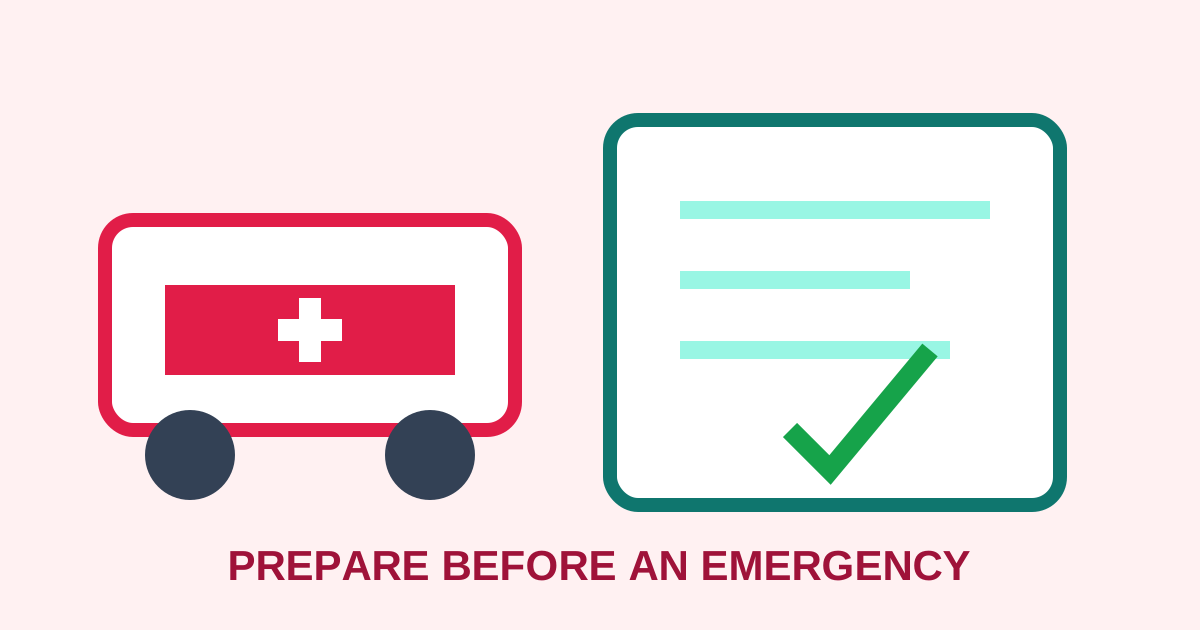
Prepare a compact emergency file and a trusted contact plan so identification, communication, payment, insurance, consent, records, and discharge questions can be handled under pressure.
- Call local emergency services or seek urgent care promptly when symptoms may be serious; paperwork should not delay emergency help.
- Carry identification, allergies, medicines, conditions, insurance contacts, and an emergency contact in an accessible format.
- Ask the hospital and insurer separately about deposits, direct billing, authorization, invoices, and claim documents.
- Before discharge or transfer, obtain a clear clinical plan, medicine instructions, warning signs, records, and follow-up route.
Emergencies compress many decisions into a short period: where to go, how to communicate, who can consent, how to pay, and which records must follow the patient. A small amount of preparation can reduce avoidable confusion.
This guide supports organization, not diagnosis or treatment. Call emergency services or seek qualified medical care promptly for serious symptoms. Follow the treating clinician’s advice.
Build an emergency information card
Keep your passport name and number, date of birth, blood type if reliably known, important conditions, allergies and reactions, current medicines and doses, insurer and policy number, and two contacts in English and Chinese where possible. Update it after any material change.
Do not store only in a locked phone. Carry a printed card and share an agreed copy with a trusted person. The pharmacy and medicine guide can help you maintain a precise medicine list.
Know the destination and communication plan
Save the commonly used ambulance number, 120, plus nearby emergency departments, your insurer’s assistance line, and an interpreter route. Record hospital names and addresses in Chinese for a driver or dispatcher.
In a potentially time-critical emergency, do not add dangerous delay merely to reach a preferred international department. Let qualified professionals assess the situation.
Separate clinical and financial questions
Ask the hospital what identification, registration, deposit, payment method, inpatient supplies, and companion arrangements are needed. Ask the insurer about network status, direct billing, emergency notification, preauthorization when practicable, exclusions, and claim evidence.
Keep itemized bills, payment records, medical certificates, clinical notes, test reports, prescriptions, and discharge documents. Use the medical insurance claims guide to organize them.
Manage admission, transfer, and discharge
Record the department, bed or ward, responsible team, working diagnosis, planned tests, medicines, allergies, restrictions, and contact person. Before a transfer, ask which records and images travel with the patient and whether the receiving facility has accepted the case.
Before leaving, use teach-back to confirm medicines, wound or device care, activity and diet, warning signs, pending results, follow-up appointment, and whom to contact. The hospital discharge guide covers the record pack in more detail.
Emergency and admission checklist
- 120, nearby hospitals, insurer assistance, and interpreter contacts are saved.
- Printed identity, allergy, medicine, condition, and contact card is current.
- Passport or permitted copy, phone charger, and payment options are accessible.
- A trusted person knows where key documents and medicines are kept.
- Hospital deposit, billing, and companion rules are clarified when possible.
- Insurer notification and authorization steps are documented.
- Results, images, prescriptions, invoices, and clinical notes are retained.
- Discharge medicines, warning signs, pending results, and follow-up are understood.
Official reference points
Hospital capabilities, payment processes, language services, and insurer rules vary. Verify local arrangements before an emergency and follow current instructions from medical professionals during one.
Frequently asked questions
Common questions
What number should I call for a medical emergency in China?
The commonly used ambulance number is 120. Availability, language support, and local procedures vary; save your city and insurer emergency contacts in advance.
Can a hospital require payment or a deposit?
Payment processes vary by hospital and situation. Ask about deposits and accepted methods, contact the insurer promptly, and do not delay seeking emergency help because of administrative uncertainty.
Should I use an international department or the nearest emergency department?
For a time-critical emergency, seek appropriate urgent care without delaying solely for language or comfort preferences. For non-critical situations, your doctor or insurer may help identify a suitable facility.
Can a friend act as my medical interpreter?
A friend may help, but complex or sensitive decisions can require a qualified interpreter. Confirm confidentiality and ensure the clinical team communicates directly with the patient or authorized decision-maker.