Working in China
Workplace First Aid Rooms in China: A Guide for Foreign Employees
Learn your workplace first-aid system in China, including trained contacts, supplies, incident reporting, emergency transport, privacy, and follow-up.
Rules and procedures can change. Check the linked official sources before acting on time-sensitive information.
Quick answer
What you need to know
A practical orientation checklist for finding workplace first-aid resources, communicating health information, escalating emergencies, and documenting an incident.
- Identify trained responders, first-aid locations, AEDs, emergency exits, and the site address before an incident.
- A workplace first-aid point is not a substitute for clinical assessment or emergency care.
- Share only necessary health information through the employer’s designated confidential process.
- After an incident, preserve the timeline, care given, referral, expenses, and required workplace report.
An office may have a stocked cabinet, trained first-aiders, an automated external defibrillator (AED), an occupational-health room, or only a written route to outside care. Learn the real system for your site and shift before you need it.
Map the response system
During onboarding, locate first-aid supplies, AEDs, emergency exits, assembly points, security, and the nearest trained responder. Save the building’s Chinese address, floor, gate, and access instructions. Ask how reception guides an ambulance or outside clinician into a controlled-access site.
Confirm coverage during night shifts, travel, remote work, warehouse or factory visits, and company events. The workplace evacuation guide helps connect first aid with the broader emergency plan.
Know the limits of onsite help
First aid is immediate support, not a diagnosis or a replacement for professional care. For breathing difficulty, severe bleeding, loss of consciousness, suspected stroke or heart attack, major trauma, or another serious condition, activate the site emergency plan and appropriate emergency services. China’s National Health Commission provides general health information through its official English website; local emergency response and hospital routes vary.
Do not take prescription medicine supplied by a colleague or use unfamiliar equipment without authorization and training. If you have a known condition, ask your clinician what workplace plan is appropriate.
Share essential information safely
Use the employer’s designated confidential channel for necessary allergy, medicine, condition, emergency-contact, or accommodation information. Ask who can access it and how responders retrieve it. Update the workplace emergency-contact plan after any change.
After an incident, record the time, location, symptoms, witnesses, first aid given, responder, referral, and transport. Keep bills, prescriptions, medical notes, and employer case numbers. For an injury connected with work, follow the workplace injury response guide and confirm reporting obligations with HR or a qualified adviser.
Workplace first-aid checklist
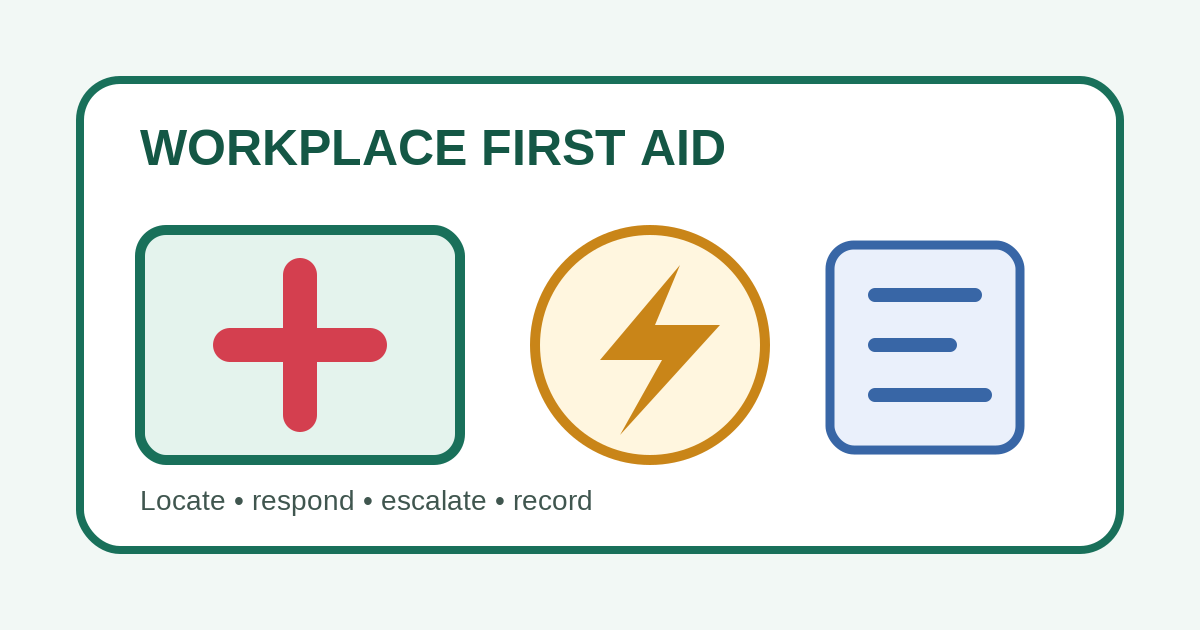
- Locate first-aid kits, AEDs, exits, security, and trained responders.
- Save the site’s full Chinese address and access route.
- Confirm coverage for your shift and work location.
- Know how the site calls and receives outside emergency help.
- Use the confidential process for essential health information.
- Never share prescription medicine or exceed your training.
- Record care, referral, transport, costs, and case numbers.
- Review the plan after drills, office moves, or health changes.
This guide is general workplace and health information, not medical or legal advice. Follow trained responders and clinicians, and confirm employer duties and reporting requirements with HR, the competent authorities, or a qualified professional.
Frequently asked questions
Common questions
Does every workplace in China have a staffed medical room?
No. Facilities and staffing differ by employer, industry, site, shift, and local requirements. Ask who is trained, what is available, and how outside emergency care is activated.
Can a colleague give me medicine from the office first-aid kit?
Do not assume so. Employer policy, staff role, allergies, interactions, and the nature of the problem matter. Ask an authorized health professional or seek clinical advice rather than sharing prescription medicine.
What information should I give HR about a medical condition?
Use the designated confidential process and provide what is necessary for emergency response or workplace support. Ask who can access the information, how it is stored, and when it must be updated.
What should happen after workplace first aid is given?
Follow the responder or clinician's advice, record the incident and care, keep receipts and medical documents, report through the required workplace channel, and arrange follow-up when recommended.