Working in China
Office Kitchens and Shared Fridges in China: A Guide for Foreign Employees
Use a shared office kitchen or refrigerator in China with practical guidance on labels, food safety, allergens, cleaning, deliveries, and team etiquette.
Rules and procedures can change. Check the linked official sources before acting on time-sensitive information.
Quick answer
What you need to know
A practical guide to learning local pantry rules, labeling food, protecting colleagues with allergies, handling deliveries, and preventing shared-fridge disputes.
- Learn the office's written and informal pantry rules before storing food or using shared appliances.
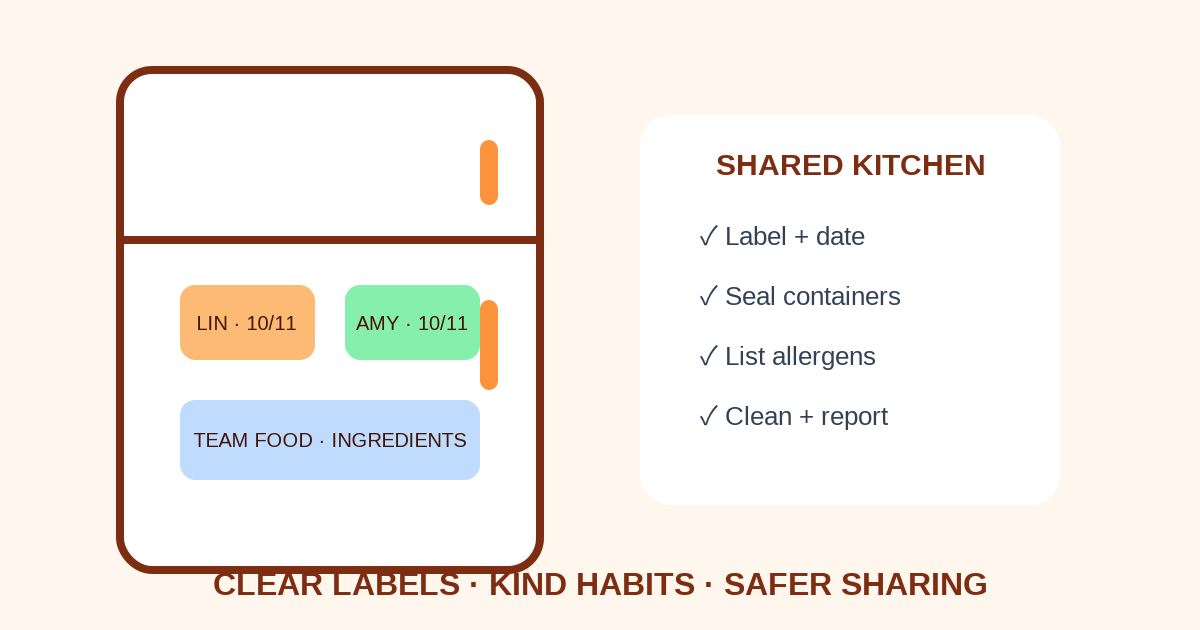
- Label personal food with your name and date, use sealed containers, and remove it promptly.
- Treat allergy, religious, vegetarian, and medical dietary needs respectfully without making assumptions.
- Report appliance faults, spills, pests, or unsafe temperatures through the office's facilities channel.
A workplace pantry can be a daily convenience and a daily source of misunderstandings. Labels, cleaning schedules, communal snacks, food deliveries, and strong-smelling meals may be handled differently by each employer. Learn the local system before treating the kitchen like your home kitchen.
Learn who manages the space
Ask the office administrator or facilities team about refrigerator shelves, clean-out days, shared tea and snacks, water dispensers, appliance rules, waste sorting, and visitor access. Check whether microwaves, kettles, coffee machines, and induction cookers have specific operating instructions. Do not bring a high-power appliance from home without approval.
The office canteen and meal-card guide covers employer meal systems; pantry food may follow different payment and ownership rules.
Store food clearly and safely
Use a clean, sealed container and label it with your name or team and the date. Keep raw food separate from ready-to-eat food, prevent leaks, and remove leftovers before the office clean-out deadline. Do not block vents or overfill the refrigerator. If food needs a controlled temperature for medical reasons, ask HR or facilities for a reliable arrangement instead of assuming a communal fridge is suitable.
China’s National Health Commission provides official health information at nhc.gov.cn. For symptoms of foodborne illness or a serious allergic reaction, seek medical help; the food allergy guide can help you prepare a communication card.
Respect dietary needs and shared-space norms
Do not taste, move, discard, or photograph another person’s food without permission. Ask before organizing a communal shelf. For team food, identify common allergens and ingredients when possible, keep serving utensils separate, and avoid presenting a dish as guaranteed allergen-free unless the preparation process supports that claim.
Strong odors and culturally familiar foods are subjective. If a problem occurs, focus on a neutral rule—sealed containers, ventilation, cleaning, and agreed storage times—rather than criticizing a colleague’s cuisine.
Handle faults and clean-outs properly
Report a warm refrigerator, damaged cable, water leak, pests, broken glass, or repeated circuit trip promptly. Do not attempt an electrical repair. Photograph your labelled items if a recurring dispute needs documentation, but follow workplace privacy rules and avoid capturing colleagues or confidential materials.
Before a holiday or business trip, clear your shelf and check the office closure plan. The public holidays and adjusted workdays guide helps with unusual working-week schedules.
Shared-kitchen checklist
- Ask about ownership, shelves, clean-out days, appliances, and waste sorting.
- Use sealed containers labelled with a name or team and date.
- Remove expired food and clean your spills promptly.
- Keep personal and communal food clearly separate.
- Ask before moving or discarding another person’s items.
- Identify ingredients and cross-contact limits for shared food.
- Report leaks, heat, pests, damaged cables, or appliance faults.
- Clear your items before holidays, travel, or office moves.
This is general workplace and food-safety guidance, not medical or employment advice. Follow employer policy and ask HR, facilities, your manager, or a doctor about individual workplace accommodations or health risks.
Frequently asked questions
Common questions
Can I take unlabelled food from an office refrigerator?
Do not assume unlabelled means shared. Ask the owner or office administrator and follow the stated pantry policy.
How should I label my lunch?
A name or team plus the storage date is usually useful. Follow any office clean-out labels or shelf system and avoid putting sensitive personal information on containers.
What should I do if I have a severe food allergy?
Tell the appropriate manager or HR contact, explain cross-contact risks, and agree on a workplace plan. Seek individualized advice from your doctor rather than relying on colleagues to assess medical risk.
Who cleans a spill in the shared fridge?
Clean your own spill promptly if it is safe to do so and notify facilities about contamination, broken glass, pests, leaks, or appliance faults.