Working in China
Workplace Org Charts and Internal Directories in China: A Guide for Foreign Employees
Navigate company org charts and internal directories in China while verifying roles, names, reporting lines, contact channels, privacy rules, and updates.
Rules and procedures can change. Check the linked official sources before acting on time-sensitive information.
Quick answer
What you need to know
A practical guide to understanding reporting lines, recording colleagues' preferred names and roles, finding service owners, and using internal contact data appropriately.
- Treat the current HR system or manager-confirmed structure as authoritative, not an old slide or chat list.
- Record preferred names, Chinese characters, pronunciation, role, team, location, and approved contact channel.
- Distinguish reporting authority, project responsibility, approval authority, and administrative support.
- Use internal contact data only for work purposes and follow employer privacy, export, and retention rules.
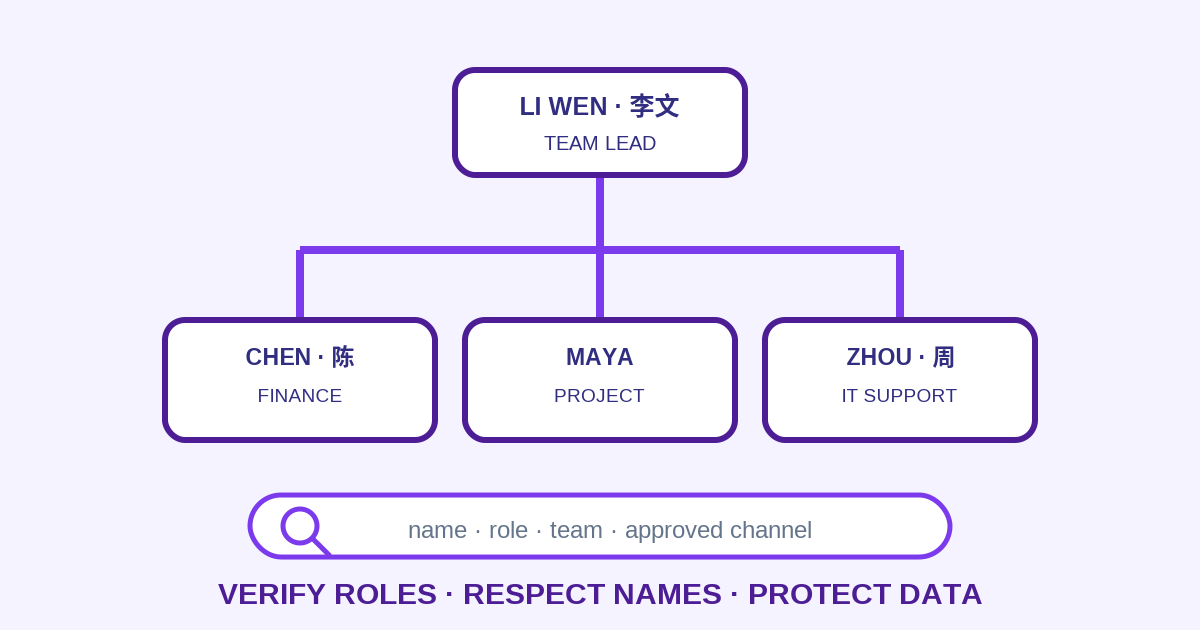
Titles and reporting lines are not always obvious in a new organization. A formal department chart, a project matrix, a group-chat member list, and the people who actually approve work may each show a different part of the company. A small verified directory helps without turning personal data into an uncontrolled contact list.
Find the authoritative source
Ask your manager or HR which system is current: an HR portal, intranet, enterprise messaging directory, departmental chart, or onboarding document. Note the “last updated” date. Treat screenshots and forwarded spreadsheets as references, not proof, when people have transferred, changed title, or left.
The workplace software access guide explains how to request the correct account and role instead of borrowing a colleague’s credentials.
Record names and roles accurately
For close collaborators, record the name they use at work, Chinese characters if supplied, pronunciation, title, team, location, time zone, approved contact channel, and scope. Ask politely rather than guessing family-name order, gender, seniority, or pronunciation. Use the person’s own email signature and profile as a starting point.
Separate four questions: Who is my formal manager? Who leads this project? Who approves this transaction? Who provides administrative or technical support? The answers may differ. Confirm unusual approvals in writing, especially for payments, hiring, contracts, data access, or external statements.
Build a task-based contact map
A useful personal map may list HR, payroll, IT service desk, facilities, security, travel, finance, legal/compliance, emergency contacts, and project owners. Link to the official directory entry rather than duplicating details where possible. Review it after reorganizations and role changes.
For meetings across teams, the shared calendars and meeting rooms guide helps distinguish organizer, required attendee, room owner, and decision-maker.
Protect internal information
Do not export the whole directory, upload it to an unapproved tool, or retain it after leaving unless policy authorizes that use. China’s Cyberspace Administration publishes official cybersecurity and personal-information material at cac.gov.cn. Your employer should interpret the applicable rules for its systems and workforce.
If a profile is wrong, send the correction through HR, IT, or the directory owner. For your own role change, align the directory, email signature, access rights, approvals, and handover with the internal role-change guide.
Org-chart and directory checklist
- Identify the current authoritative directory and its owner.
- Confirm formal manager, project lead, approver, and support contacts.
- Use each colleague’s preferred name and supplied Chinese characters.
- Record scope and location, not assumptions about authority.
- Verify high-impact approvals through official channels.
- Keep contact data in approved work systems.
- Report errors privately through HR, IT, or the directory owner.
- Review your map after transfers, reorganizations, and departures.
This is general workplace guidance, not legal, privacy, or employment advice. Follow employer policy and ask your manager, HR, IT, compliance team, or professional adviser to confirm authority and data-handling requirements.
Frequently asked questions
Common questions
Why does the org chart differ from the project team?
A person may have a formal manager, project lead, functional lead, and local administrative contact. Ask your manager which relationship applies to each decision.
Should I translate every colleague's Chinese name?
Use the person's stated preferred name and keep Chinese characters when helpful for accurate identification. Do not invent a translated name or nickname.
Can I copy the directory to my personal phone?
Only if employer policy permits it. Internal phone numbers, titles, locations, and reporting lines may be personal or confidential information.
Who should update an incorrect title or reporting line?
Use the employer's HR, IT, directory-owner, or manager process. Avoid broadly announcing a suspected error before it is verified.