Healthcare
Transferring Dental Records in China: A Guide for Foreign Patients
How to request, organize, translate, and securely transfer dental charts, X-rays, scans, treatment plans, and payment records between clinics in China or abroad.
Rules and procedures can change. Check the linked official sources before acting on time-sensitive information.
Quick answer
What you need to know
Request readable copies before changing clinics, document ongoing treatment and device details, confirm secure delivery, and let the receiving dentist decide what must be repeated.
- Ask what the clinic can provide, in which format, at what cost, and how long preparation takes.
- Collect charts, images, prescriptions, laboratory or device information, and current treatment plans.
- Verify patient identity and use a secure transfer method with the correct receiving clinic.
- A receiving dentist may still require a new examination or images for safe, current decisions.
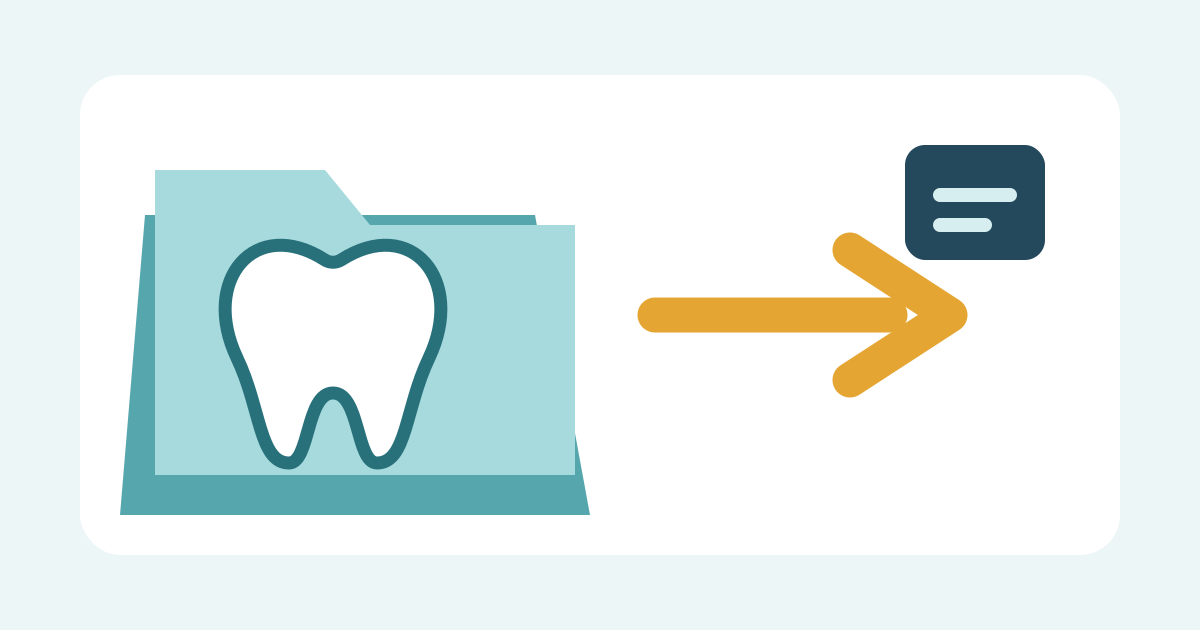
Changing cities, clinics, insurers, or countries is easier when dental information moves before treatment becomes urgent. Records help the next dentist understand history, but they do not replace a current professional examination.
Ask before the final appointment
Contact the clinic’s records, reception, or treating team and ask what can be copied, the identity and authorization documents required, the available languages and file formats, any fee, and the expected preparation time. If another person will collect material, ask what authorization is accepted.
Do this before leaving the city or losing access to a Chinese phone number. The medical-records discharge guide provides a broader organization method.
Build a useful dental packet
Depending on your care, request dental charting, treatment notes, X-rays, three-dimensional scans, photographs, prescriptions, allergies and alerts, pathology or laboratory information, implant brand and component details, crown or denture laboratory information, and the current plan with completed and pending stages.
For braces or aligners, include appliance type, attachments, wire or aligner stage, extraction history, retention plan, scan files where available, and upcoming milestones. See the orthodontic-care guide for continuity questions.
Keep invoices, official receipts, insurance claim records, warranties, and prepaid-balance information separate from the clinical file. Confirm refunds or unused packages directly with the clinic and insurer.
Check files before leaving
Open every file on a different device. Confirm that images belong to the correct patient, dates and tooth references are visible, archives are not corrupted, and the receiving clinic can read the format. Keep the original-language material; a translation should accompany rather than replace it.
Ask the new clinic what it actually needs translated. A concise treatment summary may be more useful than translating administrative pages, but clinical accuracy matters. Do not edit clinical content yourself.
Transfer securely
Confirm the exact recipient and approved delivery channel. Avoid sending sensitive health files to an unverified personal account or public group chat. If using removable media or a cloud link, protect access appropriately and send the password separately where the clinics support that method.
Keep your own backup and a transfer log showing what was sent, when, to whom, and whether receipt was confirmed. The receiving dentist may recommend new images or testing based on present clinical need; ask about benefits, alternatives, radiation exposure, and cost.
Dental transfer checklist
- Clinic copy process, fee, timing, and identity rules confirmed.
- Treatment notes and dental chart requested.
- X-rays, scans, and photographs opened successfully.
- Implant, prosthetic, orthodontic, or laboratory details included.
- Medicines, allergies, and current concerns summarized accurately.
- Originals retained alongside any translation.
- Receiving clinic and secure channel verified.
- Receipt confirmed and personal backup retained.
- New examination and repeat imaging discussed with a dentist.
Official reference point
Record access and retention procedures vary by provider and locality. This guide is organizational, not medical advice; confirm clinical decisions with a licensed dentist and privacy or record questions with the clinic and relevant authority.
Frequently asked questions
Common questions
Can I ask a dental clinic in China for copies of my records?
Ask the clinic about its current record-copy process, identity requirements, available formats, fees, and preparation time. The material available can vary by clinic and treatment type.
Which dental records are most useful when changing clinics?
Request treatment notes, dental charting, X-rays or scans, photographs, prescriptions, implant or prosthetic details, orthodontic appliance information, laboratory records, consent material, and the current treatment plan where available.
Will a new dentist accept an old X-ray?
The receiving dentist should decide whether an existing image is readable, relevant, and current enough. Do not request repeat radiation solely for paperwork; discuss the clinical need with the dentist.
Should I translate every record?
Ask the receiving clinic which sections need translation before paying for it. Keep the original together with any translation, and use a qualified translator when accuracy is important.