Family & Education
School Bullying and Safeguarding in China: A Guide for Foreign Families
A practical guide for foreign parents to document concerns, support a child, contact a school, request a safety plan, and escalate urgent safeguarding issues in China.
Rules and procedures can change. Check the linked official sources before acting on time-sensitive information.
Quick answer
What you need to know
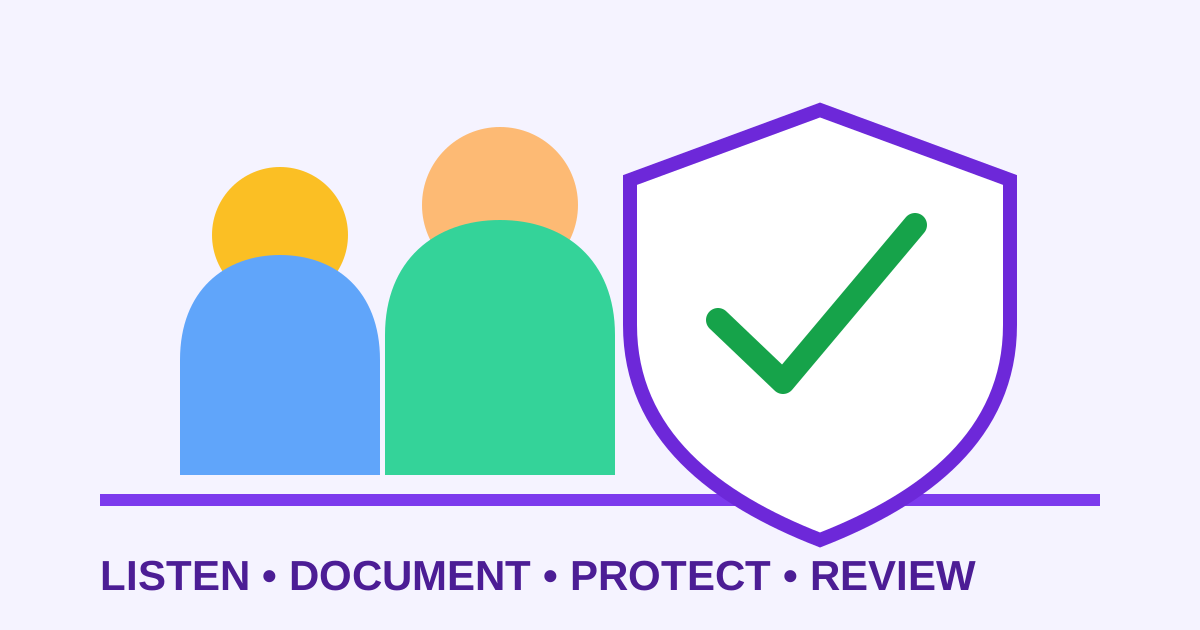
Listen without blame, preserve a factual record, contact the school's designated staff, and request a written safety and follow-up plan centered on the child's immediate wellbeing.
- Immediate danger, injury, threats, or suspected abuse require prompt help from the appropriate emergency, medical, school, or public authority.
- Record dates, places, witnesses, messages, injuries, and the child's own words without conducting an aggressive investigation.
- Ask the school for specific interim protections, a named contact, review dates, and written follow-up.
- Protect the child's privacy and wellbeing; avoid public accusations or forced confrontation.
When a child reports bullying or another safety concern, families need two tracks at once: calm support at home and a documented response with the school. The aim is not to win an argument in a parent chat; it is to reduce immediate risk, understand what happened, and establish accountable follow-up.
Start with safety and listening
Listen without blame and thank the child for speaking. Ask open, limited questions: what happened, where, when, who was present, and what would help them feel safe tomorrow. Avoid repeatedly interviewing the child or promising an outcome you cannot control.
If there is immediate danger, significant injury, a credible threat, suspected abuse, or possible criminal conduct, contact the appropriate emergency, medical, school, or public authority promptly. Obtain clinical care when needed; the pediatric care guide explains how to prepare for an appointment.
Build a factual chronology
Record the child’s words as accurately as possible, distinguishing direct observations from assumptions. Save messages, screenshots, school notices, photographs of injury or damaged belongings, names of potential witnesses, absence records, and previous reports. Do not circulate children’s identities or sensitive material in public groups.
Note changes in sleep, appetite, attendance, mood, or school performance without diagnosing their cause. If the child needs mental-health support, ask a qualified clinician or counselor for age-appropriate care.
Use the school’s route
Find the school’s safeguarding, anti-bullying, discipline, and complaints policies. Contact the designated person with a concise chronology and request acknowledgment. If language is a barrier, ask for interpretation or a bilingual meeting summary.
At the meeting, ask what can be confirmed, what privacy limits apply, who will coordinate, and when the next review occurs. The school communication guide offers a structure for written follow-up.
Request practical interim protection
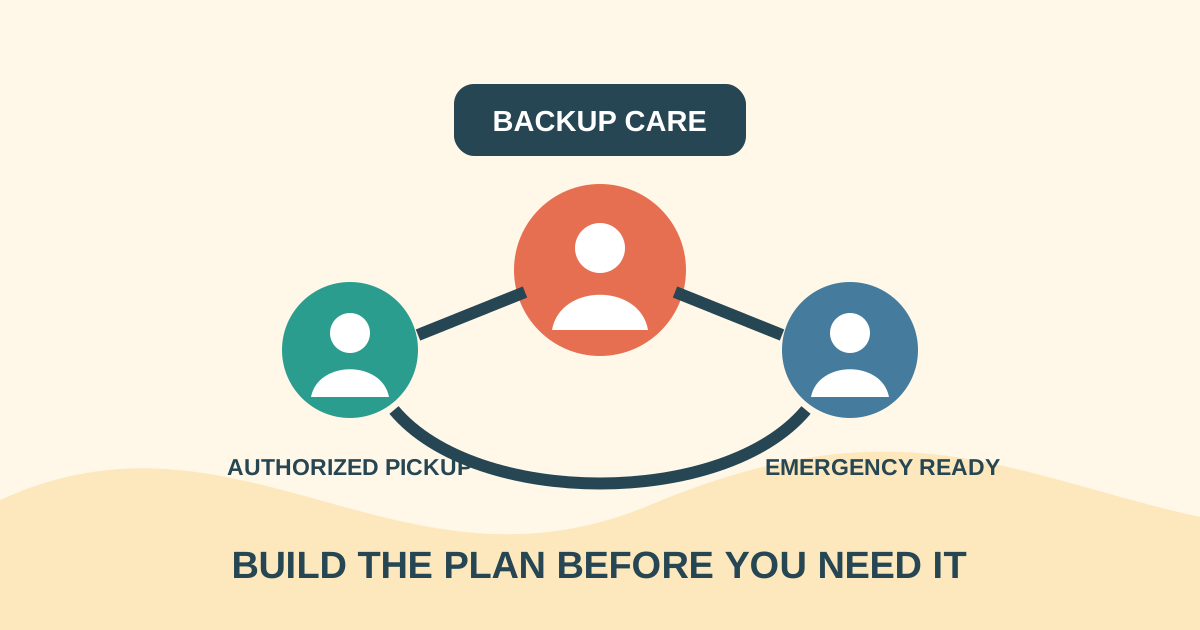
A child-specific plan might identify trusted adults, safe spaces, supervised transitions, arrival and dismissal arrangements, bus or lunch supervision, seating changes, a discreet reporting method, counseling, and a procedure for missed schoolwork. Ask how retaliation and online spillover will be monitored.
Avoid pushing children into a face-to-face meeting or apology before staff have assessed safety and willingness. Restorative steps, where suitable, should be supervised and should not replace protection or accountability.
Review and escalate
After each meeting, send a neutral summary of agreed actions, owners, and dates. Review whether incidents stop and whether the child feels safer—not merely whether a meeting occurred. If the response is delayed or ineffective, follow the school’s formal escalation route and contact its operator or the competent local education authority as appropriate.
School type, city, and the nature of the incident affect the available processes. Obtain qualified local advice for serious safeguarding, legal, or medical concerns rather than relying on general online guidance.
Family safeguarding checklist
- Immediate safety and medical needs assessed.
- Child heard calmly without blame or repeated questioning.
- Factual chronology and original evidence stored securely.
- School policy and designated contact identified.
- Written acknowledgment and meeting requested.
- Interim safety measures assigned to named staff.
- Language, counseling, transport, and learning support considered.
- Review date and escalation route recorded.
- Child’s privacy protected in parent and social-media groups.
- Urgent concerns referred to the appropriate authority.
Official reference points
This guide is general information, not legal, clinical, or safeguarding advice for a specific child. Follow the school’s current policy and seek prompt help from qualified professionals and competent authorities when safety, abuse, injury, or criminal conduct may be involved.
Frequently asked questions
Common questions
Who should a parent contact first about bullying at school?
Use the school's published safeguarding or complaint route, often the class teacher, counselor, year lead, safeguarding lead, or principal. For immediate danger, injury, or suspected crime, seek urgent help from the appropriate authority.
What should I document?
Keep a factual chronology with dates, locations, the child's words, witnesses, screenshots, damaged property, injuries, school reports, and actions taken. Store sensitive information securely.
Should parents contact the other child directly?
Usually begin with the school and avoid an unsupervised confrontation that could increase risk or compromise privacy. Ask the school how communication and restorative steps will be managed safely.
What should a school safety plan include?
It can identify safe adults and spaces, arrival and dismissal arrangements, supervision, class or transport adjustments, reporting methods, support services, and dated review points tailored to the child.