Family & Education
Backup Childcare in China: An Emergency Plan for Foreign Families
Build a backup childcare plan in China with authorized caregivers, school pickup rules, medical details, household access, trial runs, and emergency contacts.
Rules and procedures can change. Check the linked official sources before acting on time-sensitive information.
Quick answer
What you need to know
Create a small, verified caregiver network, document permissions and health details, test school and home access, and review the plan whenever family circumstances change.
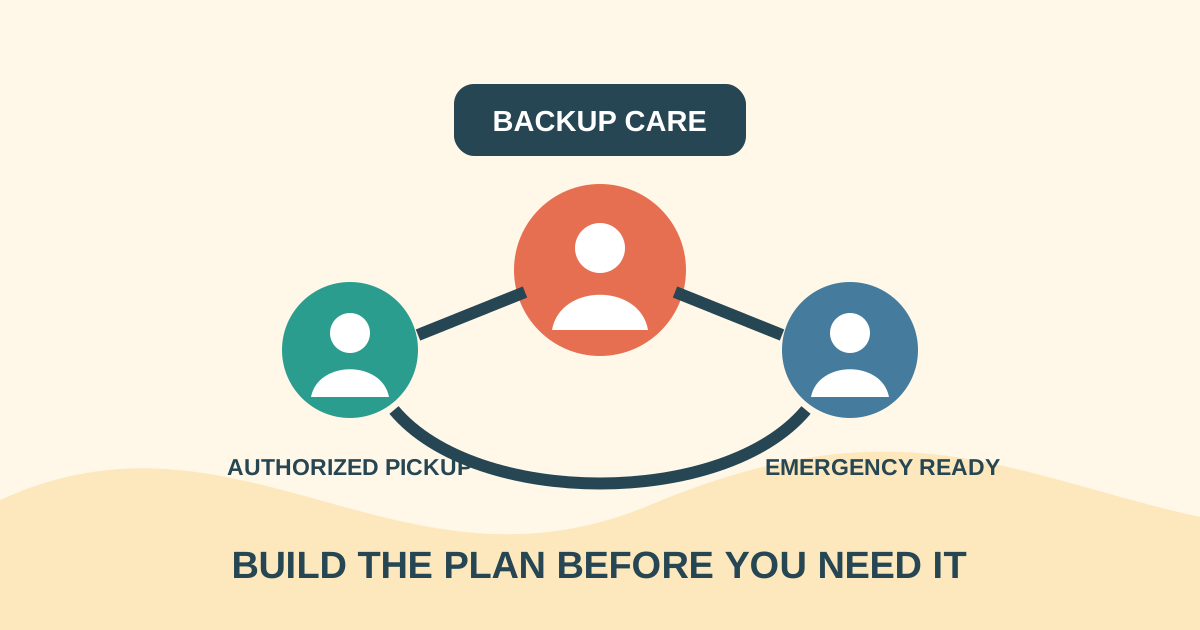
- Arrange at least two backup caregivers before an illness, travel disruption, overtime request, or school closure creates urgency.
- Confirm school pickup authorization and identity requirements directly with the school; a parent message may not be sufficient.
- Give caregivers only the access and medical information needed for the assignment, with clear emergency escalation rules.
- Run a short paid trial and update contacts, allergies, medicines, keys, and permissions at least each school term.
Backup childcare works best as a tested system, not a contact found during a crisis. A school closure, sick parent, delayed train, business trip, or unexpected overtime can expose gaps that are invisible during a normal week.
Build a small caregiver network
Identify at least two realistic options: a trusted friend or relative, a known parent in the school community, a regular household caregiver, or a vetted agency provider. Check availability by time of day, travel distance, languages, experience with the child’s age, first-aid confidence, and comfort with pets or building access.
For paid care, agree in writing on hours, duties, rate, transport, cancellations, food, screen time, photos, visitors, and emergency spending. Verify identity and references with consent. If an agency is involved, understand who contracts with, supervises, insures, and pays the worker. Employment and service arrangements can carry local obligations; confirm the setup with the provider and a qualified adviser rather than relying on informal custom.
Make pickup and access work
Ask the school or nursery exactly how an alternate adult is authorized. Submit the required name, phone number, identification, photo, relationship, and validity dates. Learn the procedure for a same-day change and whether the school needs both parents’ approval. See the school pickup authorization guide for a fuller checklist.
Test residential gate, elevator, smart-lock, and key access before the first real assignment. Use a temporary code where possible and remove it afterward. Never share payment PINs or personal account passwords.
Prepare one concise care sheet
Include:
- parents’ names, phones, workplaces, and return estimate;
- two additional emergency contacts;
- child’s full name, date of birth, languages, and recent photo;
- allergies, conditions, medicines, and action plans;
- preferred hospital, clinician, insurance, and payment route;
- school, teacher, transport, and authorized pickup details;
- meals, sleep, homework, comfort items, and house rules;
- building address in Chinese and access instructions;
- when to call a parent, doctor, building security, 120, or 110.
Do not ask a caregiver to improvise medicine dosing. Keep medicines in original packaging with clinician-approved instructions. The school medication plan and calling 120 guide help structure health and emergency information. China’s National Health Commission provides national health information, but a child’s doctor should confirm the individual care plan.
Trial, review, and close the loop
Run a short paid trial while a parent remains nearby. Practice pickup, the route home, a meal, bedtime controls, and one hypothetical emergency. Ask the child and caregiver separately what felt unclear.
Termly review checklist
- Reconfirm each caregiver’s availability and contact details.
- Renew school authorization and building access.
- Replace expired medicine and update clinician instructions.
- Check insurance, hospital, and payment information.
- Update routines, allergies, languages, and comfort needs.
- Remove former caregivers’ codes, keys, photos, and data.
- Store a paper copy in a known, secure place.
A backup plan does not replace professional medical or safeguarding advice. Discuss health needs with the child’s doctor and school, and call the appropriate emergency service when immediate safety is at risk.
Frequently asked questions
Common questions
Who can be a backup caregiver in China?
A trusted adult who is available, properly identified, accepted by the school or building where relevant, and capable of following the child's routine and emergency plan. Families should verify any agency or paid provider before engagement.
Can a caregiver collect my child from school?
Only under the school's current rules. Submit the caregiver's details and identification in advance, confirm how same-day changes work, and do not assume a chat message replaces formal authorization.
Should a caregiver hold my child's passport?
Usually a copy or limited emergency information may be enough for routine care. Store originals securely and ask the school, clinic, insurer, or relevant authority what is actually required for a specific situation.
What medical information should I share?
Provide current allergies, conditions, medicines, clinician and insurance contacts, preferred hospital, and consent or payment instructions appropriate to the task. Ask the child's doctor how to document any treatment plan.