Family & Education
School Communication in China: Parent Chats, Calendars, Documents, Fees, and Teacher Meetings
A practical English guide for foreign families managing school communication in China, including parent chats, teacher messages, calendars, documents, fees, homework, transport, health notices, and meetings.
Rules and procedures can change. Check the linked official sources before acting on time-sensitive information.
Quick answer
What you need to know
Foreign families in China can reduce school friction by tracking parent chat groups, teacher messages, calendars, fees, documents, homework, transport, health notices, and meeting records. The key habit is to convert fast chat messages into a clear family calendar and document folder.
- Set up school chat groups, emergency contacts, pickup permissions, and translation support early.
- Track school calendar, adjusted workdays, holidays, events, exams, and fee deadlines.
- Keep passport, residence, vaccination, medical, insurance, and prior school records organized.
- Confirm transport, lunch, uniforms, homework, absence rules, and meeting schedules.
- Use written summaries after important teacher conversations.
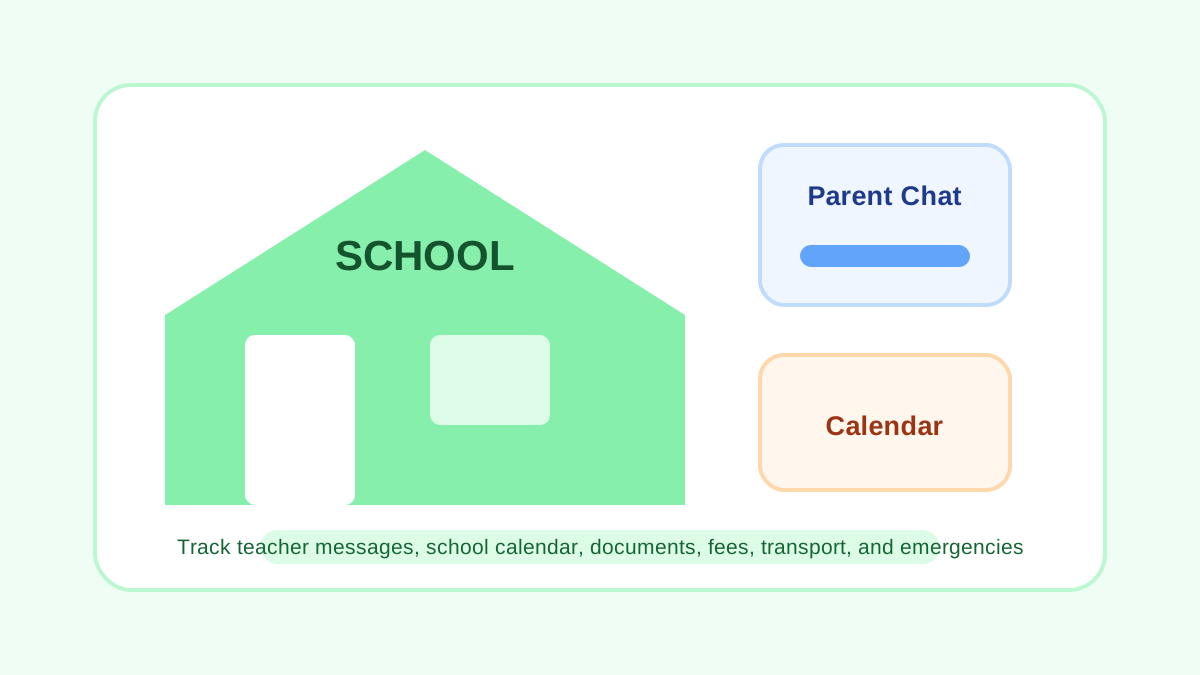
For foreign families in China, school communication can move quickly. A parent chat message, teacher note, or calendar change may affect pickup, homework, uniforms, health forms, fees, or holiday planning.
The practical solution is to turn school messages into three systems: a family calendar, a document folder, and a clear contact list.
1. Join the right communication channels
Ask the school which channels matter: parent chat group, teacher account, school app, email, printed notices, or class representative messages. Confirm who should receive emergency calls.
For family relocation planning, read Bringing Your Family to China.
2. Convert messages into calendar items
School notices may include holidays, adjusted workdays, parent meetings, exams, field trips, photo days, fee deadlines, uniform days, and health checks. Add them to a calendar immediately.
For holiday planning, use Public Holidays and Adjusted Workdays in China.
3. Keep a child document folder
Save passport, residence records, vaccination or medical notes, insurance, previous school reports, emergency contacts, pickup permissions, and payment records.
4. Clarify daily routines
Ask about arrival time, pickup process, lunch, snacks, nap items, uniforms, homework, absence reporting, school bus rules, and medicine procedures.
5. Summarize important meetings
After a teacher meeting, write a short summary: what was discussed, agreed action, timeline, and next review date. Written summaries reduce misunderstanding across languages.
Practical checklist
- I joined official school communication channels.
- I moved key notices into a family calendar.
- I saved school, health, insurance, and identity documents.
- I confirmed pickup, transport, meals, homework, and absence rules.
- I keep written summaries after important teacher meetings.
Official sources
- State Council: A Guide to Working and Living in China as Business Expatriates
- Ministry of Commerce: Guide for Business Expatriates
Frequently asked questions
Common questions
How do schools in China communicate with parents?
Many schools use app messages, parent chat groups, teacher notices, printed forms, and school calendars.
Should foreign parents join parent chat groups?
Yes, if the school uses them. They often carry urgent notices, homework reminders, event details, and schedule changes.
What documents should families keep ready?
Keep passport copies, residence records, health and vaccination records, insurance, prior school reports, emergency contacts, and pickup authorization.
How can parents avoid missing deadlines?
Move chat notices into a family calendar and set reminders for fees, forms, holidays, events, and meetings.
What if I do not read Chinese well?
Use translation tools, ask the school for English support when available, and confirm important items in writing.