Family & Education
Pediatric Care in China: A Practical Guide for Foreign Families
Plan routine and urgent pediatric care in China with a child health file, hospital shortlist, payment plan, medicine records, and language support.
Rules and procedures can change. Check the linked official sources before acting on time-sensitive information.
Quick answer
What you need to know
Build a portable child health file and learn where to seek routine, after-hours, and emergency pediatric care before a child becomes ill.
- Identify suitable routine, after-hours, and emergency facilities near home and school.
- Keep bilingual medication, allergy, vaccination, diagnosis, and insurance records.
- Ask clinicians to explain dosing, warning signs, follow-up, and test results clearly.
- Medical decisions belong with qualified clinicians; seek urgent care when symptoms are severe or rapidly worsening.
The best time to learn China’s pediatric care options is before a fever, injury, or allergic reaction. Foreign families can reduce stress by preparing records, routes, payment options, and clear questions.
This guide is educational and does not diagnose or treat illness. For symptoms, medicines, tests, or emergencies, contact a qualified clinician or the appropriate emergency service.
Map three levels of care
Identify a nearby facility for routine visits, an after-hours option, and a hospital appropriate for emergencies or specialist care. Ask about pediatric hours, appointment systems, language support, deposits, direct billing, and what identity document the child needs.
Save each address in Chinese and test the route from home and school. Our doctor visit guide explains registration and payment basics.
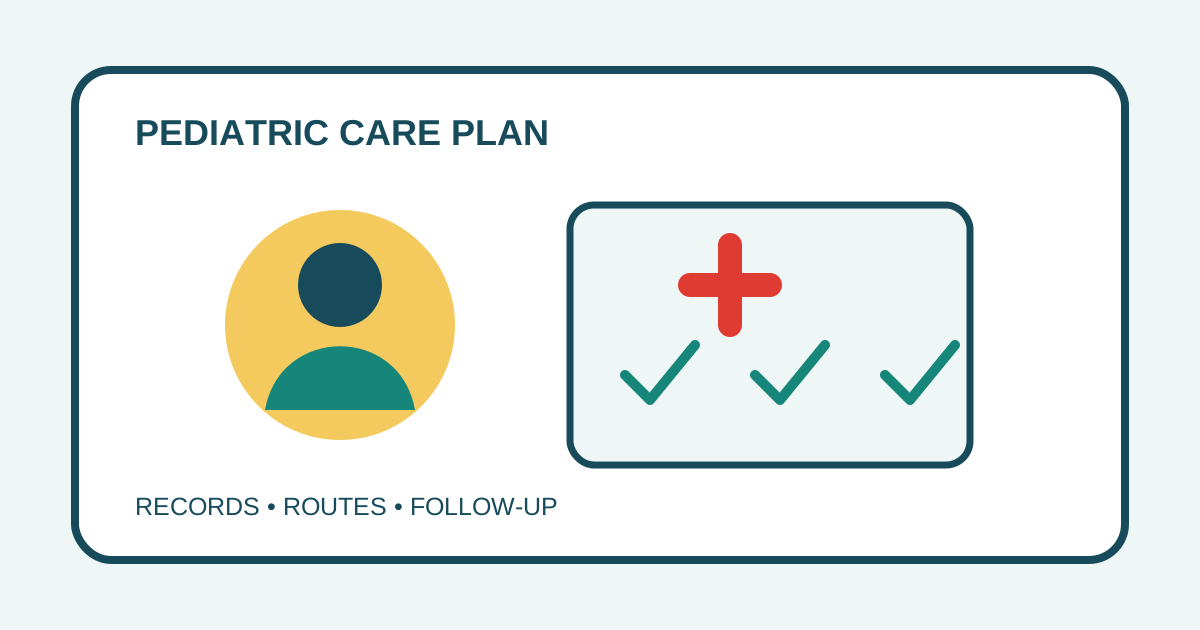
Build a portable child health file
Keep secure paper and digital copies of:
- passport and relevant residence or insurance details;
- diagnoses, operations, and hospitalizations;
- allergies and previous serious reactions;
- current medicines with product, concentration, dose, and schedule;
- vaccination records with dates and product details;
- recent test results and imaging reports; and
- parent, school, insurer, and emergency contacts.
Use consistent names and dates of birth across hospital profiles. After a passport change, ask providers to update rather than silently create duplicate records.
Make the consultation precise
Write the start time, temperature readings, symptoms, food and fluid intake, medicines already given, and relevant exposures. Bring photos only when clinically useful and respect the child’s privacy.
Before leaving, confirm the working diagnosis, test purpose, medicine instructions, warning signs, follow-up date, and how results will arrive. Ask for clarification if units or concentrations are unclear.
Handle medicines carefully
Product names and concentrations may differ from those used in another country. Never infer a child’s dose from packaging language you cannot verify. Show the clinician or pharmacist the exact product and ask them to write down the dose and interval.
For ongoing medicines, use our prescription refill guide. For vaccination planning, see vaccinations in China and confirm the child’s schedule with a pediatric clinician.
Plan payment and claims
Ask your insurer about network facilities, preauthorization, direct billing, deductibles, and claim deadlines. Keep the registration slip, itemized invoice, payment receipt, prescription, clinician note, and test reports. The medical insurance claims guide has a complete records checklist.
Pediatric care readiness checklist
- We mapped routine, after-hours, and emergency facilities.
- The child’s address and emergency contacts are saved in Chinese.
- Medical, allergy, medicine, and vaccination records are current.
- School or caregivers know how to reach the parents.
- We have appropriate payment and insurance backups.
- We record the exact medicine product and concentration.
- We know which records an insurer needs.
- We seek professional care for severe or worsening symptoms.
Official reference points
Local services and individual medical needs differ. Confirm care pathways with the treating facility, insurer, school, and qualified health professionals.
Frequently asked questions
Common questions
Can foreign children use public hospitals in China?
Many facilities see foreign patients, but registration, language, payment, and department arrangements vary. Contact the hospital and insurer in advance when possible.
What records should parents bring?
Bring the child's identity documents, medication and allergy list, vaccination record, recent reports, insurance details, and a concise symptom timeline.
Should I translate my child's medical records?
A short bilingual summary of diagnoses, allergies, medicines, doses, and emergency contacts can reduce confusion, while original records should also be retained.
How should parents choose medicine doses?
Do not guess from an adult product or another child's prescription. Confirm the exact product, concentration, dose, interval, and duration with a qualified clinician or pharmacist.