Healthcare
Managing Food Allergies While Living and Eating in China
A practical food allergy guide for foreigners in China covering translation cards, restaurants, packaged food, cross-contact, schools, emergency planning, and medical support.
Rules and procedures can change. Check the linked official sources before acting on time-sensitive information.
Quick answer
What you need to know
Prepare a precise Chinese allergy card, ask about ingredients and cross-contact every time, carry clinician-recommended medication, and keep an emergency plan that family, colleagues, schools, and restaurants can understand.
- A dish that looks familiar may use different sauces, stocks, oils, garnishes, or shared equipment.
- Translate the allergen, likely derivatives, cross-contact risk, symptoms, and required response—not only 'I cannot eat this.'
- Restaurant reassurance is not a guarantee; choose a safer alternative when staff cannot verify ingredients or preparation.
- Build your medication and emergency plan with a qualified clinician before you need it.
Living in China with a food allergy is manageable, but it requires more preparation than memorizing one ingredient name. Sauces, stocks, cooking oils, seasoning powders, garnishes, and shared equipment can create risks that are not visible in the final dish.
This article provides general planning information, not medical advice. Work with a qualified clinician on diagnosis, medicine, and emergency response. Seek urgent medical help for a serious or rapidly worsening reaction.
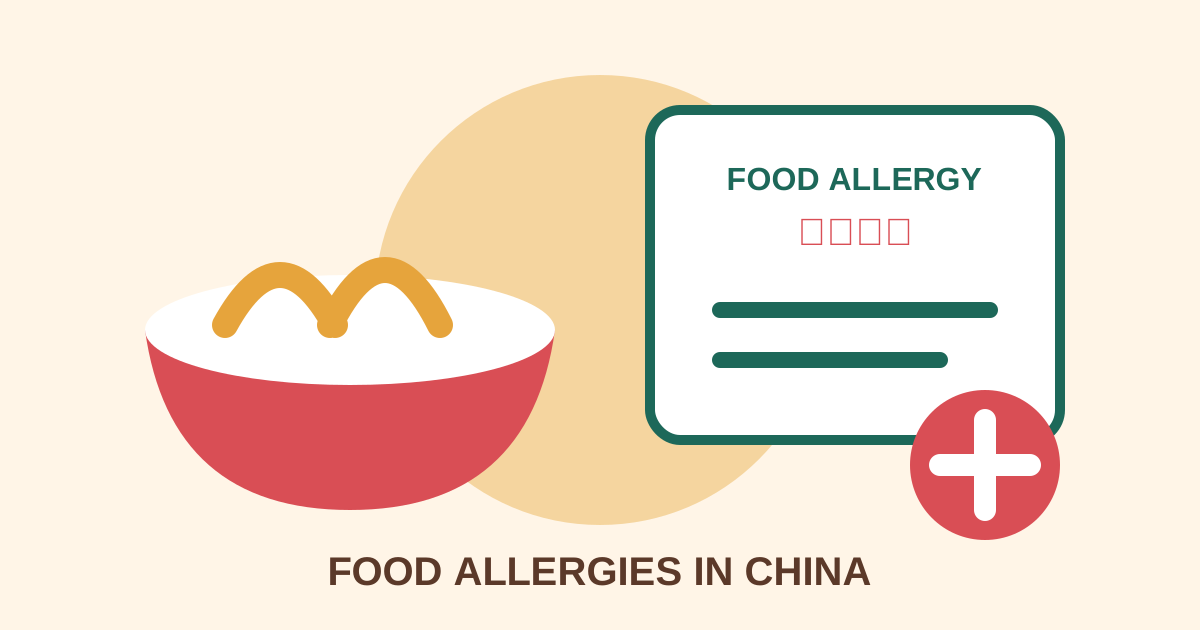
Create a precise bilingual allergy card
Ask a fluent Chinese speaker—and ideally a clinician familiar with your allergy—to review your card. Include:
- the exact allergen in English and Chinese;
- common ingredients and derivatives that may contain it;
- a clear statement about cross-contact;
- examples of sauces, stocks, oils, or garnishes to check;
- your typical serious symptoms;
- what staff should do if exposure occurs; and
- an emergency contact.
Avoid relying only on machine translation or a generic phrase such as “I do not like peanuts.” Preference, intolerance, and a potentially severe allergy communicate different levels of risk.
Save the card on your phone, carry a printed copy, and keep an editable version for updates. If traveling, include the local emergency number and your hotel or destination address.
Ask process questions at restaurants
Show the card before ordering, ideally when the restaurant is not at its busiest. Ask staff to confirm with the kitchen rather than guessing from the menu.
Useful questions include:
- What sauces, stock, paste, seasoning, and garnish are used?
- Is the same oil used for other foods?
- Are the same wok, grill, knife, board, ladle, or fryer shared?
- Is the dish premade or supplied by another company?
- Can a simple dish be prepared with clean equipment and no sauce?
If staff cannot verify the ingredients or seem uncertain about cross-contact, choose another dish or restaurant. A confident tone is not a substitute for a known preparation process. The general restaurant guide explains ordering, payment, and menu tools.
Learn the hidden ingredient patterns
Risk depends on your specific allergy, but ingredients may appear in unexpected places: nut or sesame pastes in sauces, shellfish in stock or seasoning, dairy in bakery products and drinks, egg in noodles or coatings, wheat in soy-based seasonings, or peanut oil in cooking.
Regional recipes and restaurant practices vary. Do not assume that a familiar dish has one standard formula. Buffets, hotpot, barbecue, shared dishes, bakeries, and street-food stalls can make cross-contact especially difficult to assess.
Read packaged-food labels every time
Check the ingredient list, allergen statements, manufacturer, production information, and any imported label. Do not rely on the package color or a product you previously bought; formulations and factories can change.
Photograph unfamiliar labels and ask a qualified translator, manufacturer, dietitian, pharmacist, or clinician for help when the risk is unclear. Keep the original package if you need medical assessment after a suspected exposure.
For regular shopping routines, our grocery guide suggests ways to compare sellers and maintain a stable household list.
Build an emergency plan with a clinician
Ask your clinician to provide a written plan covering symptoms, first-line medicine, when to seek emergency help, and what companions should do. Carry medicines exactly as prescribed and check expiry dates and storage conditions.
Save:
- China’s emergency medical number, 120;
- a nearby hospital capable of urgent assessment;
- your insurer’s assistance number;
- your address in Chinese;
- a concise Chinese medical summary; and
- trusted local contacts.
Do not delay urgent help while searching for translation or insurance approval. Our emergency contacts guide helps organize the wider plan.
Coordinate work, school, and home
Tell trusted colleagues, caregivers, teachers, or school health staff what the allergy is, where medicine is kept, and how to use the written plan. For children, agree on snacks, birthday food, cafeteria procedures, field trips, transport, and who is authorized to administer medicine.
At home, label safe foods, use separate tools or storage where needed, and teach household members to check ingredients before substitutions. If using a cleaner or nanny, demonstrate the routine with a bilingual checklist.
Food allergy checklist
- A clinician confirmed my allergy and emergency plan.
- My bilingual card names allergens, derivatives, and cross-contact.
- A fluent reviewer checked the wording.
- Medicines are accessible, in date, and stored correctly.
- I ask about sauces, stocks, oils, garnish, and equipment.
- I do not eat when staff cannot verify preparation.
- I reread packaged-food labels at every purchase.
- Family, colleagues, or school staff know the plan.
- My address, hospital, insurer, and contacts are saved in Chinese.
- Travel companions know where the card and medicine are.
Official sources
- National Health Commission of China
- World Health Organization: Food safety
- Codex Alimentarius: Food labelling
Medical needs and food-production practices vary. Confirm your personal safety plan with a qualified clinician and use direct, current information from each food provider.
Frequently asked questions
Common questions
Can I rely on a restaurant saying a dish has no allergen?
Treat the answer as one part of your risk assessment. Ask about sauces, stock, oil, seasoning, garnish, shared utensils, and preparation surfaces, and do not eat when the process cannot be verified.
Should I use a Chinese food allergy card?
Yes. Have a fluent speaker and ideally a clinician review precise wording for the allergen, derivatives, cross-contact, symptoms, and emergency response.
Are packaged foods in China safe for someone with allergies?
Read the current label every time and seek qualified advice about unfamiliar wording. Recipes and production lines can change, and imported stickers may not answer every cross-contact question.
Where should I keep emergency medication?
Follow your clinician's instructions for access, temperature, expiry, and use. Tell trusted people where it is and how to follow your emergency plan.