Family & Education
Build a Family Emergency Contact File in China: A Foreign Resident's Guide
A practical system for foreign families in China to organize emergency contacts, identity details, medical notes, school contacts, and access instructions.
Rules and procedures can change. Check the linked official sources before acting on time-sensitive information.
Quick answer
What you need to know
Create a bilingual, privacy-conscious emergency file that helps family, schools, employers, doctors, and trusted contacts reach the right people quickly.
- Keep a short carry card and a fuller protected household file.
- Write addresses, phone numbers, and key instructions in Chinese and English.
- Record only necessary medical information and have clinicians confirm clinical details.
- Review the file after any move, passport change, school change, or new phone number.
An emergency contact list is useful only if it is current, understandable, and available when the main phone is locked or unavailable. Foreign families in China benefit from a small bilingual card for immediate use and a fuller, securely stored household file.
Create two layers
The carry layer should be short: name, preferred language, one or two contacts, and a home, school, or employer address in Chinese. Add only genuinely essential medical alerts that a clinician has confirmed.
The protected file can contain passport and residence-document references, insurance assistance numbers, school and employer contacts, treating facilities, medication list, allergies, household access instructions, pet care, and consular details. Copies are backups, not automatic substitutes for originals.
Make every contact usable
For each person, record name, relationship, Chinese mobile number, messaging handle if relevant, language, location, and the decisions or tasks they are expected to handle. Ask permission before listing someone and test that they can recognize the family member’s full legal name.
Save your address in Chinese with building, unit, gate, compound, district, and a nearby landmark. The emergency contacts guide covers national service numbers and location preparation.
Add medical information carefully
Record allergies, significant conditions, medicines, doses, treating clinician, insurer, and preferred hospital only after checking the information. Do not use translation software alone to rewrite clinical instructions. Ask a doctor or pharmacist to confirm essential bilingual wording.
For urgent symptoms, contact appropriate emergency services rather than searching the file for a perfect provider. The ambulance 120 guide explains call preparation.
Coordinate children and dependents
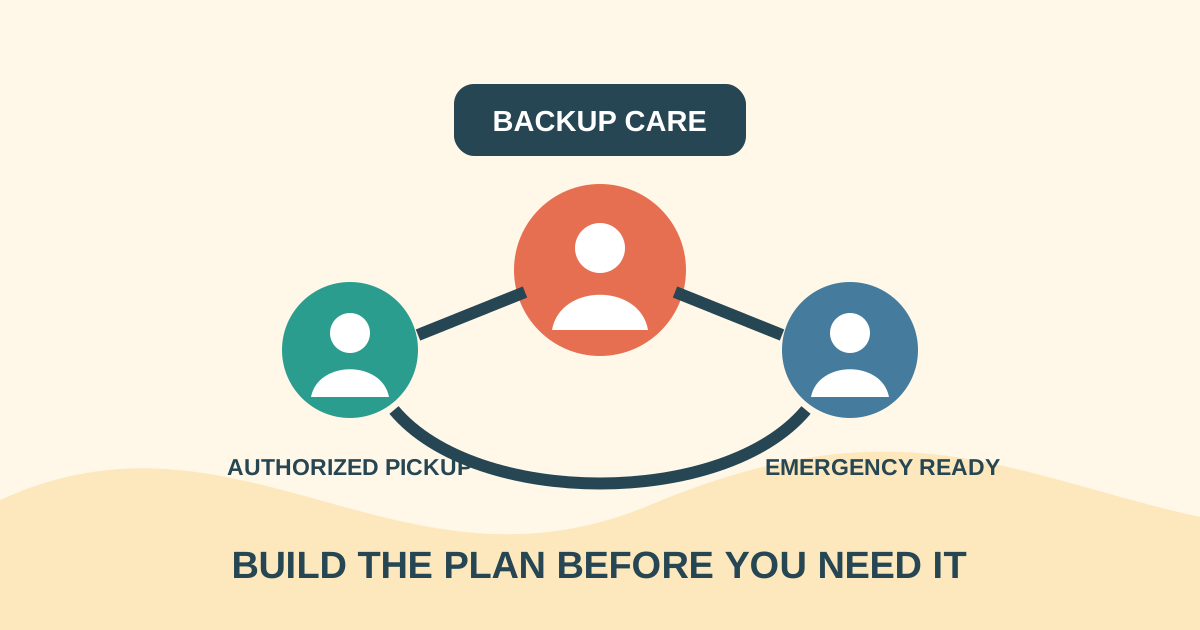
Match the household plan with school pickup permissions, caregiver contacts, daily transport, and any medication procedure. Schools control their own authorization and safeguarding processes, so submit changes through the official channel and confirm receipt.
Adults supporting an older parent or dependent family member should document communication needs, mobility support, usual routine, and the location of necessary equipment without distributing excess sensitive information.
Secure and review the file
Keep one protected digital copy and one sealed physical copy in an agreed place. Use device encryption or a reputable password-protected system, limit access, and avoid placing full passport data or medical history on an exposed card.
Family emergency-file checklist
- Carry card is short, bilingual, and current.
- Home, work, and school addresses are saved in Chinese.
- Trusted contacts have agreed to their roles.
- Medical details were checked by a clinician where appropriate.
- Insurance and consular assistance details are recorded.
- School, caregiver, dependent, and pet plans align.
- Digital and physical copies are protected.
- A calendar reminder prompts regular review.
China’s National Health Commission and your local government publish official public-health information. Operational procedures vary, so confirm emergency, school, employer, insurance, and medical arrangements directly.
Frequently asked questions
Common questions
What belongs on an emergency contact card?
Usually your name, preferred language, one or two trusted contacts, home or relevant address in Chinese, and essential medical alerts confirmed by a clinician. Keep it brief and protect unnecessary personal data.
Should I store passport copies in the file?
Copies can help identify records, but they are sensitive. Use secure storage, restrict sharing, and do not assume a copy replaces an original document when authorities or providers require one.
Who should receive the family plan?
Share only the relevant portion with trusted adults, caregivers, schools, or employers. Each recipient should know their role and how to reach the next contact.
How often should the file be updated?
Review it at least periodically and immediately after changes to phone numbers, address, passport, residence status, medication, school, employer, caregiver, or insurance.