Family & Education
Child Travel Consent and Documents in China: A Guide for Foreign Families
How foreign families in China can prepare passports, visas, consent letters, custody evidence, emergency contacts, and airline checks for a child traveling with one parent or another adult.
Rules and procedures can change. Check the linked official sources before acting on time-sensitive information.
Quick answer
What you need to know
Check every country's and carrier's rules early, align names across documents, carry evidence of the adult's authority to travel with the child, and leave a complete emergency file with a trusted contact.
- Airlines, border authorities, destinations, and transit countries may require different documents.
- A consent letter is useful but may need notarization, translation, or additional custody evidence.
- Names, passport numbers, dates, route, and contact details must be consistent.
- Never assume a child's Chinese residence document replaces destination entry permission.
When a child travels from China with one parent, a relative, school group, or family friend, the practical question is not whether one universal form exists. It is whether every authority along the route can understand who the child is and why the accompanying adult has permission to travel.
Map the whole journey
List the child’s nationality or nationalities, passport used, Chinese visa or residence permit, destination, transit points, airline, accompanying adults, and return plan. Then check official requirements for China, the destination, every transit jurisdiction, and the carrier. Rules can change and may differ for dual-national children or families affected by custody orders.
Use the domestic flights guide for travel inside China and the passport renewal guide if validity is short.
Build the document set
The child normally needs the valid travel document and appropriate entry or transit permission. Depending on the trip, also prepare:
- A birth certificate or other relationship evidence.
- A consent letter signed by the non-traveling parent or legal guardian.
- Copies of parents’ or guardians’ passports and current contact details.
- Marriage, divorce, custody, guardianship, adoption, death, or name-change records when relevant.
- Chinese residence documents and accommodation or school details.
- Insurance, itinerary, return ticket, host address, and emergency contacts.
Ask the authority requesting the consent whether it needs an original, a particular language, notarization, apostille or legalization, or a recently issued copy. The notarization and apostille guide explains the questions to ask, but the receiving authority decides what it accepts.
Draft a precise consent letter
Identify the child, both parents or guardians, and every accompanying adult using names exactly as shown in passports. Include passport numbers, birth date, relationship, destinations, dates, flights or route, purpose, accommodation, emergency contacts, and the scope of medical or logistical authority being granted. Add a signature date and reliable ways to contact the non-traveling adult.
Do not copy a generic template without checking it. A consulate, airline, school, court order, or insurer may require specific language. Sensitive identifiers should be sent only through verified channels.
Plan for disruption
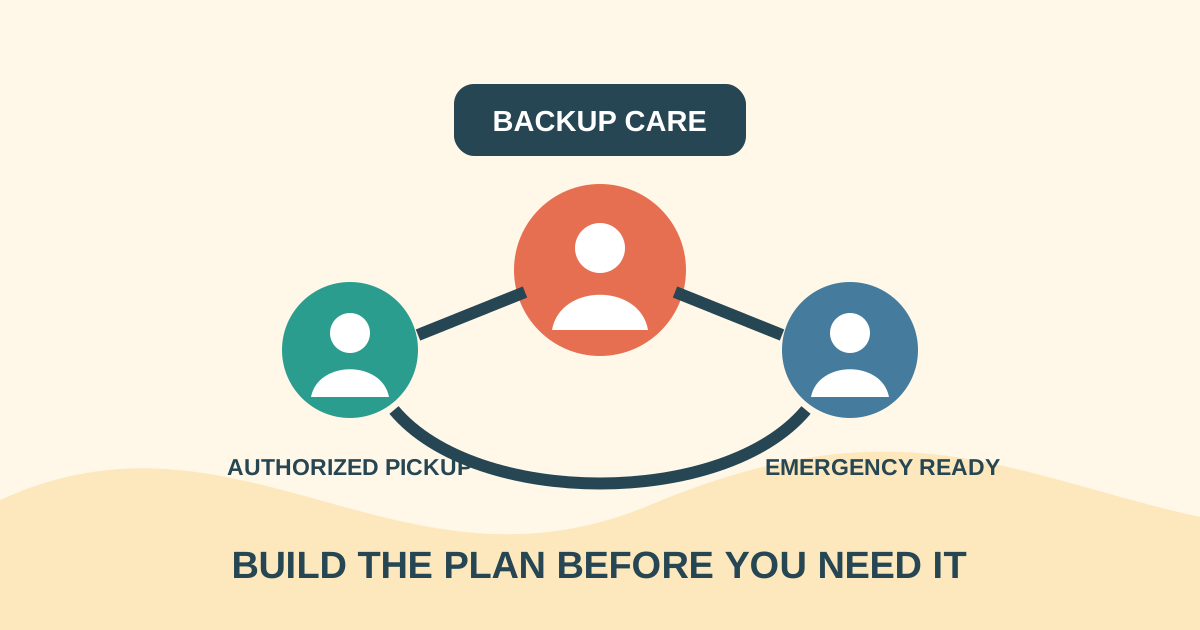
Give the accompanying adult paper and encrypted digital copies. Leave a matching file with a trusted adult who can answer calls across time zones. Agree on what happens after a cancellation, missed connection, illness, loss of passport, or route change. For a wider response plan, see Consular Emergency Planning in China.
Custody and nationality disputes can be legally complex. If consent is unavailable, a court order applies, or there is disagreement about travel, obtain advice from the relevant authorities and a qualified family-law professional before departure.
Pre-departure checklist
- Passport validity and Chinese status checked for the full trip.
- Destination and transit visas or permissions confirmed.
- Airline requirements confirmed in writing where possible.
- Relationship, custody, and name-difference evidence packed.
- Consent wording, signatures, translation, and certification accepted.
- Insurance, medicines, allergies, and emergency authority documented.
- Paper and secure digital copies stored separately.
- Trusted contact has the itinerary and matching document file.
Official reference points
- National Immigration Administration
- China Consular Affairs
- Hague Conference child protection resources
This is a planning guide, not legal advice. Confirm current requirements with the airline, relevant immigration authorities and consulates, and obtain professional advice for custody, nationality, or disputed-consent issues.
Frequently asked questions
Common questions
Does a child need a consent letter to leave China with one parent?
Requirements depend on nationality, family circumstances, route, carrier, and the authorities involved. Confirm with the airline and relevant immigration authorities or consulates before travel.
Should the letter be notarized?
Some destinations, carriers, schools, or family situations may require notarization, authentication, translation, or specific wording. Ask the receiving authority what it accepts.
What if parent and child have different surnames?
Carry documents that explain the relationship and name history, such as a birth certificate, marriage certificate, custody order, or official name-change record, as applicable.
Can a school group use one general permission form?
The organizer should confirm carrier, border, insurance, medical, and destination requirements for every child. Families should keep individual copies and emergency contacts.