Daily Life
Domestic Flights in China: Passport Booking, Airport Check-In, Luggage, Delays, and Receipts
A practical English guide for foreign residents taking domestic flights in China, including passport names, airport check-in, luggage rules, delays, receipts, transport, and travel backups.
Rules and procedures can change. Check the linked official sources before acting on time-sensitive information.
Quick answer
What you need to know
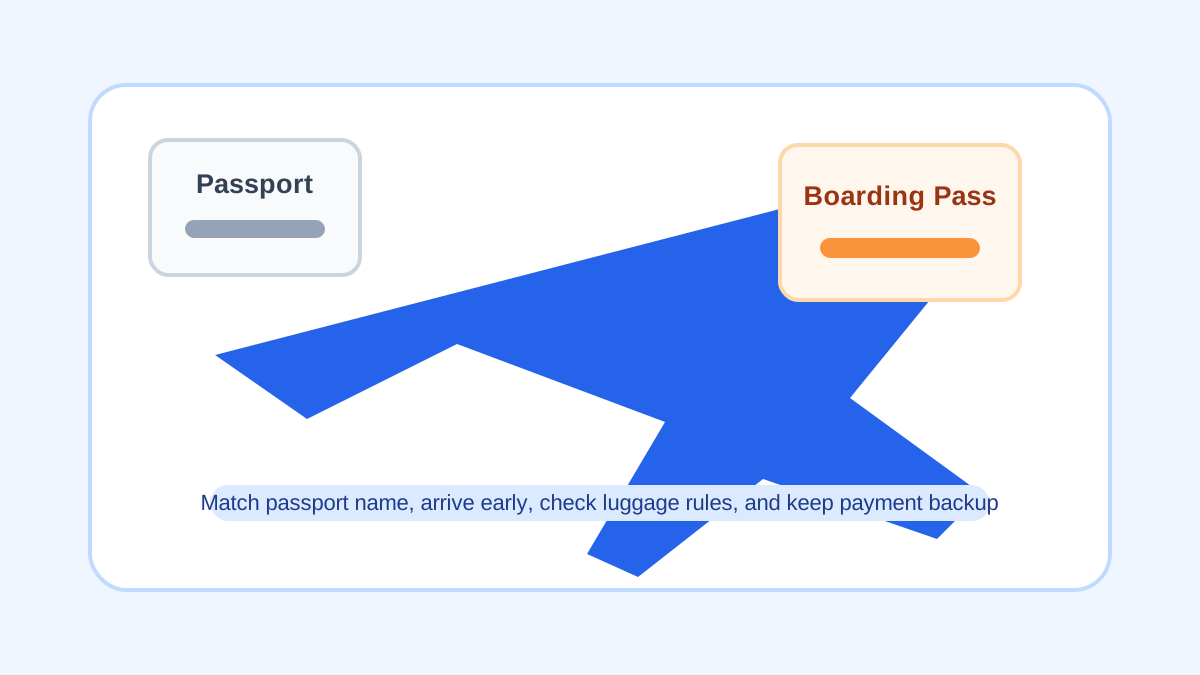
Foreign residents taking domestic flights in China should book with the exact passport name and number, arrive early, check luggage rules, keep receipts, and prepare for weather or air-traffic delays. Keep your passport, payment backup, Chinese address, and onward transport plan available.
- Book tickets with the same passport name and number you will use at the airport.
- Arrive early because manual document checks can take longer for foreign passengers.
- Check luggage, battery, liquid, and power-bank rules before packing.
- Keep itinerary, boarding pass, receipts, and delay records for reimbursement.
- Plan airport transport and backup routes before late arrivals.
Domestic flights are useful for long-distance travel in China, especially when a train route is too slow or seats are sold out. For foreign residents, the main issue is not the flight itself. It is document matching.
Book carefully, arrive early, and keep travel records if your employer or insurer needs proof.
1. Use the exact passport details
Your ticket should match the passport you will show at the airport. If you recently received a new passport, update travel accounts before booking.
For document changes, read New Passport in China.
2. Arrive earlier than a local frequent flyer
Foreign-passport checks may require a staffed counter or manual review. Give yourself extra time for document checks, luggage, security, and airport transfers.
3. Check luggage and battery rules
Review airline rules for checked luggage, carry-on size, liquids, power banks, spare batteries, and sharp items. Power-bank and battery rules can be strict at security.
4. Keep receipts and delay records
If the trip is for work, save booking confirmation, payment record, itinerary, boarding pass, invoice, and delay notice if there is one.
For expense habits, see Daily Budgeting in China.
5. Plan airport transport
Late-night arrivals, weather delays, or airport distance can make transport harder. Save your hotel or home address in Chinese and check metro, taxi, and ride-hailing options.
For navigation, read Maps and Navigation in China.
Practical checklist
- I booked with the exact passport name and number.
- I brought the passport used for booking.
- I arrived early for counter and security checks.
- I checked luggage, power-bank, and liquid rules.
- I saved itinerary, receipts, boarding pass, and delay records.
- I planned airport transport and backup routes.
Official sources
- State Council: A Guide to Working and Living in China as Business Expatriates
- Ministry of Commerce: Guide for Business Expatriates
Frequently asked questions
Common questions
Can foreigners take domestic flights in China with a passport?
Yes. Foreign passengers normally use a valid passport for booking, check-in, security, and boarding.
Does the ticket name need to match my passport?
Yes. The ticket name and passport number should match the passport you carry to the airport.
Should I arrive early for domestic flights?
Yes. Foreign-passport checks, luggage questions, or manual counter service can take extra time.
Can I use mobile boarding passes?
Sometimes, but foreign passengers may still need counter or document checks, so keep your passport and booking details ready.
What records should I keep after flying?
Keep itinerary, boarding pass, payment proof, invoice or receipt, delay notice, and baggage records if you need reimbursement or insurance.