Family & Education
After-School Activities and Holiday Camps in China for Foreign Families
How foreign families in China can evaluate after-school classes and holiday camps, verify providers, manage transport and safeguarding, and plan medical emergencies.

Rules and procedures can change. Check the linked official sources before acting on time-sensitive information.
Quick answer
What you need to know
Match the program to the child, verify the provider and staff, document pickup and medical authority, and test communication before committing to a long term.
- Evaluate supervision, staff qualifications, safeguarding, facilities, transport, and emergency response—not only the activity.
- Confirm language support, age grouping, trial options, schedule, total cost, refund terms, and required equipment.
- Give the provider clear allergy, medication, emergency-contact, and authorized-pickup information.
- Use a short trial and ask the child specific questions about safety, inclusion, and enjoyment.
After-school classes and holiday camps can help children build friendships and routines, but the glossy brochure rarely answers the most important questions. Families should evaluate the operating organization, daily supervision, safeguarding, health response, transport, communication, and contract before making a long commitment.
Start with the child and schedule
Define the goal: enjoyment, language exposure, sport, arts, academic support, or holiday coverage. Check the child’s interest, age group, teaching language, class size, noise and sensory environment, physical demands, homework, travel time, and recovery time. A program that is excellent on paper can still be a poor weekly fit.
Ask the school and other families for leads, but verify each provider independently. The school communication guide can help align activities with the school calendar and workload.
Verify people, place, and program
Request the provider’s legal name, operating details, venue address, program outline, staff qualifications, background-screening or safeguarding process, child-to-adult ratio, attendance system, visitor controls, restroom supervision, insurance information, and emergency plan. Tour the actual room, field, pool, or camp location when possible.
For sports or travel programs, ask about equipment standards, weather or air-quality thresholds, transport operator, accommodation, overnight supervision, and parent contact. If photography is planned, understand consent, storage, and publication choices.
Lock down health and pickup
Provide concise allergy, medication, disability or learning-support, food, and emergency information. Ask who sees it, how it is protected, which staff are trained, and when parents or emergency services are contacted. Confirm the nearest appropriate clinic and payment process. Use the school allergy-plan guide for a structured handover.
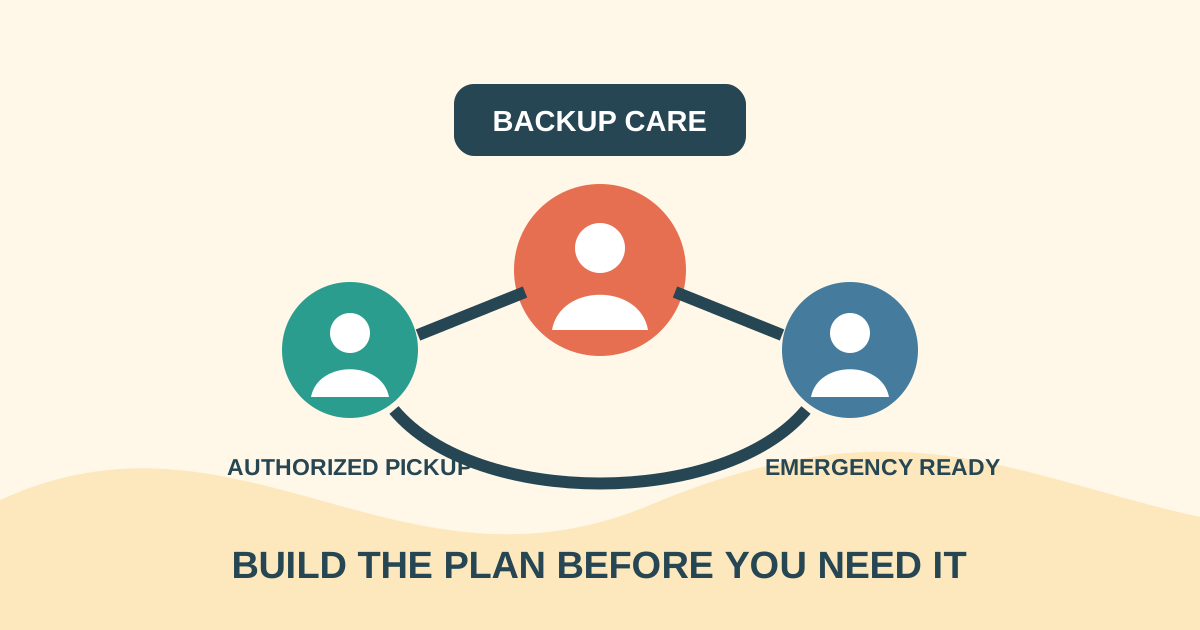
Create an authorized-pickup list and test the provider’s identity check. For a reusable framework, see the emergency guardian guide.
Activity and camp checklist
- Child’s interest, readiness, language, schedule, and travel time assessed.
- Legal provider name, venue, staff, supervision ratio, and qualifications checked.
- Trial class or short package completed where available.
- Safeguarding, attendance, visitor, bathroom, and photography rules reviewed.
- Equipment, transport, weather, overnight, and emergency procedures understood.
- Allergies, medicines, support needs, contacts, and medical authority documented.
- Authorized-pickup and unexpected-substitution process tested.
- Full fees, equipment, meals, transport, cancellation, and refund terms written down.
- Child knows how to identify staff, contact a parent, and report discomfort.
- Parent asks specific follow-up questions after each initial session.
Official reference points
- Ministry of Education for national education information
- State Administration for Market Regulation and local market-regulation channels for business and consumer information
- Local education, sports, culture, public-security, health, and market-regulation authorities as relevant to the activity
Provider licensing and oversight depend on the activity and location. Confirm current requirements with the provider, school, venue, relevant local authority, insurer, and your child’s clinician. This guide is not legal or medical advice.
Frequently asked questions
Common questions
How can I check whether a provider is legitimate?
Ask for the legal operating name, business or institutional details, venue permissions, staff qualifications, insurance information, and a written contract. Verify claims through official channels where possible.
Can a camp give my child medicine?
Policies differ. Discuss storage, authorization, dose records, trained staff, and emergency action with the provider and your child's clinician; never assume staff can administer it.
What should an authorized-pickup plan include?
List approved adults, identity checks, passwords if used, late-pickup steps, custody restrictions where legally applicable, and a procedure for unexpected substitutions.
Should I pay for a full term immediately?
A trial or shorter package can reduce risk. Before paying, read cancellation, missed-class, provider-closure, injury, weather, and refund terms.