Family & Education
School Meals and Food Allergy Plans in China: A Guide for Foreign Families
How foreign families can review school meals, document food allergies, arrange emergency plans, and coordinate teachers, nurses, transport, and activities in China.
Rules and procedures can change. Check the linked official sources before acting on time-sensitive information.
Quick answer
What you need to know
Turn a child's dietary or allergy needs into a written, rehearsed school plan covering meals, labels, medicine, emergency contacts, transport, trips, and substitute staff.
- Give the school a clinician-supported written plan instead of relying only on verbal instructions.
- Ask how ingredients, shared kitchens, substitutions, snacks, celebrations, and trips are managed.
- Confirm who may hold or administer emergency medicine and how expiry dates are tracked.
- Review the plan after menu, medicine, diagnosis, classroom, or transport changes.
School food is more than the lunch menu. Breakfast programs, snacks, birthday treats, cooking lessons, after-school clubs, buses, sports, and trips can all create separate handoffs. A useful plan assigns responsibility at each one.
Map every food setting
Ask who supplies and prepares meals, where ingredient information comes from, how substitutions are communicated, and whether the kitchen is shared. Include classroom rewards, vending areas, celebrations, boarding, and food brought by other families.
For general enrollment due diligence, start with Choosing Schools in China. If the issue is a preference rather than a medically diagnosed allergy, label it accurately so staff can apply the right process.
Create a clinician-supported plan
Ask the child’s clinician to document the condition, recognizable symptoms, response steps, prescribed medicine, dose, and when emergency help is required. Translate essential operational information carefully and keep the original. Medical decisions should come from the treating clinician, not this guide.
The school plan should name trained roles rather than depend on one favorite teacher. Confirm what happens with substitute staff, bus attendants, coaches, and off-campus providers.
Control medicine and communication
Agree on storage, accessibility, labeling, authorization forms, expiry checks, replacement, and trip handoff. Make sure emergency contacts are current and reachable in China. Ask how the school records an exposure and informs parents.
Children should learn age-appropriate self-advocacy without being made solely responsible. Practice how to refuse unknown food and find an adult. The food allergy guide has useful restaurant communication ideas.
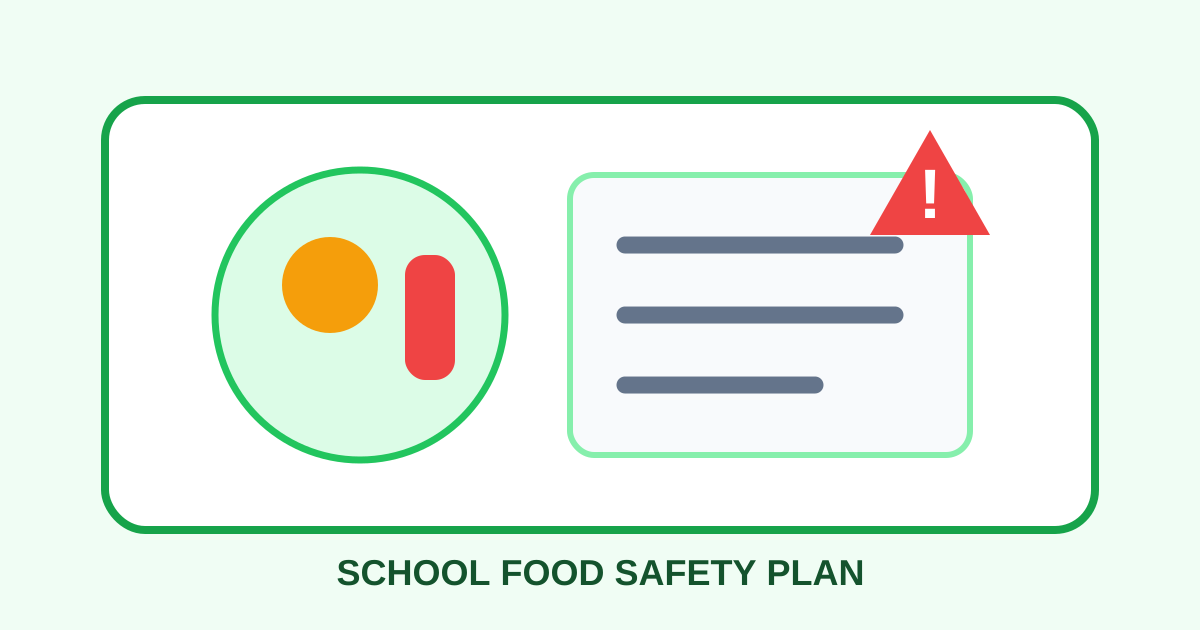
School food-safety checklist
- Current diagnosis and clinician instructions supplied.
- Allergen names and emergency steps available in useful languages.
- Meal supplier, ingredient, substitution, and shared-kitchen process understood.
- Snacks, celebrations, clubs, buses, sport, and trips included.
- Medicine authorization, storage, access, expiry, and replacement confirmed.
- Teachers, nurse, cafeteria, transport, coaches, and substitutes covered.
- Parent and backup contacts tested.
- Incident reporting and post-incident review agreed.
- Plan reviewed after any medical, menu, class, or activity change.
Official reference points
School practices and health needs differ. Confirm the plan with the school, meal provider, treating clinician, and insurer where relevant.
Frequently asked questions
Common questions
Can a school guarantee an allergen-free meal?
Ask the school to describe its actual controls. Shared kitchens, suppliers, substitutions, and classroom food may make absolute guarantees inappropriate.
Should my child carry emergency medicine?
Follow the treating clinician's advice and the school's current policy. Confirm storage, access, authorization, expiry checks, and trained responders in writing.
What information should be bilingual?
The allergen names, symptoms, response steps, medicine instructions, emergency contacts, and child identification should be understandable to everyone responsible for the child.
Does the plan cover school trips?
It should. Confirm meals, transport, medicine custody, communications, and the nearest appropriate care for trips, sports, clubs, and overnight activities.