Working in China
Workplace Conflicts of Interest in China: A Disclosure Guide for Foreign Employees
Help foreign employees identify and document outside work, investments, relatives, suppliers, gifts, and other potential conflicts through company channels.
Rules and procedures can change. Check the linked official sources before acting on time-sensitive information.
Quick answer
What you need to know
Read the applicable policies, disclose potential conflicts early through the approved channel, keep factual records, follow safeguards, and obtain advice for material questions.
- A potential conflict is not always misconduct, but hiding one can create avoidable risk.
- Review employment, outside-activity, investment, procurement, gifts, confidentiality, and approval rules together.
- Disclose facts without sending unnecessary family, financial, client, or company data.
- Keep the decision, conditions, renewal date, recusal steps, and later changes in an authorized record.
Foreign employees may carry investments, freelance projects, family connections, professional roles, and business relationships across several countries. A conflict question is usually easier to manage when it is disclosed before the employee joins a decision, accepts a benefit, or commits to outside work.
Read the connected rules
Collect the employment contract, employee handbook, code of conduct, outside-employment policy, procurement rules, gifts policy, confidentiality agreement, investment restrictions, and annual disclosure form. Confirm which legal entity employs you and which compliance or HR team owns the process.
The employee handbook guide explains how to preserve policy versions. Do not rely on a colleague’s informal permission.
Identify relationships, not just payments
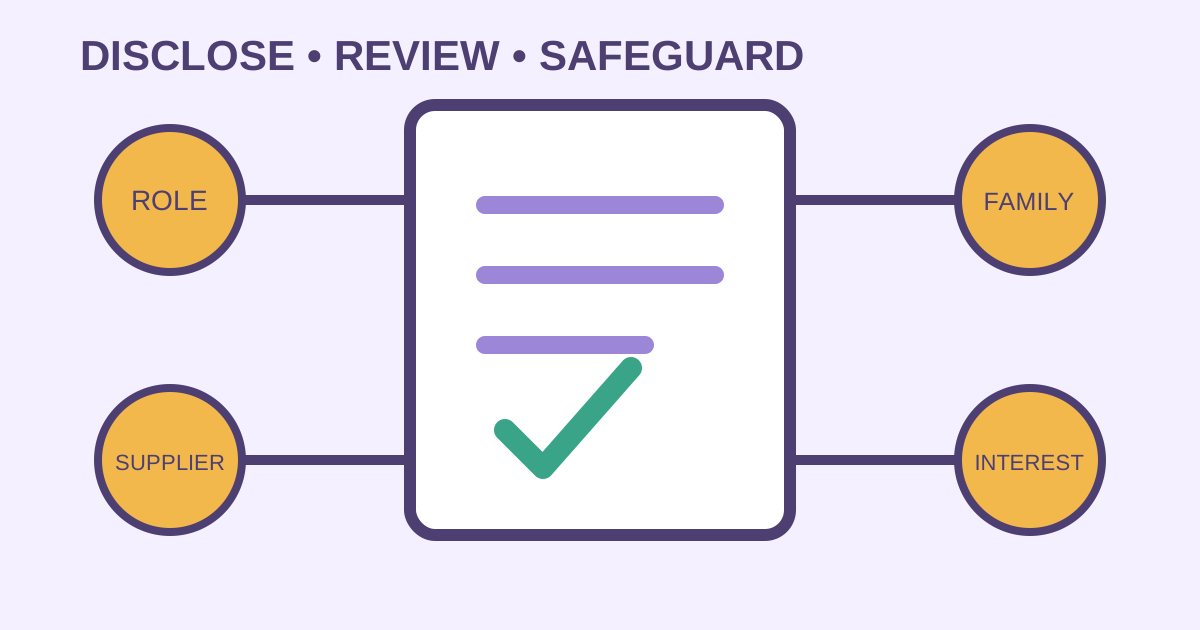
Review outside jobs, consulting, businesses, directorships, volunteer leadership, investments, supplier or customer interests, family relationships, referrals, gifts, travel, and opportunities learned through work. Consider whether you can influence hiring, purchasing, pricing, audit, payment, promotion, or confidential information involving that interest.
A theoretical or remote interest may still need disclosure if the policy says so. Conversely, disclosure does not automatically prove wrongdoing.
Make a focused disclosure
Use the approved form or compliance channel. State the relationship, dates, role, decision-making connection, and proposed safeguard. Avoid attaching unrestricted copies of a relative’s identity documents, personal bank records, or confidential third-party contracts unless the responsible team lawfully requests them through a secure route.
Ask for written confirmation of receipt and whether you should pause a decision while review is pending.
Follow and renew safeguards
Possible controls include recusal, a different approver, information barriers, transaction review, limits on outside activity, or periodic renewal. Record what you must do, who monitors it, when approval expires, and which changes trigger a new disclosure.
Gifts and entertainment require their own checks; use the workplace gifts guide. If the question involves legal duties, work authorization, tax, securities, or a disputed disciplinary action, consult HR, the responsible authority, and a qualified professional. Published national law can be searched in the official National Laws and Regulations Database.
Conflict disclosure checklist
- Current contract and policies collected.
- Outside roles and financial interests reviewed.
- Family, supplier, customer, and hiring links considered.
- Decision-making power identified.
- Disclosure submitted through an approved channel.
- Receipt and interim instructions saved.
- Recusal or other safeguards documented.
- Changes and annual renewal dates monitored.
This is general compliance organization, not legal advice. The correct result depends on the facts, employer rules, professional duties, and applicable law.
Frequently asked questions
Common questions
What can create a workplace conflict of interest?
Examples include outside work, supplier relationships, family connections, personal investments, gifts, referrals, board roles, and using company opportunities or information personally.
Does disclosure mean I did something wrong?
Not necessarily. Disclosure lets the employer assess the facts and choose safeguards such as approval, recusal, limits, reassignment, or divestment where appropriate.
Can I take freelance work while employed in China?
Do not assume permission. Check your contract, employer policy, work authorization, tax, confidentiality, and professional rules, and obtain case-specific advice before accepting work.
Should I disclose a relative who works for a supplier?
If policy or your decision-making role could make the relationship relevant, use the compliance channel and let the responsible team assess it.