Working in China
Work Expense Reimbursement in China: A Guide for Foreign Employees
How foreign employees in China can manage business expense approvals, fapiao, travel evidence, reimbursement deadlines, currency conversion, and payroll records.
Rules and procedures can change. Check the linked official sources before acting on time-sensitive information.
Quick answer
What you need to know
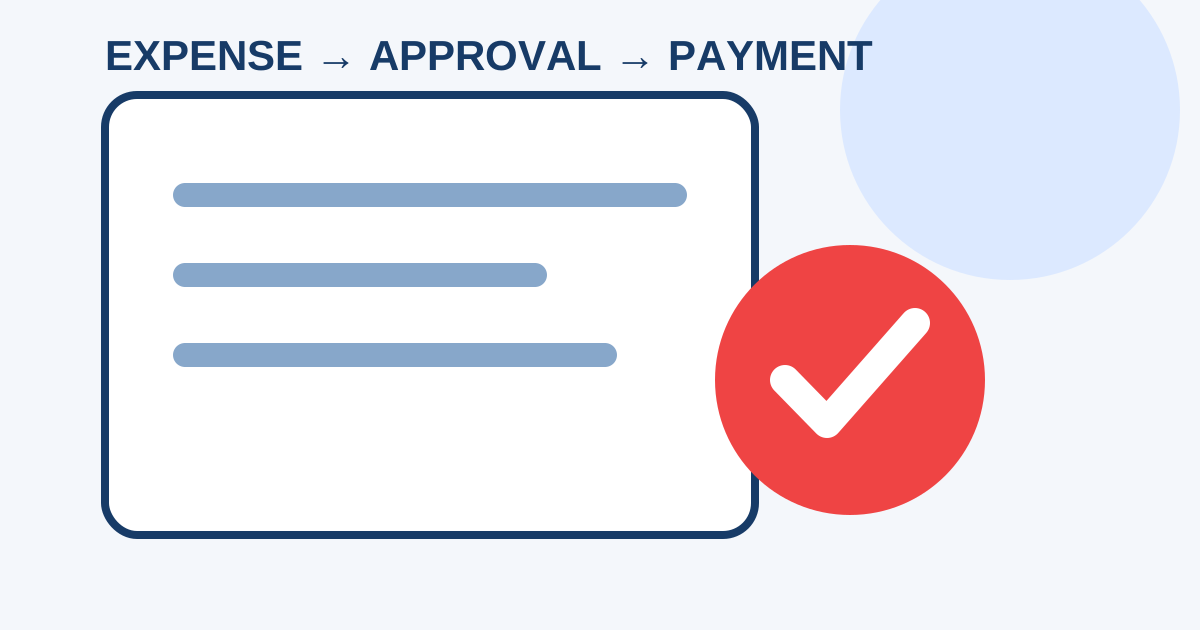
Confirm the company policy before spending, request the correct invoice details, preserve supporting evidence, submit expenses on time, and reconcile the payment with payroll or bank records.
- Approval, invoice, and supporting-document requirements vary by employer and expense type.
- Ask for the employer's exact invoice title and tax information before requesting a fapiao.
- Keep the commercial receipt, payment record, itinerary, and business purpose even when you receive a fapiao.
- Ask finance or a qualified tax adviser to confirm unusual, cross-border, or high-value claims.
Business expenses in China can involve more than showing a card receipt. Your employer may need a specific invoice, evidence of the business purpose, prior approval, and a submission through its internal system. A small preparation routine prevents most rejected claims.
This guide is general workflow information, not tax or accounting advice. Company policies and tax-document requirements change, so confirm unusual expenses with finance or a qualified adviser.
Read the policy before spending
Find the current expense policy and check spending limits, approved suppliers, booking channels, required approvals, claim deadlines, and excluded items. Ask whether different rules apply to meals, taxis, hotels, trains, flights, client entertainment, equipment, home office costs, or foreign travel.
If the expense is outside the normal policy, obtain written approval that identifies the purpose and maximum amount. An informal “okay” may not give finance the information it needs.
Get the correct invoice information
Before requesting a fapiao, copy the exact company invoice title and taxpayer details from an official finance-team source. Confirm whether the company accepts an electronic invoice, paper invoice, or a particular invoice category.
Check the seller name, buyer information, date, amount, item description, and invoice code or number before leaving. If something is wrong, ask the seller how to correct it rather than editing the document.
Keep the full evidence trail
A fapiao may not explain why the company incurred the cost. Preserve:
- prior approval and business purpose;
- itemized commercial receipt or order record;
- fapiao and any verification file;
- mobile-payment, card, or bank record;
- itinerary, boarding record, or hotel folio;
- participant names for business meals when required;
- project, client, or cost-center code; and
- a note explaining any difference between paid and invoiced amounts.
Organize files by trip or month. Use filenames that include the date, merchant, amount, and expense type, but keep personal identity and payment details out of shared filenames.
Handle transport and travel carefully
Book through the company channel when required. Confirm the traveler’s passport name before buying tickets and keep change or cancellation records. Our guides to domestic flights and train travel explain document checks for foreign passengers.
For taxis or ride-hailing, match each trip to a meeting, airport transfer, or other business purpose. Avoid combining personal and business journeys in one unexplained claim.
Submit and reconcile
Enter dates, amounts, tax amounts, currencies, categories, and cost centers exactly as the system requests. If a foreign-currency expense is permitted, record the original amount and use the exchange-rate method specified by finance.
Save the submission confirmation and approval trail. When paid, compare the approved amount with the bank transfer or payroll entry. Review How to Read a Payslip in China if reimbursement appears alongside salary.
Do not assume that a reimbursement has the same payroll or tax treatment in every situation. Ask finance about any item that appears as taxable income or differs from the approved claim.
Expense reimbursement checklist
- I used the latest company policy.
- I obtained written pre-approval where required.
- The invoice uses the exact company details.
- The amount and item description are correct.
- I kept the itemized receipt and payment evidence.
- The business purpose and participants are documented.
- Travel changes and cancellations are included.
- Foreign currency uses the approved conversion method.
- I submitted before the deadline.
- I reconciled the approved and paid amounts.
Official sources
Official systems and employer procedures may differ. Ask your finance team to confirm invoice validity, deductible documentation, retention, and payroll treatment for your specific claim.
Frequently asked questions
Common questions
Is a payment screenshot enough for reimbursement in China?
Often it is only supporting evidence. Your employer may also require a compliant invoice, itemized receipt, approval, attendee list, itinerary, or other documents.
What company details should appear on a fapiao?
Use the exact invoice title and any taxpayer information supplied by your finance team. Do not guess or reuse details from an old claim without checking.
Can I claim an expense paid in foreign currency?
Possibly, but the employer's policy should define acceptable evidence, exchange-rate source, conversion date, and any approval requirement.
What if I lost the original invoice?
Tell finance promptly. Ask whether an electronic copy, replacement, written explanation, or other evidence is acceptable rather than altering a document.