Daily Life
Spare Keys and Trusted Home Access in China: A Guide for Foreign Residents
Create a secure spare-key and trusted-access plan for a China apartment covering permission, smart locks, emergencies, visitors, records, and key return.
Rules and procedures can change. Check the linked official sources before acting on time-sensitive information.
Quick answer
What you need to know
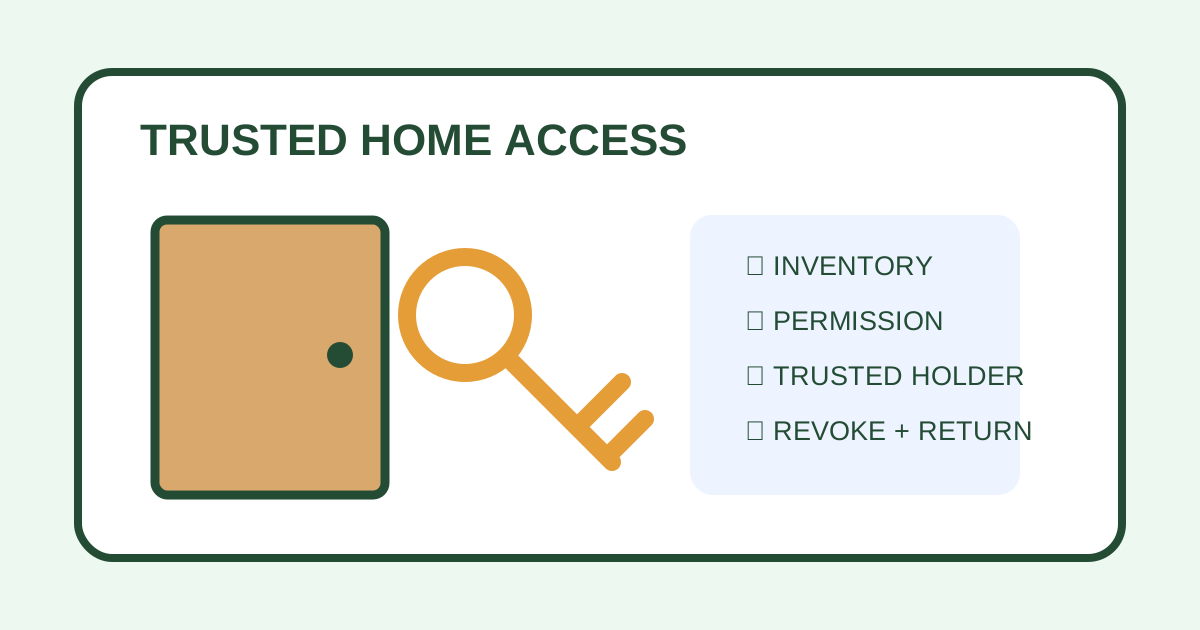
Confirm permission, minimize copies, choose a trusted holder, document limited use, protect identifying information, and change or recover access when circumstances change.
- Check the lease, landlord instructions, and building rules before copying a key or changing a lock.
- Keep an access inventory covering physical keys, cards, remotes, smart-lock codes, apps, and biometric users.
- Give a trusted person only the access and instructions needed for a defined purpose and time.
- Recover, revoke, or replace access promptly after loss, staff changes, travel, a breakup, or moving out.
A spare key is useful only if it can be found by the right person and cannot be linked easily to your home by the wrong one. Treat physical and digital entry methods as one controlled access system.
Build an access inventory
List every apartment key, mailbox key, access card, lift card, parking remote, gate code, smart-lock code, app administrator, fingerprint, and emergency mechanical key. Record who issued it, its identifying number where applicable, who holds it, and when it must be returned.
Keep the detailed inventory securely, separate from the keys. Do not attach the full address or apartment number to a spare. The smart lock guide covers batteries, administrator accounts, codes, and move-out resets.
Confirm permission
Read the lease and ask the landlord or property manager before duplicating a controlled key, copying an encrypted card, drilling, replacing a cylinder, or adding a lock. A front door may connect to building fire, insurance, maintenance, or master-key arrangements.
Ask which locksmith or service channel is authorized, who pays, how many copies are allowed, and what must be surrendered at move-out. If you are already locked out, use the apartment lockout guide instead of forcing entry.
Choose a trusted holder
Select someone dependable, reachable, and close enough to help: for example, a family member, close friend, or formally authorized building contact. Avoid hiding keys in common areas, under mats, in meter boxes, or beside the door.
Agree in writing on the limited reasons for use, such as a verified medical emergency, pet care, a serious leak, or an agreed visit during travel. State how the person verifies a request, whom they may admit, whether they may photograph the home, and how they report entry and exit.
Prepare emergency instructions
Store a concise contact card with the holder: your phone, landlord or agent, property management, a local emergency contact, pet information, and the location of utility shutoffs only if the person is competent and authorized to use them. Do not give unnecessary passport, banking, or work information.
For longer travel, define visit dates, parcels, plants, pets, ventilation, alarms, and what counts as an emergency. The family emergency contact file helps organize a broader response plan.
Control temporary access
For cleaners, repair technicians, guests, or pet sitters, prefer supervised entry or a time-limited code where the approved system supports it. Confirm identity and appointment through the original service channel. Never share an administrator password or reuse a banking or phone code.
After access ends, collect keys and cards, revoke codes and app users, review logs where available, and update the inventory. Do the same after a lost device, staff change, roommate departure, relationship change, suspected copying, or security incident.
Move-out and loss checklist
Count all items well before moving. Ask the landlord for the required return list and document handover with a signed record or message. Delete only the digital users you are authorized to manage and confirm the required factory-reset or administrator transfer process.
If an item is lost, record what it opened, when and where it was last seen, and whether it showed an address. Notify the landlord or property manager quickly and use an approved locksmith or system administrator.
Trusted-access checklist
- Lease and building permission checked.
- All keys, cards, remotes, codes, apps, and users inventoried.
- Copies minimized and not labeled with the full address.
- Trusted holder and permitted uses documented.
- Emergency contacts and limited instructions supplied.
- Temporary access expires or is revoked.
- Lost access reported promptly.
- Move-out return and digital handover recorded.
Leases, lock systems, and building rules vary. Confirm permission, emergency entry, replacement, and liability questions with the landlord, property manager, authorized provider, insurer, or professional adviser.
Frequently asked questions
Common questions
Can I copy an apartment key in China?
Permission and technical restrictions depend on the lease, landlord, lock, key type, and building rules. Ask before copying a controlled key, card, or remote.
Who should hold an emergency spare key?
Choose a reliable person who lives close enough, understands the limited purpose, can verify an emergency request, and will protect and return the key. Do not label it with the full address.
Is a smart-lock code safer than a spare key?
It can be easier to limit or revoke, but security depends on the lock, account, app, code practices, batteries, network, logs, and backup method. Follow the manufacturer's and landlord's instructions.
What should I do after losing a key or access card?
Notify the landlord or property manager promptly, identify what was lost, disable digital access where authorized, and follow the approved replacement or lock-change process.