Daily Life
Secure Document Disposal in China: A Privacy Guide for Foreign Residents
Dispose of old documents in China safely by sorting retention needs, redacting identifiers, choosing secure destruction, and recording business or family handovers.
Rules and procedures can change. Check the linked official sources before acting on time-sensitive information.
Quick answer
What you need to know
Separate records that must be retained from safe-to-destroy copies, remove identifiers from ordinary recycling, verify destruction services, and protect both paper and digital duplicates.
- Do not destroy originals or records that may still be needed for immigration, tax, employment, banking, insurance, school, or medical purposes.
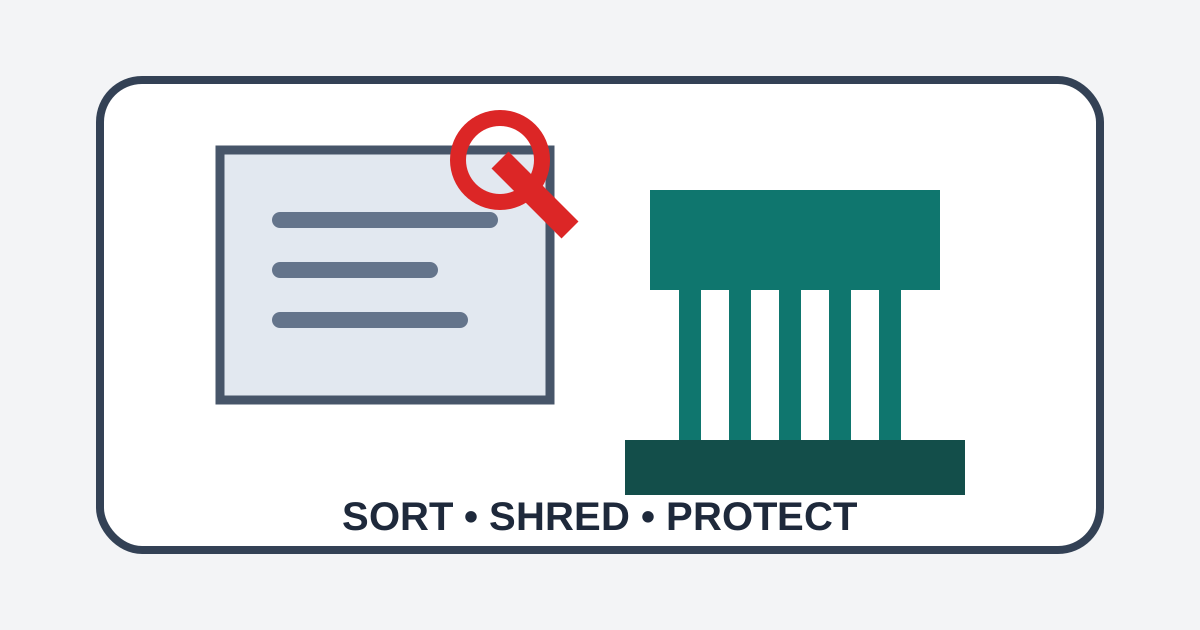
- Cross-cut or otherwise securely destroy pages containing passport, permit, banking, address, signature, health, or child information.
- Verify who collects outsourced records, how they are transported and destroyed, and whether a destruction certificate is available.
- Review scans, cloud folders, printer storage, and messaging attachments as well as paper.
An old delivery label and an expired application copy can reveal more than expected when combined. A safe disposal routine reduces that exposure without destroying records you may later need.
Sort before you shred
Create four groups: originals to keep, time-limited records, duplicates safe to destroy, and unclear items requiring advice. Typical “check first” records include passports and permits, employment contracts and separation records, payroll and tax files, leases, bank statements, insurance policies, school documents, prescriptions, and medical reports.
Write a retention reason and review date for important files. Rules and practical requirements differ; confirm consequential decisions with HR, the issuing authority, accountant, insurer, school, clinician, or qualified adviser. Scan only when a digital copy will actually be accepted.
Identify sensitive material
Protect pages showing passport or permit numbers, Chinese or overseas identity numbers, dates of birth, signatures, addresses, phone numbers, bank accounts, QR or barcodes, medical data, children’s information, passwords, and company-confidential content. The passport copy privacy guide explains safer sharing before a document reaches the disposal stage.
Cross-cut shredding or pulping is safer than placing whole pages in mixed recycling. Remove labels from medicine containers and parcels. Where a label cannot be removed, obscure or destroy all readable identifiers rather than only the recipient name.
Verify an outsourced service
For a household, ask property management whether the compound has a secure paper process; do not assume an ordinary recycling bin is confidential. For larger volumes, obtain the destruction provider’s legal name, pickup staff identification, sealed-container method, vehicle and storage controls, destruction location, subcontracting policy, completion time, complaint contact, and certificate option.
Employers should use their own approved records policy and vendor process. Never take company documents home for private disposal unless formally authorized.
Remember digital copies
Search phones, scanners, shared drives, downloads, email, chat attachments, and cloud folders for duplicate scans. Emptying a visible folder may not erase backups or managed-device records. Follow employer or service-provider procedures and avoid deleting material under a legal hold, dispute, audit, or active application.
China’s Cyberspace Administration of China publishes national data and cybersecurity information. This guide is practical privacy planning, not a statement of the legal retention period or disposal duty for a specific record.
Quarterly disposal checklist
- Separate originals, retained records, duplicates, and unclear items.
- Confirm retention before destroying tax, work, visa, school, or health files.
- Remove parcel and medicine labels containing personal data.
- Cross-cut, pulp, or use a verified destruction provider.
- Record bulk or business destruction when required.
- Delete authorized digital duplicates through the correct process.
- Review shared folders, printer memory, and old devices.
- Keep a simple index of important surviving originals.
If a document is still needed for an application, the certified translation guide can help you prepare a controlled working copy while keeping the original secure.
Frequently asked questions
Common questions
Can I put old passport copies in ordinary recycling?
That can expose identity details. Securely destroy or fully redact the personal-data areas before disposal, while retaining any copy that remains legitimately necessary.
How long should I keep tax or employment documents?
Retention depends on the document, current rules, employer processes, and possible future uses. Confirm with HR, the relevant authority, or a qualified tax or legal adviser before destroying records.
Is tearing a document by hand enough?
Large pieces can leave names, numbers, signatures, or QR codes readable. Cross-cut shredding, pulping, or a verified confidential-destruction service offers better protection.
What should I ask a document destruction company?
Ask for its legal name, custody process, transport controls, destruction method, subcontractors, timing, proof of destruction, data handling, and written quote.