Family & Education
Tutoring and Homework Support in China: A Guide for Foreign Families
Choose tutoring and homework support in China by checking school alignment, provider credentials, child safety, scheduling, fees, privacy, progress, and exit terms.
Rules and procedures can change. Check the linked official sources before acting on time-sensitive information.
Quick answer
What you need to know
Start with the child's school and learning goal, verify any provider carefully, protect the child's time and data, and review progress against a written plan.
- Ask the school what support already exists and whether outside tutoring aligns with its curriculum, academic-integrity rules, and assessment approach.
- Verify the provider, teacher, venue, safeguarding process, fees, cancellation terms, and permitted business scope before paying.
- Define a narrow goal and baseline, protect sleep and recreation, and avoid tutors completing assessed work for the student.
- Share only necessary student information and keep contracts, attendance, feedback, payments, and complaints in one record.
Tutoring can help with a specific gap, language transition, exam skill, or study routine. It can also add cost and pressure without solving the underlying issue. Begin with evidence from the student and school, not a generic promise of higher scores.
Define the need with the school
Ask the classroom or subject teacher what they observe, which skills are affected, what work samples show, and what help the school already provides. Check curriculum, assessment dates, homework expectations, academic-integrity rules, and the language used for instruction.
If the issue may involve language acquisition, learning support, health, attendance, or wellbeing, use the appropriate school team rather than treating every difficulty as a tutoring problem. The language support guide and learning support guide provide useful starting points.
Write a specific goal, baseline, method, review date, and stop condition. “Read an age-appropriate passage with better accuracy” is more useful than “improve English.”
Check the provider and teacher
Verify the provider’s legal name, location, business information, service scope, teacher identity and credentials, safeguarding policy, complaint channel, and emergency process. Ask whether sessions are individual or group, online or in person, recorded, substituted, or observed.
Rules affecting tutoring services can change and vary by program and locality. China’s Ministry of Education is an official policy source; confirm the current position with the local education and market-regulation authorities before entering a significant contract.
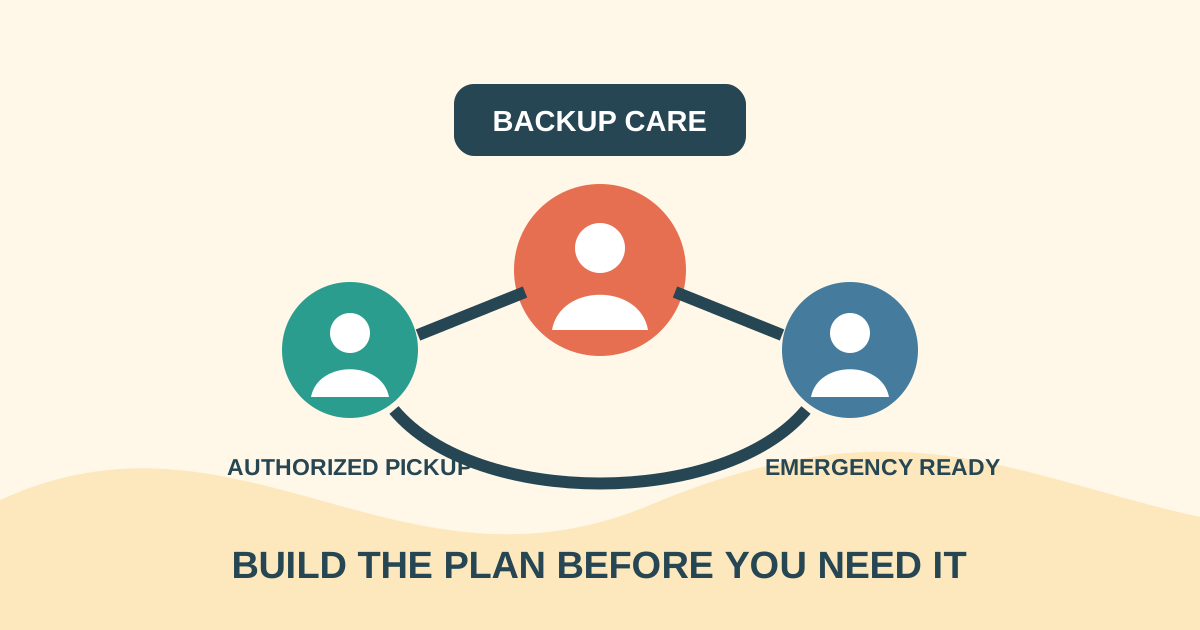
Meet the teacher with the child before a long commitment. For in-person sessions, use a suitable visible venue, define pickup authorization, and avoid informal arrangements that bypass the provider’s safety process.
Read the contract and payment terms
Record subjects, teacher, session length, timetable, location, materials, total price, payment milestones, trial terms, cancellations, make-ups, expiry, teacher changes, refunds, and dispute contact. Be cautious with large prepaid packages or pressure to pay immediately.
Pay the contracting entity through a traceable method and request the required invoice or receipt. The returns and refunds guide explains evidence to keep if a service differs from what was promised.
Protect learning, time, and privacy
Tell the tutor what assistance the school permits. The tutor should teach concepts, strategies, and independent habits—not impersonate the student or complete graded work. Balance tutoring with sleep, meals, exercise, friends, and unstructured time.
Share only the records needed for the stated purpose. Ask where student work, videos, voice recordings, assessment results, and parent contacts are stored and when they are deleted. Do not post another child’s work or group-session recording publicly.
Review progress and wellbeing
Use brief written feedback and periodic work samples. At the agreed review date, compare progress with the baseline and ask the child how the sessions feel. Continue, adjust, pause, or end based on evidence rather than sunk cost.
Tutoring checklist
- School observation, work samples, and existing support reviewed.
- Specific goal, baseline, review date, and stop condition written.
- Provider, teacher, venue, credentials, and safeguarding checked.
- Contract, fees, invoice, cancellation, refund, and complaint terms saved.
- Academic-integrity boundaries shared with the tutor.
- Sleep, recreation, transport, and child comfort protected.
- Student data and recordings limited to a defined purpose.
- Progress and wellbeing reviewed before renewing.
For persistent academic or emotional difficulties, coordinate with the school and an appropriately qualified education or health professional. This guide is general planning information, not educational, legal, or medical advice.
Frequently asked questions
Common questions
Does my child need a private tutor in China?
Not necessarily. First ask the teacher what difficulty is observed, what school support exists, and what the child needs. A targeted short plan may be more useful than open-ended tutoring.
How can I verify a tutoring provider?
Ask for its registered name, business information, teacher credentials, safeguarding rules, venue details, contract, fee schedule, and refund process. Confirm current local requirements with the relevant education or market-regulation authority.
Can a tutor help with graded homework?
The tutor should follow the school's academic-integrity rules. Coaching concepts and study methods may be appropriate, but completing assessed work for a student can create serious problems.
What if my child is stressed by tutoring?
Pause and speak with the child, teacher, and provider. Reduce load, clarify the goal, or stop under the contract terms; seek a qualified health professional if wellbeing concerns persist.