Family & Education
Learning Support and Special Education in China for Foreign Families
How foreign families in China can evaluate school learning support, assessments, accommodations, therapy coordination, records, costs, and transition planning.
Rules and procedures can change. Check the linked official sources before acting on time-sensitive information.
Quick answer
What you need to know
Describe the child's needs with current evidence, compare each school's actual support capacity, document accommodations and costs, and plan continuity across languages and moves.
- A school's admissions language does not by itself show what daily learning support it can deliver.
- Ask who provides support, in which language, how often, at what cost, and how progress is measured.
- Coordinate school, clinician, therapist, and family records with appropriate consent and privacy controls.
- Educational and clinical decisions should be confirmed with qualified local professionals.
Finding the right school for a child who needs learning, communication, sensory, behavioral, physical, or social-emotional support requires more than comparing curricula. Families need evidence of what the school can actually deliver every week.
Terminology and services differ among schools and cities. This guide does not diagnose a child or recommend a treatment; educational and healthcare decisions belong with qualified professionals who know the child.
Write a functional needs profile
Summarize the child’s strengths, interests, communication, languages, classroom access, sensory needs, mobility, self-care, learning barriers, successful strategies, current services, and safety considerations. Describe what helps rather than relying only on a diagnostic label.
Collect recent school reports, work samples, assessments, therapy notes, accommodation plans, vaccination and medical information where relevant, and parent observations. Keep originals and provide translations only through a competent service when accuracy matters.
Interview the school about delivery
Ask who leads learning support, their qualifications, staff-to-student ratio, supported age groups, languages, availability, and reporting line. Request a concrete example of the child’s likely week: in-class support, small group, individual instruction, therapy, breaks, transport, activities, and home communication.
Clarify whether services are included in tuition, charged separately, provided by an outside clinic, or dependent on staffing. Ask about waitlists, trial periods, review dates, exit criteria, and what happens when needs exceed current capacity. Use the broader school selection guide for admissions comparisons.
Understand assessment and consent
A school may request an educational, psychological, speech-language, occupational, physical, hearing, vision, or medical assessment. Ask the purpose, assessor’s credentials, language, tools, cost, report recipients, and whether interpretation changes validity.
Before records are shared, understand who will access them, how long they are kept, and whether an outside provider or overseas team receives them. Give specific, informed consent and retain a copy. Ask how to correct factual errors.
Put support in a written plan
The plan should identify current performance, measurable priorities, classroom strategies, accommodations, specialist services, responsible people, frequency, progress evidence, family communication, and formal review dates. Define terms such as “as needed” so expectations are observable.
Possible accommodations include adjusted instructions, seating, assistive technology, movement breaks, extended time, alternative response formats, or accessible facilities. Suitability is individual; qualified educators and clinicians should guide the plan.
Coordinate health and therapy carefully
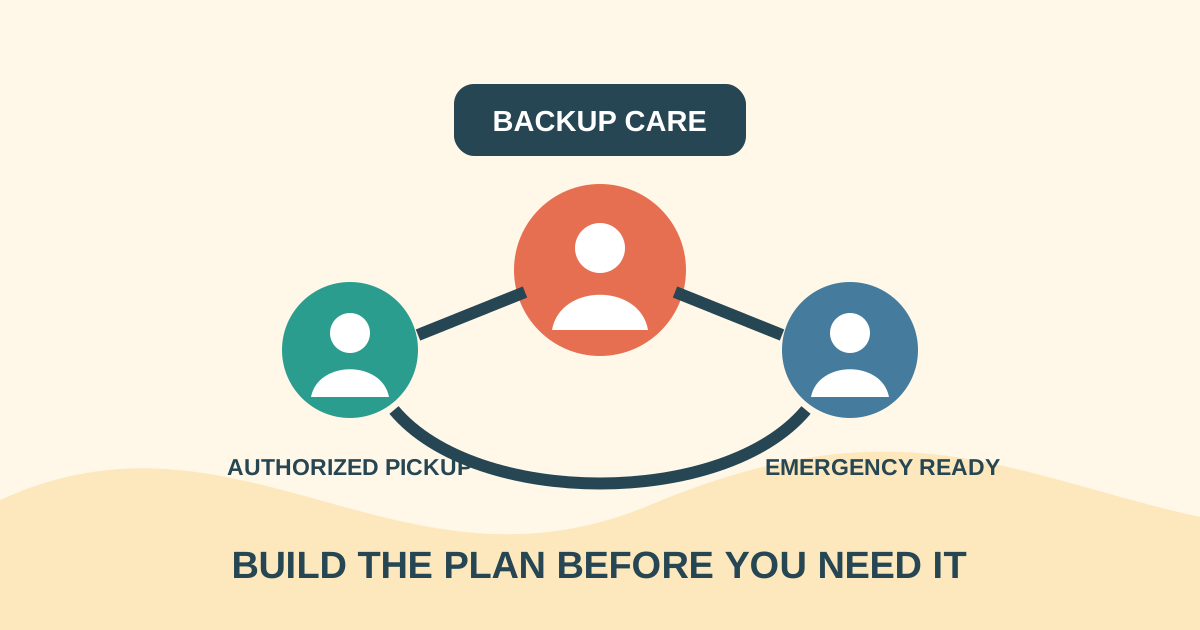
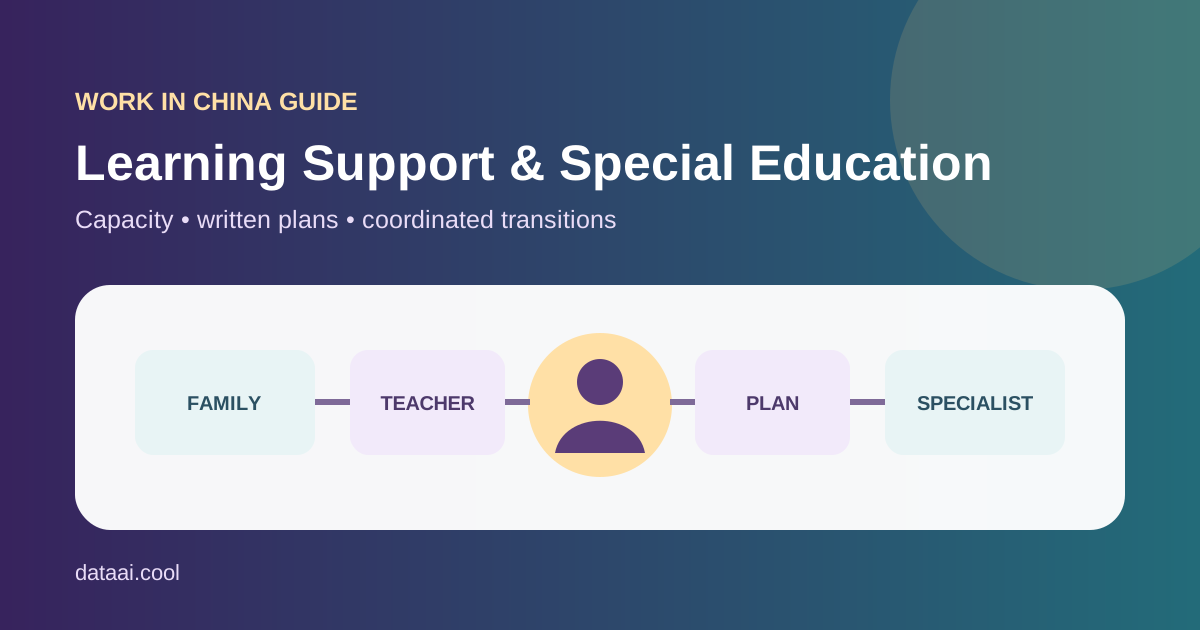
If a child uses outside therapy or medication, establish a consent-based communication route among the family, school nurse, teacher, support lead, and clinician. Document emergency contacts, allergies, medication instructions, mobility support, and who may collect the child. The school emergency guardian guide provides a useful backup framework.
Do not change therapy or medication based on informal school advice. Discuss concerns with the treating professional and ask the school to provide dated observations.
Plan transitions early
For a grade change, school transfer, or move, request a complete file: reports, plans, progress data, provider contacts, assistive-technology details, successful strategies, and current priorities. Ask the receiving school to confirm capacity before paying non-refundable fees.
The school transfer guide covers record handoff and fee timing. Build overlap where possible and prepare a child-friendly transition story, campus visit, visual schedule, and named contact.
Learning support checklist
- Child strengths and functional needs summarized clearly.
- Current reports, plans, and work samples organized.
- School staffing, language, capacity, and facilities verified.
- Weekly services, fees, and waitlists documented.
- Assessments use appropriate professionals and consent.
- Support plan has measurable goals and review dates.
- Privacy and record-sharing arrangements understood.
- Health, therapy, transport, and emergency roles coordinated.
- Family receives regular evidence of progress.
- Transition file and receiving-school capacity confirmed early.
Official reference points
- Ministry of Education of the People’s Republic of China
- National Health Commission
- UNICEF China: Education
Availability and admission policies vary. Confirm educational options with the relevant school and education authority, and confirm assessment, therapy, and medical questions with appropriately licensed professionals.
Frequently asked questions
Common questions
Do all international schools in China provide the same learning support?
No. Staffing, admissions policies, languages, facilities, therapy access, accommodations, and fees differ substantially. Request written details for the child's specific needs.
Will an overseas assessment be accepted?
A school may find it useful but request an updated, translated, or locally completed assessment. Ask what credentials, dates, language, and report format it accepts.
Should parents disclose a learning need during admission?
Accurate information helps a school assess whether it can support the child. Ask how records are protected, who reviews them, and how the information affects admission and service planning.
How can support continue when moving cities?
Start early, request a complete transition file, identify providers, confirm waiting lists, and arrange a handover among the current and receiving teams with appropriate consent.