Daily Life
Household Batteries and Electronics Recycling in China
Sort household batteries, phones, chargers, and small electronics in China with safer storage, data removal, documented handover, and local disposal checks.
Rules and procedures can change. Check the linked official sources before acting on time-sensitive information.
Quick answer
What you need to know
Separate damaged batteries, protect terminals, remove personal data, confirm the local collection route, and keep valuable or hazardous items out of ordinary parcel returns.
- Do not puncture, crush, heat, or casually mail swollen, leaking, recalled, or damaged batteries.
- Check the label and local collection instructions instead of assuming every battery uses the same bin.
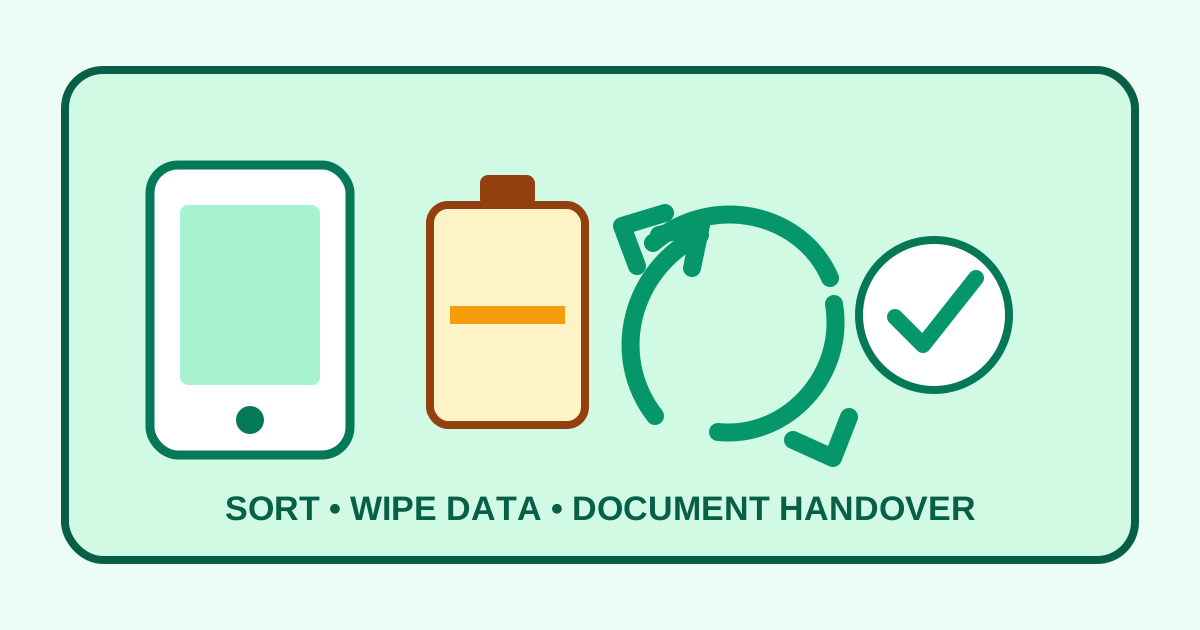
- Back up and securely remove accounts and data before handing over a phone, computer, or storage device.
- Record the collector, device identifiers, payment, and handover when an item has data or resale value.
Old power banks, button cells, rechargeable batteries, phones, cables, and small appliances accumulate quickly. Disposal is not one universal process: the product chemistry, physical condition, local waste rules, manufacturer program, and collector all matter.
Sort by item and condition
Read the label and separate loose batteries from devices. Keep rechargeable packs, button cells, power banks, phones, lamps, and larger appliances identifiable. A swollen, leaking, unusually hot, recalled, wet, or physically damaged battery needs different handling from an intact spent cell.
Do not test a questionable battery by charging it. Do not bend, puncture, crush, dismantle, or place it near heat. Keep children and pets away and seek product-specific guidance promptly. If there is smoke, fire, strong heat, or immediate danger, move away and use the local emergency route; the home fire-safety guide provides planning basics.
Confirm the current collection route
Ask your property-management office how the compound handles batteries and small electronics. Also check the product manufacturer, authorized retailer, municipal sanitation information, and a verified recycling business. Photograph the label or show the exact item rather than asking only about “recycling.”
China’s Ministry of Ecology and Environment publishes national environmental policy and information, but implementation and accepted items vary locally. Follow the current instructions for your city and compound.
Prepare data-bearing devices
Before a working phone, tablet, computer, camera, or drive leaves your control, back up what you need. Sign out of personal and work accounts, remove SIM and removable storage cards, disable account or activation locks as appropriate, and follow the manufacturer’s reset procedure. A reset may not meet every security requirement; consult your employer before disposing of a work device.
Record the model, serial or IMEI where relevant, physical condition, collector, date, price, and handover confirmation. For repairs rather than disposal, use the electronics data-protection checklist.
Store and transport carefully
Keep loose intact batteries from contacting metal objects; cover exposed terminals with suitable nonconductive tape when the manufacturer or collection route recommends it. Use stable packaging that prevents movement. Do not place questionable batteries in checked luggage or ordinary courier parcels. Carrier and transport rules change, so confirm them before travel or shipping.
Recycling checklist
- Product type, chemistry, and condition identified.
- Damaged item isolated from heat and combustible material.
- Manufacturer or local collection instructions checked.
- Personal and work data backed up and removed.
- SIM and storage cards removed.
- Device identifiers and condition recorded.
- Collector and payment documented.
- Handover receipt retained.
This guide is general safety organization, not hazardous-material or fire-response advice. For a damaged battery or uncertain product, follow the manufacturer, local fire-safety authority, property manager, and qualified recycling provider.
Frequently asked questions
Common questions
Can all household batteries go into the same recycling bin?
Do not assume so. Chemistry, damage, and local sorting rules matter. Read the product label and follow the current instructions from your compound, retailer, manufacturer, or local authority.
Can I send a swollen battery by courier?
Do not mail it through an ordinary parcel channel. Isolate it from heat and combustible materials without crushing it, then ask the manufacturer, retailer, property manager, or local fire-safety channel for a suitable handover route.
How should I prepare an old phone for recycling?
Back up needed data, sign out of accounts, remove SIM and storage cards, disable activation locks where appropriate, perform the maker's reset process, and document the device identifier and recipient.
Can I sell working electronics instead?
Often yes, but verify the buyer, describe condition accurately, remove personal data, and keep the platform order and payment record.