Working in China
Extreme Weather Commutes in China: A Workplace Plan for Foreign Employees
Prepare for typhoons, floods, heat, snow, and air-quality disruptions in China with verified alerts, manager communication, safe travel, and remote-work records.
Rules and procedures can change. Check the linked official sources before acting on time-sensitive information.
Quick answer
What you need to know
Monitor official local warnings, agree on attendance and remote-work communication before disruption, and never take an unsafe route merely to prove presence at work.
- Use official local weather, transport, employer, and emergency messages.
- Know who decides delayed arrival, remote work, shift relief, or site closure.
- Keep a charged phone, Chinese addresses, medication, and transport alternatives ready.
- Document instructions and time accurately without making legal assumptions about pay or leave.
China’s climates range from coastal typhoons and urban flooding to heat, snow, cold waves, dust, and poor visibility. A practical workplace plan connects official warnings to clear decisions about travel, attendance, shifts, and communication.
Identify trusted alerts
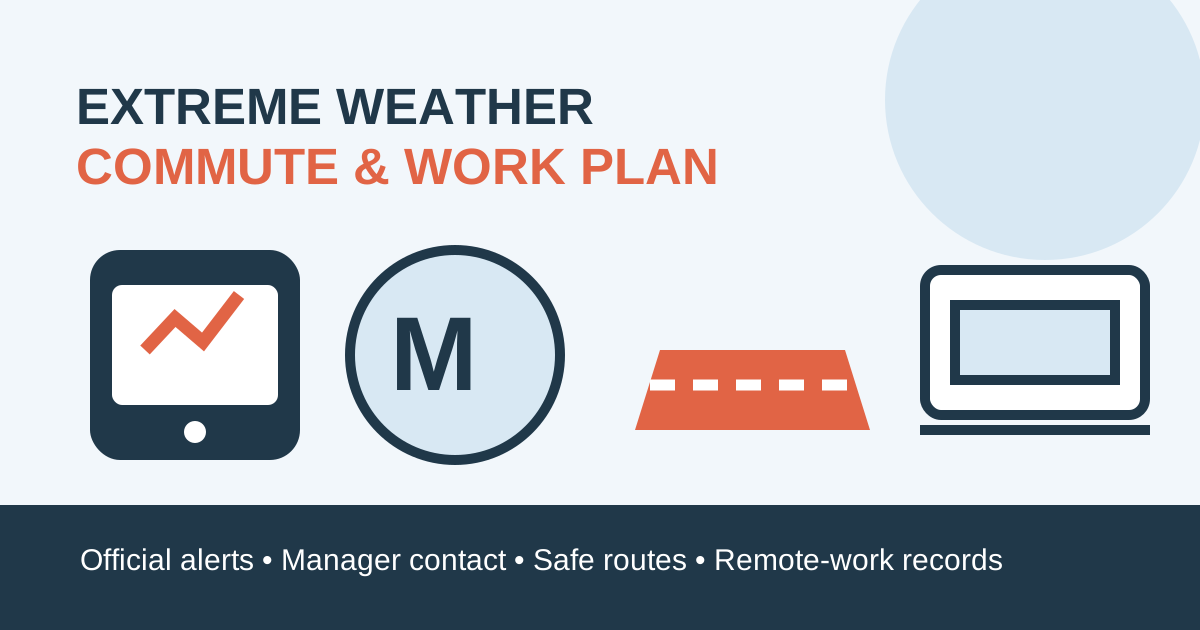
Save the local meteorological bureau, emergency authority, transport operators, and employer alert channels. The China Meteorological Administration provides national information, but operational instructions and warning thresholds are local.
Check the timestamp, affected district, warning level, forecast period, and action advice. A screenshot forwarded in a group may be old or from another city. Compare it with the source before changing plans.
The weather and air-quality guide explains how to interpret conditions without relying on one app.
Agree on workplace decisions in advance
Ask HR or your manager who announces delayed opening, remote work, site closure, shift changes, or early release. Record the primary and backup contact, reporting deadline, attendance channel, and what employees should do if mobile data or the company system fails.
For factory, laboratory, hospital, logistics, or other essential roles, clarify shift-relief and shelter procedures. Never leave a safety-critical position without handover, but report an unsafe journey early enough for the employer to activate backup staffing.
Pay, leave, overtime, and remote-work treatment can depend on local rules and the employment contract. Preserve written instructions and time records, then confirm questions with HR, the responsible local authority, union where applicable, or a qualified labor adviser. The remote and hybrid work guide covers record keeping.
Prepare two safe routes—and a no-travel option
Map public transport and a realistic alternative, including the last safe connection home. Check official operator notices before departure. Avoid underpasses, riverfronts, slopes, tunnels, closed roads, standing water, and fallen electrical equipment during storms or flooding.
Do not enter floodwater on foot, bicycle, e-bike, or car. Do not wait outdoors during lightning or shelter under unstable structures. Follow police, transport staff, property management, and emergency directions even if a navigation app still shows the route open.
Pack for a disrupted day
Carry a charged phone, power bank, identification required for the trip, Chinese home and workplace addresses, key contacts, water, weather-appropriate clothing, and essential medicine used according to clinical advice. Keep a lawful payment backup because networks, batteries, or terminals may fail.
At work, know the safe indoor area, exits, assembly point, emergency supplies, and who checks attendance. Review the workplace evacuation guide before warning season.
Communicate briefly and early
Send a factual message: your location, observed travel barrier, official notice, expected next update, and whether you can work safely from another approved location. Avoid promising an arrival time that depends on a closed line or unsafe road.
If you are already traveling, stop in a safe staffed location when conditions deteriorate. Tell family and work contacts where you are without sharing sensitive live location in a broad group.
Record and review
Keep official alerts, employer messages, attendance entries, transport cancellation notices, and necessary expense receipts. After the event, identify failures: late alert, unclear authority, inaccessible VPN, depleted power bank, missed shift handover, or no safe transport home.
Workplace weather checklist
- Official local warning and transport sources saved.
- Manager, HR, and backup contact identified.
- Attendance, remote-work, and shift-handover process understood.
- Two travel routes plus a no-travel communication plan prepared.
- Chinese addresses, power, medicine, clothing, and payment backup ready.
- Workplace shelter, exit, and assembly arrangements known.
- Written instructions, time, and expenses retained.
- Plan reviewed before the local severe-weather season.
Weather, emergency, and employment requirements vary by city and workplace. Follow current official instructions and obtain professional advice for unresolved employment or safety obligations.
Frequently asked questions
Common questions
Does a weather warning automatically mean I should not go to work in China?
Not every warning has the same operational effect. Follow official local instructions and your employer's safety process, and contact your manager when travel conditions are unsafe or unclear.
Can my employer require remote work during a closure?
That depends on the employment arrangement, local measures, company policy, and circumstances. Confirm equipment, hours, data security, expenses, and attendance with HR or a qualified adviser.
What if public transport stops during my shift?
Tell the designated manager early, check verified operator notices, and follow the workplace shelter, accommodation, transport, or release plan. Do not improvise through flooded or closed routes.