Working in China
Company Cards and Business Expenses in China: A Foreign Employee Guide
Use a company card in China with clear spending rules, merchant records, fapiao requirements, currency checks, reconciliations, disputed charges, and handover controls.
Rules and procedures can change. Check the linked official sources before acting on time-sensitive information.
Quick answer
What you need to know
Confirm the cardholder rules before spending, collect the required invoice and business record, reconcile promptly, report unusual charges, and return or close access during role changes.
- Know permitted categories, limits, approval thresholds, cash rules, and personal-use restrictions before the first transaction.
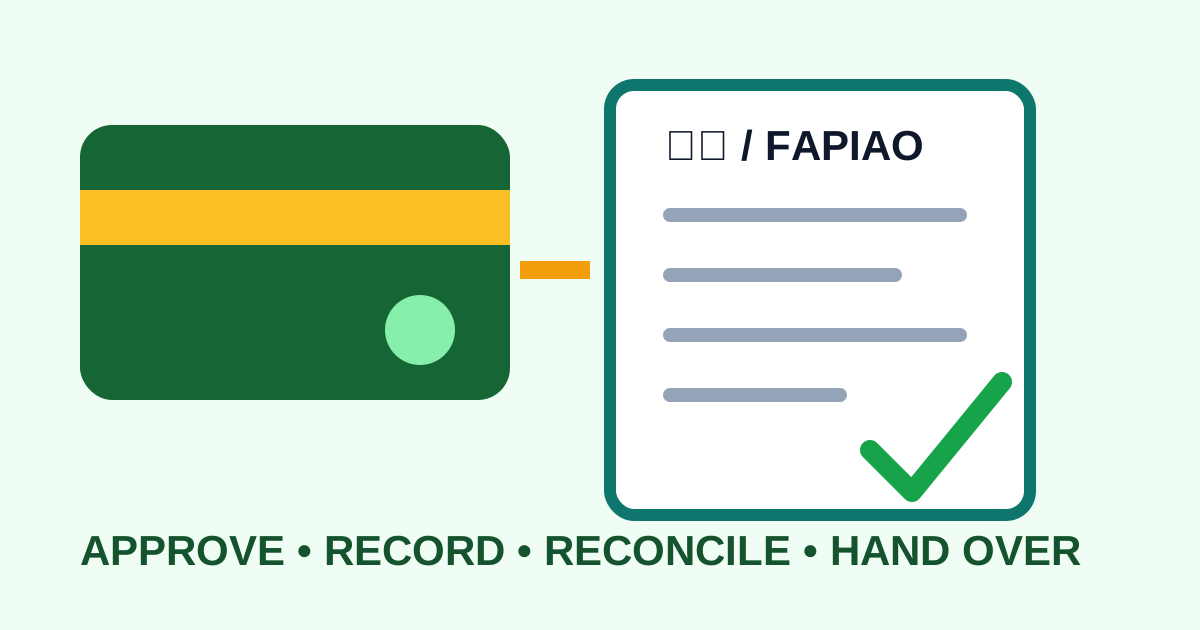
- A card receipt may not replace the fapiao or other supporting record required by the employer.
- Reconcile merchant, date, amount, currency, attendees, purpose, project, and approval on schedule.
- Report a lost card or suspicious charge immediately through the issuer and employer's official channels.
A company card changes how a purchase is paid, but it does not remove the need for approval, a valid business purpose, or supporting documents. In China, the card transaction, itemized receipt, fapiao, booking record, and expense report may each serve a different control or accounting purpose.
Read the cardholder rules before spending
Ask finance for the current policy, cardholder agreement, permitted categories, single and monthly limits, approval thresholds, online and overseas use, cash-withdrawal rules, recurring payments, tips, deposits, foreign currency, and prohibited merchants. Confirm whether the card belongs to a legal entity, department, project, or named employee.
Do not share the physical card, PIN, one-time code, wallet token, or online credentials unless a documented company process explicitly permits a controlled arrangement. Do not use the card for personal purchases on the assumption that repayment will resolve the issue.
Approve the business purpose first
Record the requester, approver, vendor, purpose, budget, project or cost center, date, currency, amount, and any procurement requirement. For travel, distinguish the company card from a personal advance or reimbursement. The work-expense reimbursement guide explains the broader evidence workflow.
For software, memberships, or advertising, identify renewal dates, account owner, cancellation route, data access, and who inherits the service if the cardholder changes roles. Avoid attaching the card to a personal account when a company-controlled account is required.
Collect the complete transaction record
Ask finance what type of fapiao and buyer details are required before ordering. Save the itemized bill, card receipt, order confirmation, delivery or service evidence, business purpose, attendee or traveler details where required, and approval. A payment screenshot alone may not show what was purchased.
Check that the merchant, date, amount, currency, tax or invoice information, and actual goods or services agree. Never request, accept, or submit a fabricated, inflated, unrelated, or duplicate invoice. China’s State Taxation Administration provides official tax and invoice information on its English website.
Reconcile on a fixed rhythm
Review transactions weekly or on the employer’s schedule rather than waiting for the statement deadline. Match each line to its documents, add the approved business description and project code, and identify credits, refunds, deposits, foreign-exchange differences, service charges, and duplicates.
If a receipt is missing, use the written exception process promptly. Do not recreate evidence or silently assign a charge to an inaccurate category. Keep the case number and finance decision with the reconciliation.
Respond quickly to loss or suspicious activity
Save the issuer’s official domestic and international reporting channels offline. If the card, phone wallet, or credentials are lost, freeze or report access through the official route and notify finance or security immediately. Record the last legitimate transaction, time, location, disputed entries, actions, and reference numbers.
Be cautious when someone claiming to be a bank or finance colleague asks for a PIN, one-time code, remote-screen access, or transfer to a “safe account.” Verify through a known channel. The lost-wallet guide provides a containment sequence.
Hand over the card and connected services
Before a transfer, extended leave, or departure, list the physical card, wallet tokens, recurring vendors, deposits, pending refunds, open disputes, unreconciled charges, subscriptions, and stored merchant profiles. Finance should decide whether access is suspended, reassigned, or closed.
Return the card through the employer’s documented process and obtain acknowledgment. Do not cut up or discard company property unless instructed.
Company-card checklist
- Cardholder policy, limits, approvals, and prohibited uses understood.
- Purchase has a documented business purpose and budget owner.
- Vendor account and recurring renewal remain company-controlled.
- Itemized bill, fapiao, proof of payment, and approval collected.
- Transactions reconciled to statement, currency, refund, and project.
- Missing documents handled through the formal exception route.
- Loss and suspicious-charge contacts stored offline.
- Card, tokens, subscriptions, disputes, and refunds included in handover.
Company controls, tax documentation, bank procedures, and employee responsibility vary. Confirm current requirements with finance, the issuer, HR, tax staff, or qualified professional; this guide is not tax or legal advice.
Frequently asked questions
Common questions
Can I use a company card for a personal purchase and repay it later?
Do not assume this is allowed. Follow the written company policy and ask finance before spending; repayment may not cure a policy, accounting, tax, or control problem.
Is the card slip enough for reimbursement or reconciliation?
Often not. The employer may require a valid fapiao, itemized bill, proof of payment, business purpose, attendee list, project code, and approval. Confirm the exact record set.
What if a merchant cannot issue the required fapiao?
Ask finance before completing the purchase where practical. Do not fabricate or substitute an unrelated invoice; obtain the merchant explanation and follow the employer's exception process.
What should I do about a suspicious charge?
Freeze or report the card through the official issuer channel, notify the employer's finance or security contact promptly, preserve transaction evidence, and follow the documented dispute process.