Working in China
Commuting and Meal Allowances in China: A Record-Keeping Guide for Foreign Employees
How foreign employees in China can document commuting and meal benefits, distinguish allowances from reimbursements, check payroll entries, and retain compliant records.
Rules and procedures can change. Check the linked official sources before acting on time-sensitive information.
Quick answer
What you need to know
Clarify whether each benefit is a fixed allowance, payroll item, company-paid service, or expense reimbursement, then follow the employer's approval and evidence rules consistently.
- Benefit labels do not determine payroll or tax treatment by themselves.
- Get eligibility, limits, evidence, approval, and payment timing in writing.
- Match claims to trips or meals and retain invoices, receipts, and approvals.
- Ask payroll, HR, and a qualified tax adviser to confirm current treatment.
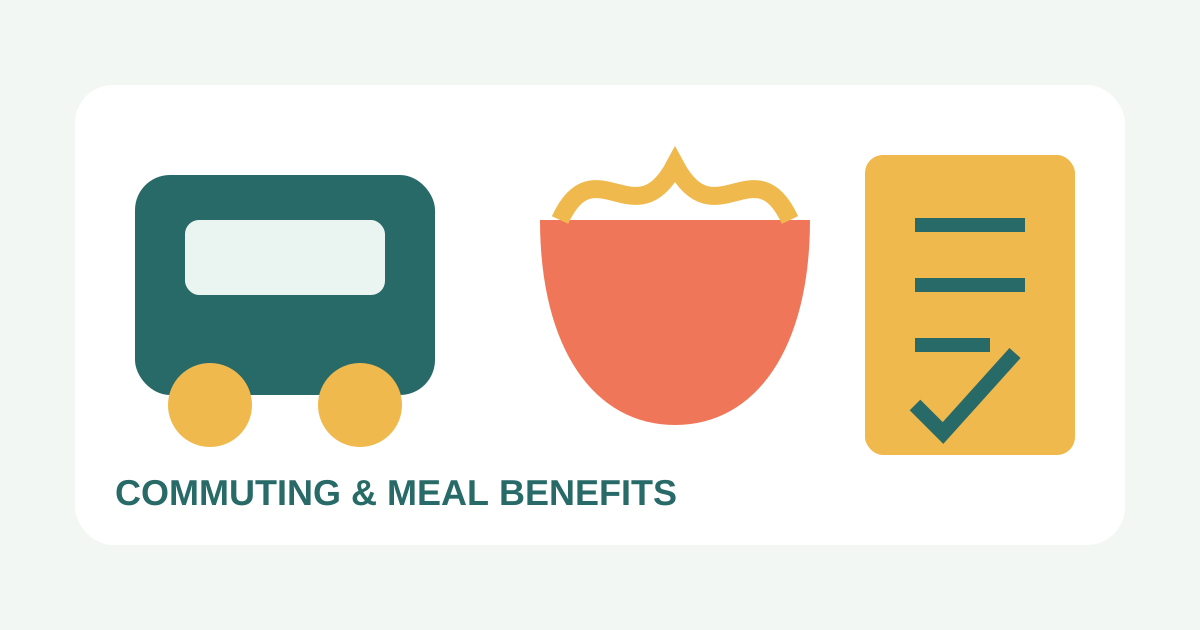
Employers in China may support commuting or meals through a fixed cash allowance, payroll benefit, canteen, prepaid arrangement, company transport, or reimbursement of eligible expenses. Those formats can look similar to an employee while producing different approval, documentation, payroll, and tax workflows.
Identify the benefit format
Ask HR or finance to name each benefit and explain who is eligible, when it begins and ends, monthly or per-event limits, approved expense types, excluded situations, required evidence, approver, submission deadline, payroll label, and payment schedule.
Do not rely only on a recruitment message or an informal manager promise. Save the current policy version and your eligibility confirmation. If policy and contract language differ, ask HR to resolve the difference in writing.
Separate commuting from business travel
An ordinary trip between home and the regular workplace may be handled differently from transport to a client, temporary worksite, airport, or late-night assignment. Record date, origin, destination, business purpose, project, and approver when the policy requires them.
For app-based transport, keep the eligible itinerary, compliant invoice or receipt, and payment evidence. Remove unrelated personal trips before sharing an exported statement. The business travel guide covers longer assignments and travel approvals.
Document meals consistently
Determine whether the policy covers routine workday meals, overtime meals, team meals, client entertainment, or travel meals—and do not interchange those categories. Record the date, purpose, participants when required, amount, and approval. Ask finance what invoice title and taxpayer details are needed before requesting an invoice.
Avoid splitting or relabeling expenses to bypass a limit. If a platform order includes personal or ineligible items, identify them clearly and claim only what policy permits.
Reconcile claim, payment, and payroll
Maintain a simple ledger with expense date, category, amount, evidence file, submission date, approval status, approved amount, payment date, and payroll or bank reference. Compare it with the work expense reimbursement checklist and your monthly payslip.
If an item is rejected or reduced, ask which rule and policy version applied and whether correction or resubmission is possible. Save the response with the claim.
Confirm payroll and tax treatment
A benefit’s everyday name does not establish its legal or tax treatment. Ask payroll how it appears in gross pay, taxable income, reimbursement records, and year-end data. For material or unusual arrangements, confirm current treatment with a qualified China tax adviser and the competent tax authority.
Monthly checklist
- Current policy and personal eligibility saved.
- Benefit format, limit, exclusions, and deadline understood.
- Commute, business travel, and meal categories kept separate.
- Dates, purpose, route or participants recorded as required.
- Valid invoices, receipts, payment evidence, and approvals attached.
- Personal or ineligible items removed from each claim.
- Approved amount matched to bank payment or payslip.
- Differences and corrections resolved in writing.
- Payroll and tax treatment confirmed by qualified parties.
Official reference point
Employer policies and tax treatment vary and can change. This article is a record-keeping guide, not legal or tax advice; confirm decisions with HR, payroll, the competent tax authority, and a qualified professional.
Frequently asked questions
Common questions
Are commuting and meal allowances automatically tax-free in China?
Do not assume so. Treatment depends on the benefit structure, facts, evidence, current rules, and payroll handling; confirm with payroll and a qualified tax professional.
What evidence might an employer request?
Policies vary, but records may include dates, business purpose, route or attendees, invoices, receipts, payment proof, platform records, and manager approval.
What if the payroll amount differs from my approved claim?
Compare the approved amount, benefit limit, payroll label, payment date, and any returned or rejected line, then ask payroll to explain the difference in writing.
Can I submit a personal commute as business travel?
Only submit an expense under the category and purpose allowed by the employer's policy. Ask finance when a trip crosses between ordinary commuting and assigned business travel.