Family & Education
Childcare and Nannies in China: A Hiring Guide for Foreign Families
A practical guide for foreign families comparing daycare, ayi and nanny arrangements in China, with interview questions, trial periods, safety routines, pay, and records.
Rules and procedures can change. Check the linked official sources before acting on time-sensitive information.
Quick answer
What you need to know
Foreign families should compare licensed group care and in-home support based on schedule, language, safety, references, duties, backup coverage, and a written pay arrangement. Use a supervised trial and document emergency routines.
- Define childcare duties separately from cooking, cleaning, errands, and eldercare.
- Verify references and discuss safety, discipline, screen time, food, medicine, and transport explicitly.
- Use a written agreement covering hours, pay, leave, overtime, privacy, notice, and emergencies.
- Confirm employment, agency, tax, and insurance questions with qualified local advisers.
Finding childcare in China is less about learning one local label and more about defining the job clearly. “Ayi” may mean cleaner, cook, caregiver, nanny, or a combination, while nurseries and childcare centers operate on different schedules and enrollment models.
Use this guide to structure the search. Confirm agency, employment, tax, insurance, and childcare rules locally because requirements vary.
1. Write the care brief first
List the child’s age, language needs, hours, pickup locations, allergies, naps, meals, pets, and expected household tasks. Separate childcare from cleaning and cooking so candidates can quote and plan accurately.
If school is involved, align the plan with the communication practices in School Communication in China.
2. Compare the main options
Families commonly consider:
- nursery or childcare center;
- full-time in-home caregiver;
- part-time after-school help;
- shared caregiver arrangement;
- employer-supported childcare; or
- short-term babysitting through a trusted service.
Compare opening hours, holidays, commute, language environment, child-to-carer ratio, meals, sick-child policy, backup care, and total monthly cost.
3. Screen agencies and candidates
Ask an agency for its registered business name, fee schedule, screening method, training claims, insurance information, contract, refund terms, and replacement policy.
For a candidate, request identity details and references with consent. Ask previous families factual questions about duties, dates, reliability, communication, and reason for leaving.
4. Interview around real routines
Discuss:
- handling crying and conflict;
- food preparation and allergies;
- naps, hygiene, and toilet training;
- outdoor play and transport;
- screen time and photos;
- visitors and home privacy;
- fever, injury, or emergency response; and
- communication when parents are delayed.
Avoid vague questions such as “Are you good with children?” Ask what the person would do in a specific, ordinary situation.
5. Run a paid supervised trial
Observe normal routines rather than staging a crisis. Check handwashing, attention, safe food preparation, respectful communication, and whether the child gradually becomes comfortable.
Explain your home access, camera, and privacy practices clearly. Do not secretly change agreed monitoring arrangements.
6. Put the arrangement in writing
Record duties, location, schedule, base pay, overtime, pay date, meals or transport, public holidays, annual leave, sick leave, trial period, notice, confidentiality, home keys, and emergency contacts.
If using an agency, clarify whether it or the family is the contracting party and who handles replacement or disputes. Get qualified advice for employment-status questions.
7. Build an emergency sheet
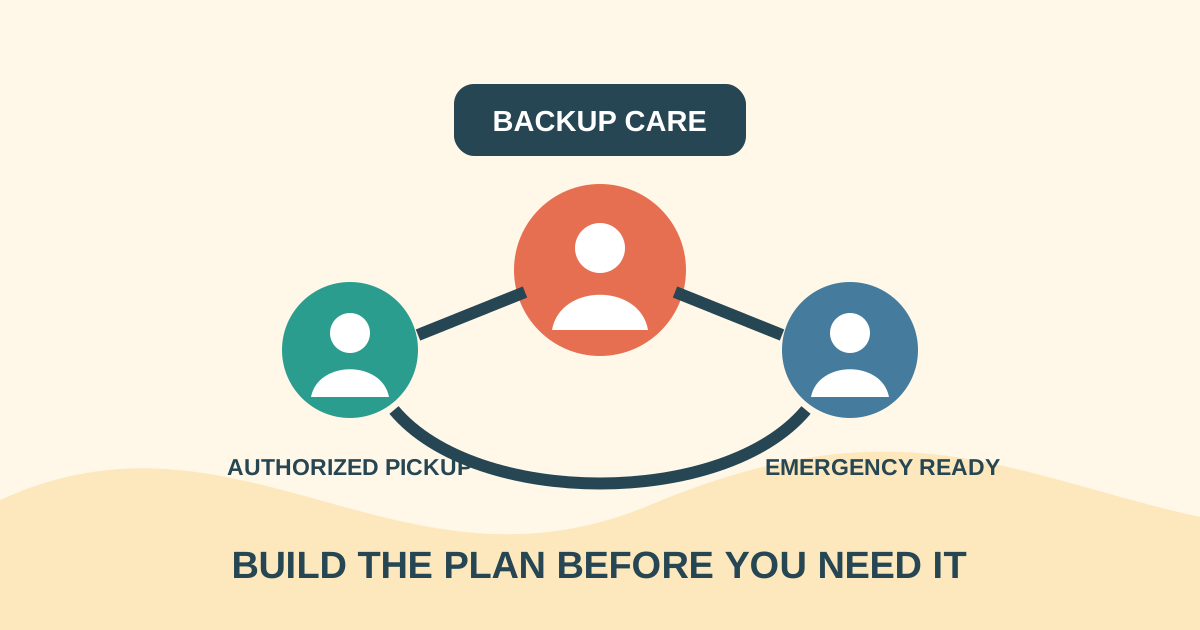
Keep a bilingual note with parent contacts, home and school addresses, pediatric provider, allergies, medicines, approved pickup people, and the emergency numbers 110, 119, and 120.
Caregivers should not diagnose illness. Agree when to call parents, when to seek urgent care, and how to document any clinician-approved medicine dose.
Childcare hiring checklist
- I wrote a clear duty and schedule brief.
- I compared center and in-home options.
- I checked agency terms and candidate references.
- I discussed safety, discipline, food, screens, and privacy.
- I completed a paid supervised trial.
- I documented pay, leave, notice, and overtime.
- I prepared bilingual emergency contacts.
- I arranged backup care for holidays and illness.
Official sources
Local licensing, labor, and service requirements may differ. Verify a center or agency with the relevant local authority and seek professional advice where needed.
Frequently asked questions
Common questions
What does ayi mean in China?
Ayi is a broad everyday term that can refer to a domestic helper, cleaner, caregiver, cook, or nanny. Define the actual duties instead of relying on the label.
Should a family use an agency?
An agency can help with matching, replacement, references, and contracts, but service quality varies. Check its business details, fees, screening process, and replacement policy.
What should a nanny trial include?
Use a paid, supervised trial covering meals, play, naps, hygiene, school pickup if relevant, and emergency communication. Do not create artificial safety tests.
Can a caregiver give a child medicine?
Only follow a clear parent and clinician-approved plan. Label medicines, document doses, and never ask a caregiver to diagnose or improvise treatment.