Daily Life
Car Servicing and Repairs in China: A Guide for Foreign Owners
How foreign car owners in China can choose a workshop, document faults, approve estimates, protect warranty and insurance claims, and verify completed repairs.
Rules and procedures can change. Check the linked official sources before acting on time-sensitive information.
Quick answer
What you need to know
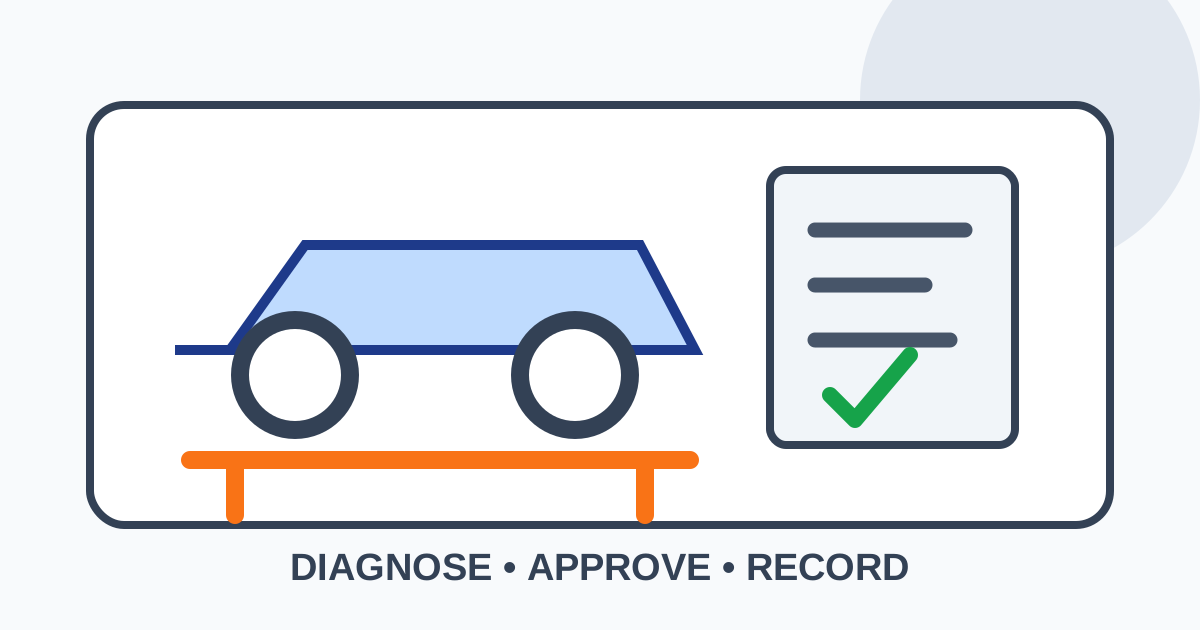
Document the vehicle and fault, choose a verifiable workshop, separate maintenance from insurance work, approve itemized costs, and keep a complete service record.
- Record warning lights, symptoms, mileage, timing, and vehicle condition before handover.
- Confirm workshop identity, authorization, parts choice, estimate, schedule, and storage terms.
- Coordinate accident or insured repairs with the insurer before dismantling or replacement where required.
- Test the vehicle, reconcile parts and charges, and archive the invoice and service history.
Routine maintenance becomes much easier when every visit produces a usable record. For a breakdown, warning light, or accident repair, evidence and authorization matter just as much as finding the nearest workshop.
Document the vehicle and problem
Record the plate, vehicle identification number, mileage, fuel or charge level, warning lights, symptoms, dates, recent work, and conditions when the fault appears. Photograph all sides, wheels, cabin, dashboard, and valuables before handover.
If the vehicle may be unsafe, stop using it and seek qualified roadside or emergency help. The roadside assistance guide covers safe recovery planning.
Choose and verify the workshop
Ask for the workshop’s business name, address, contact, hours, service capability, and whether it is authorized for warranty work. Confirm towing, diagnosis, parking or storage, inspection, and cancellation fees.
For an electric or hybrid vehicle, verify high-voltage training and model-specific capability. Ask the manufacturer, seller, or insurer which facilities meet warranty or claim requirements.
Approve a defined scope
Request a written diagnosis and itemized estimate showing labor, parts brand and condition, fluids, taxes, outside services, completion date, and repair warranty. State an approval threshold for additional work and require a new authorization if the diagnosis changes.
Ask whether old parts will be photographed, returned, inspected by an insurer, or retained under a parts-exchange program. Do not sign a blank work order or accept unclear bundled charges.
Separate insurance and maintenance
For collision, flood, theft, or other potentially insured damage, contact the insurer before dismantling or replacement when safe and required. Save police, towing, survey, claim, and authorization records. See the traffic accident guide for the immediate evidence sequence.
Routine wear, manufacturer warranty, recall, and insured damage may follow different payment paths. Ask each party to confirm its portion in writing.
Verify collection and records
At collection, compare the approved estimate with the final bill. Inspect condition, warning lights, fluid leaks, settings, mileage, fuel or charge, and returned belongings. Take a safe test drive if appropriate and ask the technician to explain the work and follow-up interval.
Keep the work order, diagnostic report, parts list, invoice or fapiao, payment proof, warranty, photos, and updated service history.
Car service checklist
- Vehicle, mileage, fault, and pre-service condition recorded.
- Workshop identity and technical capability verified.
- Warranty and insurer requirements checked first.
- Itemized scope, price, parts, and timeline approved.
- Additional-work authorization limit set.
- Replaced-part handling agreed.
- Final inspection and safe test completed.
- Invoice, warranty, and service history archived.
China’s Ministry of Transport is an official national transport source, while consumer issues may involve the 12315 platform. Requirements and liability depend on the vehicle, workshop, warranty, insurer, and local facts; confirm important decisions with the responsible parties or a qualified adviser.
Frequently asked questions
Common questions
Should I use a dealer or independent workshop?
Compare warranty conditions, technical capability, parts, price, location, and records. Ask the manufacturer or seller how an outside repair could affect coverage before authorizing work.
Can a workshop start work after a verbal quote?
Ask for a written diagnosis, itemized estimate, approval threshold, and contact process for additional work. Do not sign a blank authorization.
What should I do after an accident?
Prioritize safety and follow police and insurer instructions. Confirm inspection, towing, workshop, evidence, and authorization requirements before repairs where circumstances allow.
Should I keep replaced parts?
Ask before work begins whether parts can or should be returned, photographed, retained for warranty or insurance inspection, or handled under an exchange program.