Daily Life
Building an Apartment Tool Kit in China: A Guide for Foreign Residents
Build a practical apartment tool kit in China with guidance on hardware-store vocabulary, safe renter repairs, measurements, storage, landlord approval, and service calls.
Rules and procedures can change. Check the linked official sources before acting on time-sensitive information.
Quick answer
What you need to know
A practical guide to choosing a small household tool kit, buying compatible supplies, separating safe routine tasks from professional work, and keeping repair records in a China rental.
- Start with measuring, fastening, lighting, and protection tools for routine non-technical tasks.
- Bring photos, dimensions, thread sizes, voltage or model details, and the old part when shopping.
- Get landlord approval before drilling, altering fixtures, changing locks, or making visible repairs.
- Leave electrical, gas, plumbing, structural, height, and sealed-equipment work to qualified providers.
A small tool kit helps with loose cabinet handles, furniture adjustments, picture measurements, package opening, and other routine tasks. It should not become an excuse to work on live electricity, gas, hidden pipes, structural parts, or equipment you are not trained to repair.
Build the kit around likely tasks
A compact starter set might include a metric tape measure, small spirit level, interchangeable screwdriver with common bits, hex keys matching your furniture, adjustable wrench, pliers, flashlight, utility knife with guard, scissors, work gloves, painter’s tape, removable labels, cable ties, and a parts tray. Add eye protection where the task and manufacturer instructions call for it.
Choose tools that fit your hand and have clear instructions. Avoid large power tools, ladders, chemical adhesives, and electrical testers unless you understand their risks and have permission for the intended job. The home repair technician guide explains how to arrange and supervise work beyond a basic renter task.
Shop with exact information
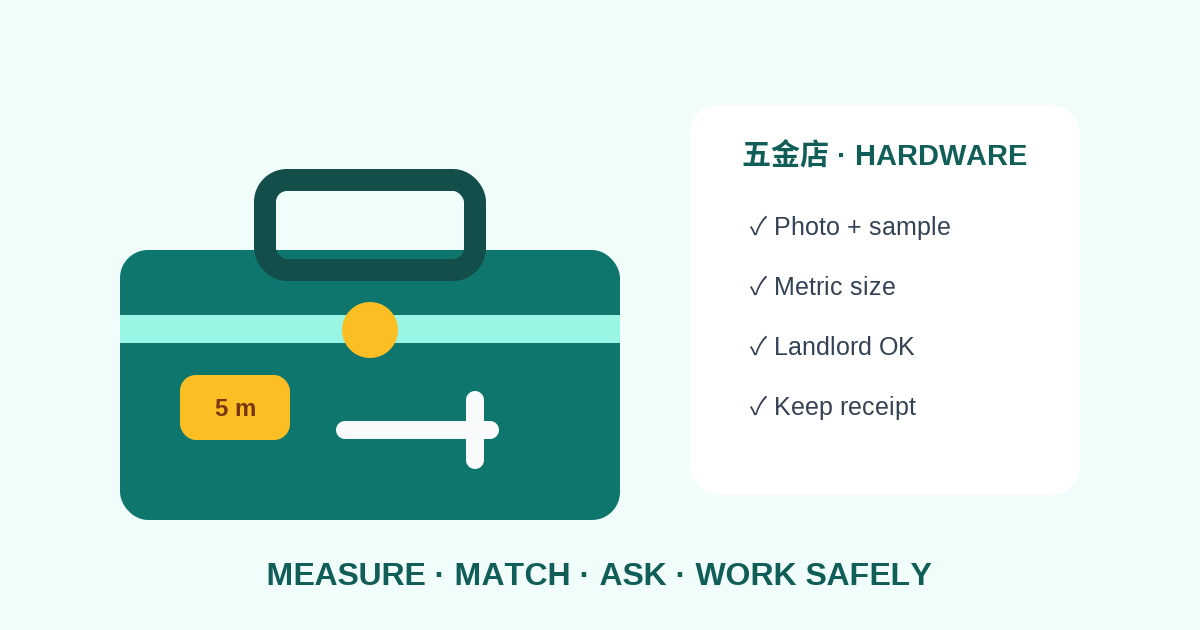
Neighborhood hardware shops are commonly called 五金店 (wujindian); home-improvement stores and online platforms may carry a wider range. Bring a photo, metric dimensions, thread diameter, screw length, material, brand, model, and the old part when it is safe and clean to transport. Do not choose a fastener or fitting only because it looks similar.
Useful phrases include 这个尺寸是多少? (“What size is this?”), 有没有同样规格? (“Do you have the same specification?”), and 可以退换吗? (“Can it be returned or exchanged?”). Confirm quantity, compatibility, return terms, and whether opened packaging is returnable. China’s State Administration for Market Regulation provides official consumer information at samr.gov.cn.
Know the renter boundary
Ask the landlord before drilling, painting, replacing locks, altering fixed furniture, changing taps, or making a visible repair. Ask property management about quiet hours, lift access, common-area work, and approved service providers. Photograph the area before and after and keep receipts.
For any wall fixing, follow the permission and hidden-service checks in the wall mounting and drilling guide. Never drill based only on visual inspection.
Call a professional early
Stop when a task involves live electricity, gas, pressurized or concealed plumbing, waterproofing, structural elements, fire systems, heights, heavy lifting, asbestos-like material, a sealed appliance, or a recurring fault. A burning smell, spark, water near electricity, gas odor, bulging battery, or unstable heavy fixture needs isolation and qualified help, not improvised repair.
Store the kit dry, organized, and inaccessible to children. Keep blades guarded, small fasteners contained, and batteries separate from metal objects. Review the kit after a move and remove corroded, damaged, or unfamiliar items.
Apartment tool-kit checklist
- List routine tasks before buying tools.
- Choose metric measuring tools and bits that match existing hardware.
- Bring photos, dimensions, specifications, and safe sample parts to the shop.
- Confirm compatibility, quantity, receipts, and return terms.
- Obtain landlord or property approval for visible or fixed changes.
- Photograph the area and keep repair records.
- Stop at electrical, gas, plumbing, structural, height, or sealed-equipment work.
- Store blades, batteries, chemicals, and small parts safely.
This is general household and consumer guidance, not trade, electrical, gas, plumbing, structural, or legal advice. Follow manufacturer instructions and confirm repairs with the landlord, property office, and an appropriately qualified service provider.
Frequently asked questions
Common questions
What is a hardware store called in Chinese?
A neighborhood hardware shop is often called a 五金店 (wujindian). Product range varies, so bring a photo, measurements, and the old part when safe.
Can I drill holes in a rental apartment?
Ask the landlord and property office first. Wall materials, hidden services, building rules, and move-out restoration duties differ.
Should I buy electrical test tools for home repairs?
Only buy tools you are trained and authorized to use. A tester does not make live electrical work safe; arrange a qualified electrician for electrical faults or alterations.
How should I store tools around children?
Use a locked or inaccessible dry container, keep blades and small parts secured, retain guards, and store batteries according to manufacturer instructions.