Family & Education
School Academic Integrity and AI Use in China: A Guide for Foreign Families
Help students and parents understand school rules for collaboration, sources, translation, tutoring, generative AI, investigations, and academic-integrity records.
Rules and procedures can change. Check the linked official sources before acting on time-sensitive information.
Quick answer
What you need to know
Families should learn the school's rules before an assignment, document permitted support and sources, and respond to any concern calmly through the stated review process.
- Ask for current rules on collaboration, tutoring, translation, citation, calculators, code, and generative AI.
- When instructions are unclear, the student should ask the teacher before submitting the work.
- Keep drafts, notes, sources, prompts, revision history, and permitted-support records where appropriate.
- If a concern is raised, request the evidence and process, protect the child's privacy, and use the appeal channel.
Academic-integrity rules now cover more than copying text. They may govern tutoring, parent editing, translation, calculators, code libraries, collaboration, online answer sites, and generative AI. Foreign families should not assume that a practice allowed at a previous school is allowed at the current one.
Get the current rules
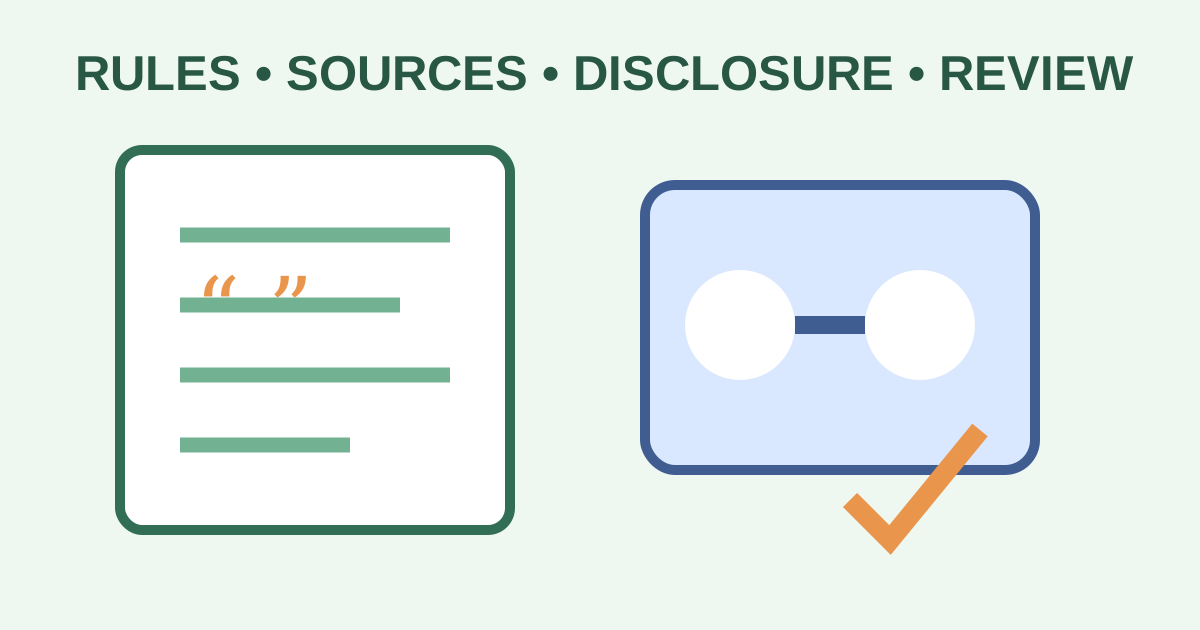
Collect the student handbook, assessment policy, citation guide, acceptable-use policy, and assignment instructions. Ask whether expectations differ by age, subject, assessment type, or teacher. Confirm what assistance must be disclosed and the required citation format.
The school devices and parent portal guide covers account, monitoring, and device questions.
Define acceptable help before submission
Students should ask the teacher whether they may brainstorm with another person, use a grammar checker, translate a phrase, receive tutoring, consult a coding assistant, or use generative AI. “Use technology responsibly” is too broad for a high-stakes task; request an assignment-specific answer.
Parents can help the child understand instructions and plan time without silently rewriting the work. Tutors should know the school’s boundary between teaching and producing an answer.
Make the work process visible
Keep appropriate drafts, reading notes, citations, calculations, file history, code commits, experiment data, and teacher feedback. If AI use is permitted, record the tool, purpose, prompts or outputs required by the school, verification steps, and disclosure.
Never upload confidential school material, another student’s data, unpublished assessments, or sensitive personal information to an external tool without authorization.
Verify rather than trust a generated answer
AI systems can invent sources, quotations, facts, and calculations. Students remain responsible for submitted work. Check claims against assigned sources, cite actual materials, test code, and explain the reasoning in the student’s own words. If the task assesses independent skill, assistance may be inappropriate even when the answer is accurate.
Respond to a concern fairly
Ask for the policy, assignment instructions, alleged issue, evidence, possible consequences, meeting attendees, and review or appeal route. Let the student provide a factual chronology and relevant drafts. Use qualified interpretation if language could affect the process.
Keep the discussion private rather than debating it in a class group. For broader student support, see the parent-teacher conference guide. China’s official Ministry of Education publishes national education information, while the school must explain its own assessment process.
Academic-integrity checklist
- Current handbook and assignment rules reviewed.
- Permitted collaboration, tools, tutoring, and translation confirmed.
- Citation and disclosure format understood.
- Drafts, notes, sources, and revision history retained.
- Sensitive data kept out of unauthorized tools.
- AI-produced claims and citations independently checked.
- Concern handled through the school’s stated process.
- Meeting outcome and any appeal deadline recorded.
The goal is not to avoid every digital tool. It is to make the student’s actual learning, assistance, sources, and decisions transparent.
Frequently asked questions
Common questions
Can students use generative AI for homework?
That depends on the school, subject, teacher, and assignment. Ask what is allowed, what must be disclosed, and how any assistance should be cited.
Is translation software allowed?
Policies vary. A language-support tool may be allowed for one task and prohibited for another, especially when the assessment measures language ability.
What records can show how work was created?
Drafts, notes, source lists, file history, code commits, prompt logs when relevant, and teacher-approved support can help explain the process.
What should parents do after an allegation?
Stay factual, request the relevant policy and evidence, let the student explain, avoid group-chat debate, and follow the school's review and appeal process.