Daily Life
Scam and Fraud Prevention in China: A Practical Guide for Foreign Residents
How foreign residents in China can recognize impersonation, payment, delivery, job, housing, and account scams, verify requests, protect evidence, and respond quickly.
Rules and procedures can change. Check the linked official sources before acting on time-sensitive information.
Quick answer
What you need to know
Slow down unexpected requests, verify identities through a separately sourced channel, protect verification codes and screen-sharing access, and preserve evidence before contacting the platform, bank, or police.
- Treat urgency, secrecy, unusual payment routes, and requests for verification codes as warning signs.
- Verify a person or organization using contact details you find independently, not the details inside the message.
- Never share passwords, one-time codes, payment PINs, or remote-control access.
- If money or an account is at risk, act quickly while preserving screenshots, transaction details, and contact records.
Foreign residents in China may receive convincing messages about parcel fees, frozen bank accounts, police cases, tax refunds, job offers, apartment deposits, school payments, or a friend who urgently needs money. The safest response is a repeatable verification process, not a guess about whether the message looks professional.
Recognize the pressure pattern
Pause when a caller or message creates urgency, demands secrecy, threatens immediate punishment, promises an unusually easy return, changes payment details, or moves a conversation away from an official platform. Be especially cautious with requests to install an unknown app, share a screen, enable remote control, scan a payment code, disclose a one-time code, or transfer money to a “safe account.”
Delivery notices and account alerts can be genuine, but open the courier, bank, or payment app yourself rather than following a message link. The same principle applies to packages and deliveries and mobile payment account recovery.
Verify through a separate route
End the call or pause the chat. Find the organization’s official number or app independently. For an employer, landlord, school, or friend, use a previously known number and ask a question only the real person would understand. Verify changed bank details in person or through a second trusted contact.
An official-looking badge, uniform, document, caller ID, or video is not enough by itself. Do not send passport scans until you understand the purpose, recipient, retention method, and secure channel. Watermark copies for the stated purpose where appropriate.
Protect the payment and account layer
Use unique passwords, device locks, transaction alerts, and the strongest account protection available. Keep payment limits proportionate to daily needs. Never share a password, payment PIN, SMS code, app confirmation code, or screen-control access.
If you change numbers or lose a device, use the lost phone response plan and update critical services promptly. Review linked cards, authorized devices, recurring payments, and recent transactions.
Respond after suspected fraud
Contact the bank or payment platform through an official channel immediately and ask about freezing, recalling, disputing, or tracing the transaction. Secure email, mobile, cloud, and financial accounts from a trusted device. Preserve evidence before blocking the contact: screenshots, usernames, phone numbers, URLs, voice messages, timestamps, receipts, account names, and transaction IDs.
Ask the local public security authority how to report the incident and bring identification plus organized evidence. For material financial loss, identity misuse, or cross-border consequences, consider qualified legal advice. Do not pay a second person who promises guaranteed recovery.
Anti-fraud checklist
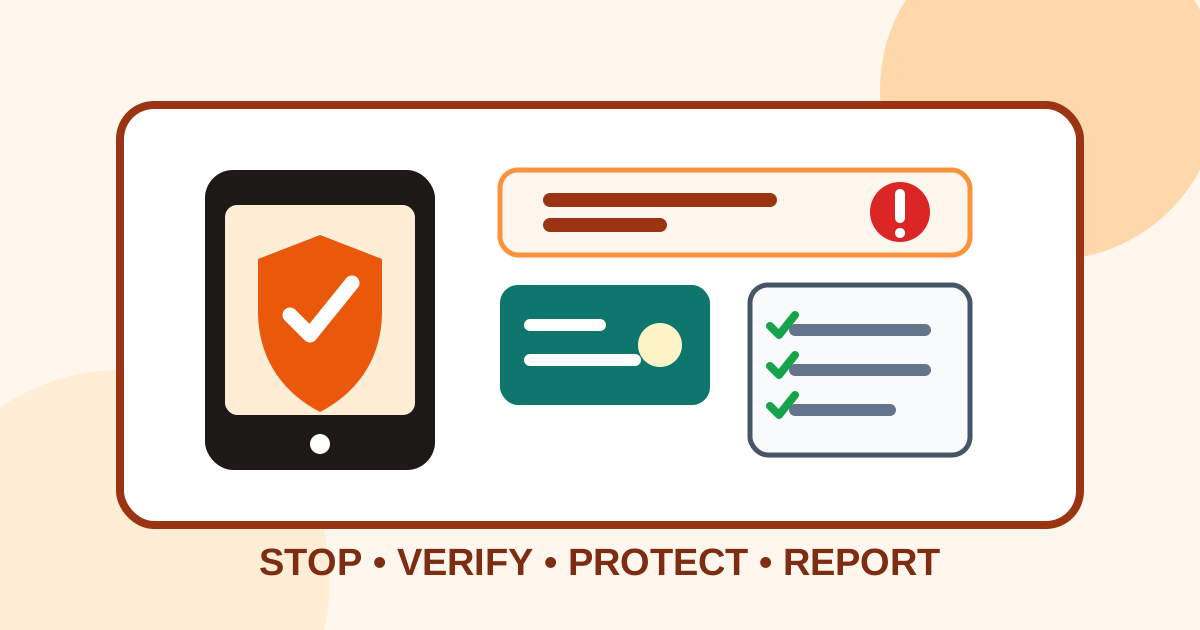
- Stop when a request creates urgency, secrecy, fear, or an unusual reward.
- Open the official app or website yourself; do not use the supplied link.
- Verify the identity and payment details through a separate known channel.
- Refuse requests for codes, passwords, PINs, screen sharing, or remote access.
- Limit the personal documents you send and use a secure channel.
- Enable transaction alerts and review authorized devices and linked cards.
- Preserve evidence and contact the financial provider quickly after a loss.
- Ask local police for the current reporting route; use an interpreter if needed.
Official reference points
Fraud patterns and reporting routes change. Confirm current procedures with the relevant bank, platform, employer, school, courier, or public authority, and seek professional advice when the loss or identity risk is significant.
Frequently asked questions
Common questions
Will a bank, police officer, courier, or platform ask for my verification code?
Do not disclose one-time codes, passwords, or payment PINs. End the conversation and contact the organization through its verified app, website, card number, or in-person office.
What should I do immediately after a suspicious transfer?
Contact the sending bank or payment platform through an official channel, secure affected accounts, preserve transaction evidence, and ask local police how to report. Recovery is not guaranteed, so speed matters.
Is a video call or official-looking ID proof of identity?
No. Images, caller IDs, documents, voices, and video can be manipulated. Verify the request through a second, independently sourced channel.
Should I delete suspicious messages?
Do not interact further, but preserve screenshots, usernames, numbers, links, timestamps, receipts, and transaction IDs if it is safe to do so.