Daily Life
Lost Phone in China: SIM Card, Mobile Payments, Bank Cards, Apps, and Account Recovery
A practical English guide for foreign residents who lose a phone in China, including SIM replacement, mobile payment security, bank cards, app recovery, data backup, and emergency contacts.
Rules and procedures can change. Check the linked official sources before acting on time-sensitive information.
Quick answer
What you need to know
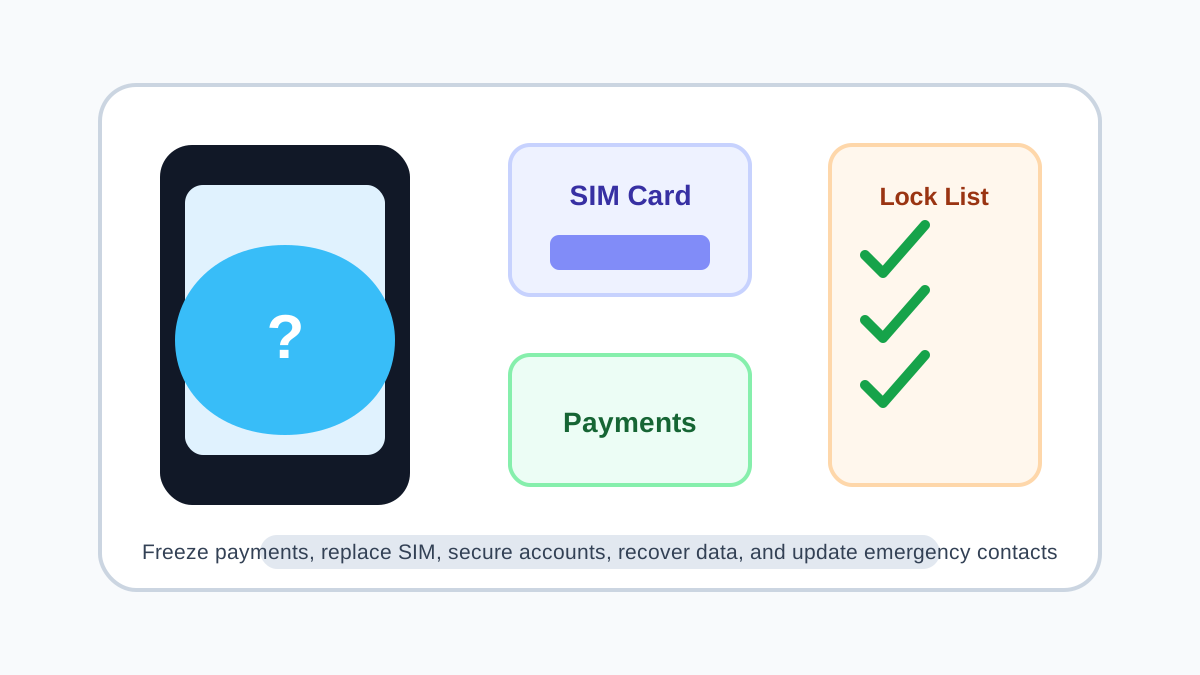
If you lose your phone in China, first protect payment apps and bank cards, then replace or suspend your SIM, recover key accounts, and update emergency contacts. Preparation matters because your phone may control payments, transport, maps, delivery, banking, and identity verification.
- Freeze or secure payment apps, banking apps, and cards as soon as possible.
- Use your passport and carrier account details to replace or suspend the SIM.
- Recover essential apps before nonessential services: payments, bank, maps, transport, delivery, email, and messaging.
- Keep offline copies of passport, residence permit, address, emergency contacts, and insurance details.
- Set device locks, cloud backup, and a backup phone or trusted contact before an incident happens.
In China, losing a phone is more than losing a device. Your phone may control payments, bank verification, transport codes, maps, delivery, work messages, and identity checks.
The right response is simple: secure money first, restore your phone number second, then rebuild app access in priority order.
1. Secure payments and bank access
If you can access your accounts from another device, lock payment apps, check recent transactions, and contact your bank if needed. Ask a trusted colleague or friend to help if language becomes a barrier.
For payment setup, read Mobile Payments in China.
2. Replace or suspend the SIM
Visit your mobile carrier with the passport used for real-name registration. If you cannot visit quickly, ask the carrier whether the SIM can be suspended first.
For carrier basics, use Getting a SIM Card in China.
3. Recover essential apps first
Prioritize payment apps, bank apps, messaging, maps, transport, delivery, email, and work tools. Do not waste time restoring every shopping or entertainment app before core access works.
4. Keep offline emergency records
Your emergency folder should include passport copy, residence permit, Chinese address, employer contact, landlord contact, insurance details, and important phone numbers.
See Emergency Contacts and Safety in China for a complete list.
5. Prepare before it happens
Use a strong device lock, cloud backup, account recovery options, and a backup payment method. A cheap backup phone can be useful for long-term residents.
Practical checklist
- I secured payment apps, bank access, and recent transactions.
- I suspended or replaced the SIM with my carrier.
- I recovered payment, messaging, maps, transport, delivery, email, and work apps first.
- I kept offline identity and emergency records.
- I set up backup access before the next incident.
Official sources
- State Council: A Guide to Working and Living in China as Business Expatriates
- Ministry of Commerce: Guide for Business Expatriates
Frequently asked questions
Common questions
What should I do first if I lose my phone in China?
Secure payment and banking access first, then suspend or replace the SIM, recover essential apps, and notify key contacts.
Can foreigners replace a Chinese SIM card?
Usually yes, but you normally need the passport used for real-name registration and may need to visit the carrier store.
Can losing my phone affect mobile payments?
Yes. Payment apps, bank verification, transport codes, delivery accounts, and identity checks may all depend on your phone.
Should I keep a backup phone?
A backup phone is useful for long-term residents, especially if your main phone controls banking, maps, work messaging, and authentication.
What records should I keep offline?
Keep passport and permit copies, Chinese address, emergency contacts, carrier information, bank phone numbers, insurance details, and key login recovery notes.