Daily Life
Public Toilets in China: A Practical Hygiene Guide for Foreign Residents
Find and use public toilets in China confidently, with practical advice on signs, supplies, accessibility, children, hygiene, and reporting problems.
Rules and procedures can change. Check the linked official sources before acting on time-sensitive information.
Quick answer
What you need to know
Recognize common toilet signs, carry a small supply kit, choose facilities that match your needs, and use official channels when accessibility or maintenance fails.
- Learn the characters 卫生间 and 厕所 and save nearby facilities before a long journey.
- Carry tissues, hand sanitizer, and a sealable bag because supplies vary by location.
- Accessible, family, and seated facilities are not available everywhere; plan ahead when they are essential.
- Follow posted disposal instructions and report urgent maintenance problems to onsite staff.
Public toilets are easy to find in many Chinese malls, transport hubs, parks, hospitals, museums, and service areas, but layout, supplies, accessibility, and cleaning standards vary. A little preparation makes daily commuting and longer trips much easier.
Learn the signs and map likely stops
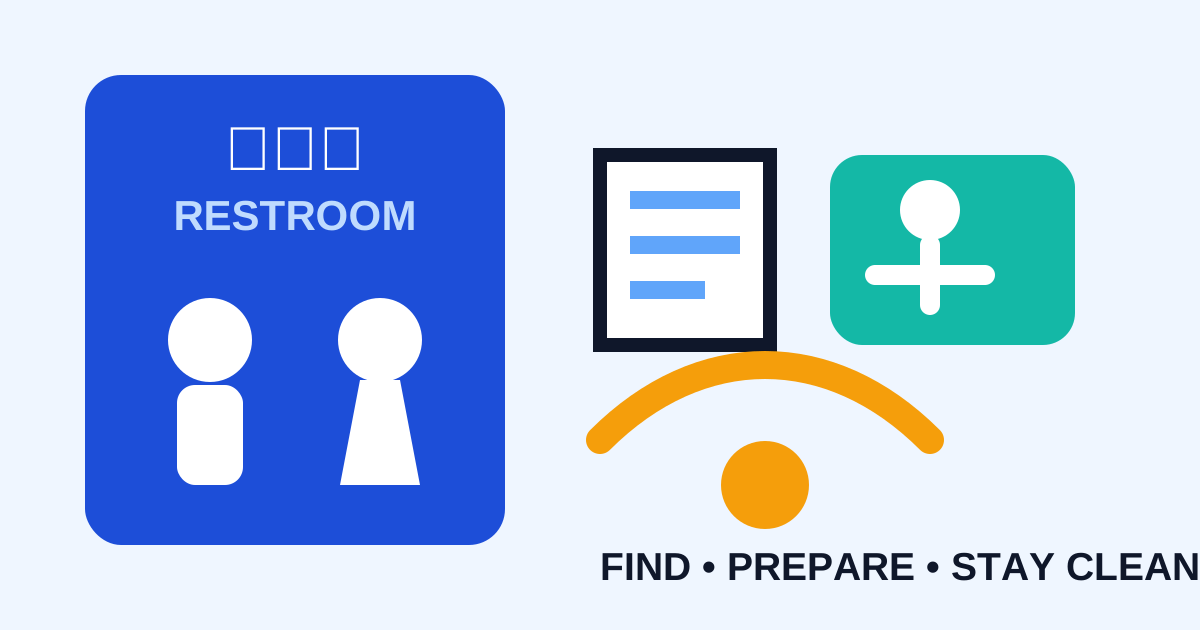
Useful labels include 卫生间 (washroom), 厕所 (toilet), 洗手间 (washroom), and WC. Navigation and venue apps may list facilities, but opening hours and exact locations can change. In a mall or station, ask an information desk rather than entering a staff-only area.
Before an intercity journey, identify facilities at the departure station, transfer point, and destination. The train travel guide and intercity bus guide explain how to plan station time.
Carry a compact supply kit
Keep pocket tissues or toilet paper, unscented hand sanitizer, a few wet wipes, and a small sealable bag. Do not assume soap, paper, hooks, shelves, or a dry changing surface will always be available. Avoid placing a phone, passport, or bag on the floor; use a hook when it appears secure or keep valuables attached to you.
Handwashing with soap and safe water is preferable when available. Sanitizer is a backup, not a substitute when hands are visibly dirty. China’s National Health Commission publishes public-health information; follow local venue notices during an outbreak or service disruption.
Choose the right stall
Stall doors may show a seated or squat-toilet icon. Do not stand on a seated toilet. When using a squat toilet, secure loose items, face the direction indicated by the fixture design, and use handrails if provided. Floors can be wet, so wear stable footwear and move carefully.
Accessible and family toilets may be locked, located on another floor, or reserved for people who need them. Ask staff for access. Never treat an accessible facility as general storage or occupy it unnecessarily.
Plan for children and health needs
Families should identify baby-changing rooms, child seats, family toilets, and handwashing height before an outing. Carry a portable changing mat and never leave a child unattended. The family emergency contact guide helps organize useful contacts.
People with bowel, bladder, mobility, pregnancy, or other health needs may want a bilingual note explaining the need for urgent toilet access. Ask a qualified clinician about individual care needs; this guide is not medical advice.
Follow the facility’s disposal rules
Use the bin or flush according to posted instructions. Dispose of menstrual products, wipes, diapers, and other non-flushable items in the designated bin. Do not force a blocked flush. If water is overflowing, a lock is broken, or the floor creates an immediate hazard, alert onsite staff and use another stall.
Public-toilet checklist
- The main Chinese toilet signs are saved on my phone.
- Route and transfer-stop facilities are identified.
- Tissues, sanitizer, wipes, and a sealable bag are packed.
- Seated, accessible, or family facilities are confirmed where essential.
- Children and valuables will not be left unattended.
- Posted flushing and waste-disposal instructions will be followed.
- A serious maintenance or safety problem will be reported to staff.
Facility layouts and public-health procedures differ by city and venue. Treat current signs and onsite staff instructions as the controlling guidance.
Frequently asked questions
Common questions
How do I recognize a public toilet sign in China?
Look for WC, the familiar male and female symbols, or the Chinese words 卫生间 and 厕所. Signs inside malls, stations, parks, and hospitals may also use Restroom or Toilet.
Should I carry toilet paper?
Yes. Many facilities provide it, but availability varies and dispensers may be outside individual stalls. A small personal supply and hand sanitizer are sensible backups.
Are seated toilets always available?
No. Some facilities have both seated and squat stalls, while others have only one type. Check stall-door symbols or ask staff if a seated or accessible stall is necessary.
Can toilet paper be flushed?
Follow the sign in that facility. Plumbing and disposal arrangements differ. Where a bin is provided for paper, use it as directed and keep the area tidy.