Daily Life
Package Lockers and Pickup Stations in China: A Guide for Foreign Residents
Use parcel lockers and neighborhood pickup stations in China with correct contact details, pickup codes, identity checks, inspection, privacy, and dispute records.
Rules and procedures can change. Check the linked official sources before acting on time-sensitive information.
Quick answer
What you need to know
Keep your delivery identity and phone reachable, verify the pickup point, inspect promptly, and document exceptions before codes expire or parcels are returned.
- Use a reachable Chinese mobile number and a complete Chinese address with compound, building, unit, and gate details.
- Check the carrier message inside the official order or delivery channel before following a pickup code or payment request.
- Know the pickup deadline, opening hours, identity requirement, storage fee, and return process.
- Protect labels and codes, inspect promptly, and preserve evidence for missing, damaged, or wrongly released parcels.
Many deliveries in China end at a smart locker, convenience point, or neighborhood station rather than your door. The handoff is easy when the phone number, address, pickup notice, and deadline all match—but confusing when messages arrive only in Chinese or several stations have similar names.
Make the address usable
Enter the recipient name consistently, a reachable Chinese mobile number, and the address in Chinese. Include province or municipality, district, road, compound, building, unit, room, and useful gate notes. Do not put passport numbers or unnecessary personal data in the visible address field.
Pin the correct map location and save the compound’s Chinese name. The packages and deliveries guide covers home delivery and courier communication more broadly.
Verify the notice
Compare the message with the shopping order: carrier, tracking number, item, recipient phone suffix, station name, address, and deadline. Open the carrier or platform through its normal app instead of an unexpected link. Be cautious if a message asks for a new payment, bank login, identity upload, or remote-control app; see the scam prevention guide.
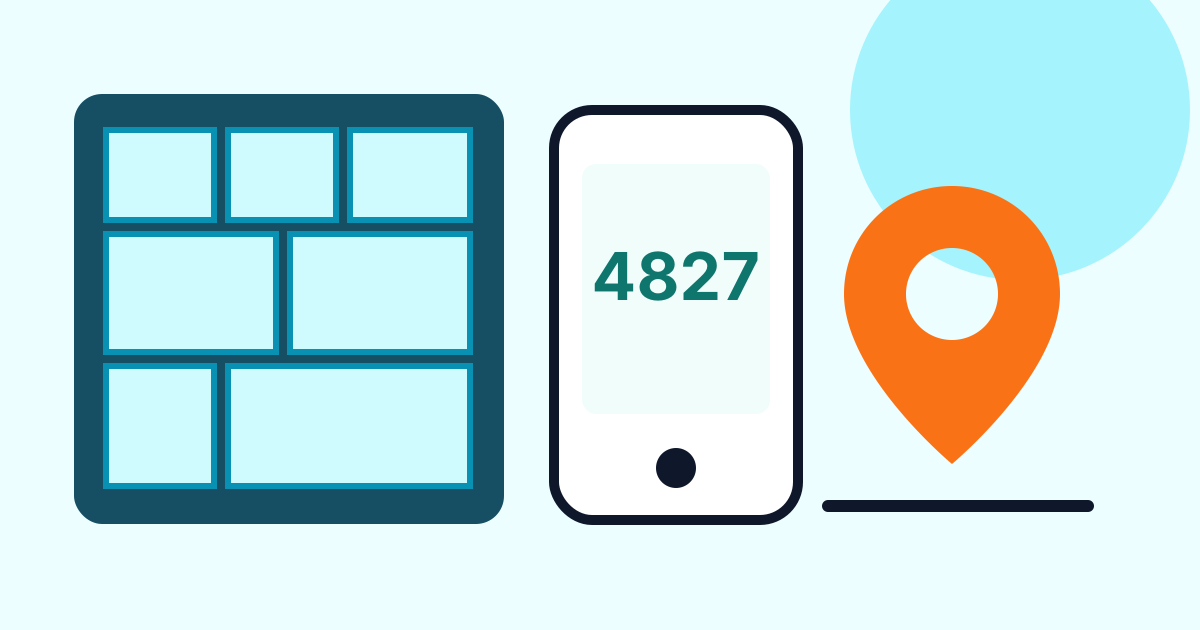
For a locker, identify the correct bank of doors before entering the code. Shield the screen and do not post a live pickup code in a public group. For a staffed station, ask what proof is required and whether a passport is accepted if identity verification applies.
Collect and inspect promptly
Check opening hours, lunch closures, access gates, storage deadline, and possible fees. At collection, compare the label and tracking number before leaving. Photograph a crushed, wet, opened, relabeled, or incomplete package and ask staff to record the condition.
Open valuable or fragile goods under the platform’s recommended evidence process. Keep the outer label until you confirm the contents. If the item is wrong or defective, follow the returns and refunds guide rather than sending it to an unverified address.
Handle exceptions quickly
If the code fails, the compartment is empty, or the system says “collected,” save screenshots and contact the carrier, platform, station, or locker operator immediately. Record times, names, ticket numbers, and promised actions. Ask that relevant operational or surveillance records be preserved where available; do not demand access to other customers’ personal information.
China’s State Post Bureau publishes standards and industry information, including a standard for intelligent mail and parcel lockers. Exact consumer procedures still depend on the carrier and local service agreement.
Parcel pickup checklist
- Chinese address, map pin, recipient name, and mobile number checked.
- Tracking number and pickup location match the official order.
- Hours, deadline, storage fee, and return rule confirmed.
- Accepted code, phone, passport, or authorization method known.
- Pickup code kept private and suspicious links avoided.
- Label and package condition checked before departure.
- Exception screenshots, photos, contacts, and ticket number saved.
- Labels containing personal data removed before recycling.
If a parcel contains medicine, perishable goods, official documents, or another time-sensitive item, confirm handling and collection directly rather than relying only on an automated message.
Frequently asked questions
Common questions
Do I need a Chinese ID card to collect a parcel?
Requirements vary by carrier, locker, station, parcel type, and local procedure. Ask whether the pickup code, order page, passport, phone number, or recipient authorization is accepted.
Can another person collect my parcel?
Sometimes, but authorization rules differ. Confirm the accepted method and share only the minimum code or identity information required through a trusted channel.
What if a locker says my package was collected but I do not have it?
Report it immediately through the carrier or platform, preserve the status page and messages, and ask the locker operator or station to retain relevant records.
How long will a pickup station hold a parcel?
There is no single period for every provider. Check the specific notice and ask about storage fees, deadline extensions, and automatic return before the deadline.