Daily Life
Hiring Household Help in China: A Practical Guide for Foreign Residents
Hire household help in China more safely by defining duties, checking providers, agreeing pay and privacy rules, keeping records, and planning household access.
Rules and procedures can change. Check the linked official sources before acting on time-sensitive information.
Quick answer
What you need to know
Define the service precisely, verify the provider and worker with consent, document pay and boundaries, protect household data, and review the arrangement before expanding access.
- Decide whether you need cleaning, cooking, childcare, elder support, pet care, or a combination before contacting a provider.
- Confirm who the contracting party and employer is, how the worker is paid, and who handles insurance, tax, and workplace incidents.
- Use a written service record covering duties, hours, cancellations, keys, privacy, breakage, expenses, and termination.
- Start with limited access and a paid trial; never share payment credentials, passport originals, or unnecessary family information.
Household help can make long-term life in China much easier, but vague expectations create risk for both the household and the worker. Start by defining the job, the legal relationship, and the access it genuinely requires.
Define the work before searching
List tasks by frequency and standard: floors and bathrooms, laundry, grocery shopping, cooking, school pickup, childcare, elder support, pet care, or overnight presence. Note working hours, languages, allergies, pets, heavy lifting, products to avoid, and whether travel is ever expected. Care work is not interchangeable with general cleaning; seek appropriately trained help for medical or personal-care tasks.
Compare direct introductions, community recommendations, and registered service agencies. For an agency, verify its business name, contact details, service address, written terms, fees, replacement policy, complaint route, and invoicing. Ask who is the contracting party, who pays the worker, and who handles injury, insurance, tax, leave, or other employment responsibilities.
China’s Ministry of Human Resources and Social Security publishes labor and social-security information. The classification and obligations of a particular arrangement depend on its facts and locality, so confirm them with the agency, local authority, or a qualified adviser.
Interview fairly and verify with consent
Discuss experience relevant to the exact tasks. Use scenarios: a child develops a fever, a pipe leaks, a delivery asks to enter, or a valuable item is found. Check references with the person’s permission and confirm identity directly. Avoid collecting unrelated sensitive information or keeping document copies longer than needed.
Agree on a paid trial with normal duties and a clear duration. Observe communication, safety, care with belongings, and whether the workload fits the booked hours. A trial is also the worker’s chance to assess the household.
Put the operating rules in writing
Record:
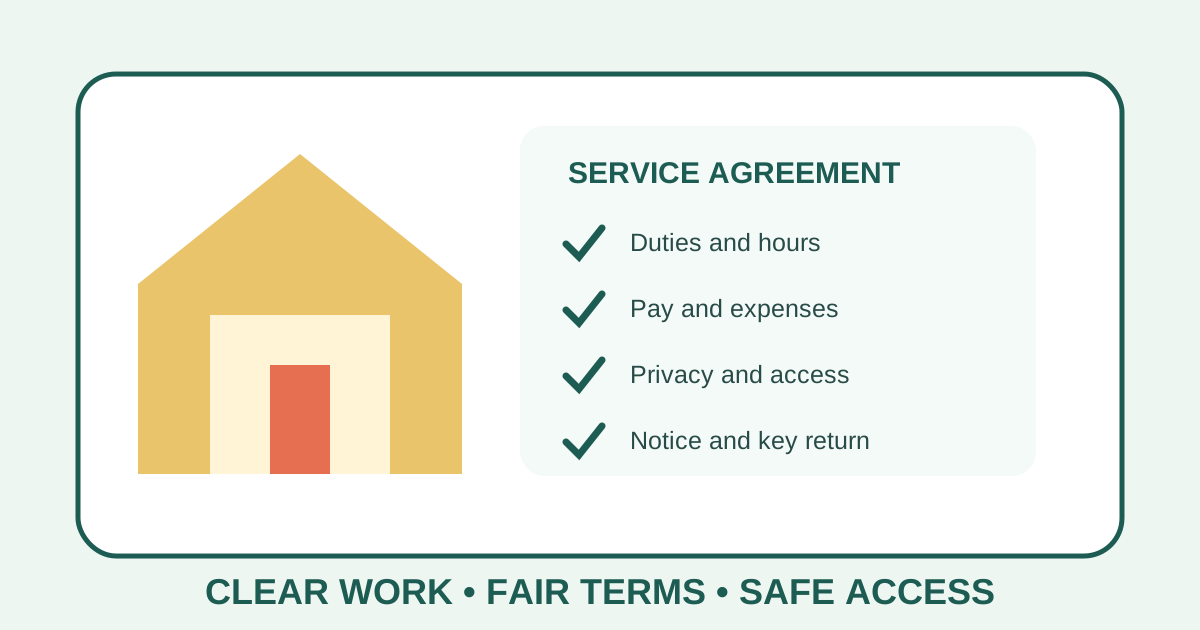
- parties, service location, start date, and trial period;
- duties, exclusions, quality standard, and supplies;
- schedule, breaks, overtime or holiday arrangements;
- rate, payment date, expense approval, receipts, and cancellations;
- key, gate, alarm, camera, and visitor rules;
- confidentiality, photos, family data, and disposal of documents;
- illness, injury, breakage, complaints, and emergency contacts;
- notice, final payment, key return, and access removal.
Keep a payment log. Do not retain wages as an informal deposit or make deductions based only on suspicion. For holiday scheduling, the public holidays and adjusted workdays guide helps with calendar planning, but contractual and labor questions should be confirmed professionally.
Limit access and review it
Begin with the minimum necessary access. Use a separate temporary door code if available, lock away passports, medicines, financial papers, employer devices, and valuables, and never disclose payment PINs or authentication codes. If cameras are present, disclose them and obtain advice about lawful, respectful use; do not place them in private areas.
First-month checklist
- Walk through every task and cleaning product.
- Label allergies, hazards, shutoff valves, and emergency numbers.
- Agree how purchases are approved and reimbursed.
- Check in privately after the first day and first week.
- Record schedule or duty changes in writing.
- Review keys, codes, privacy, payment, and workload after one month.
- Close access and reconcile payment promptly when the service ends.
The home security camera guide covers device and privacy planning. This article is general operational guidance, not a determination of employment status or legal duties.
Frequently asked questions
Common questions
What does ayi mean in a household-services context?
It is commonly used for a household helper, but the actual role may range from cleaning to cooking or care work. Define the duties rather than relying on the label.
Should I hire through an agency?
An agency may help with matching and administration, but services and responsibility vary. Check its business identity, contract, fees, replacement policy, complaint process, and who employs or pays the worker.
Can I ask for identity or health records?
Request only information relevant and lawful for the role, explain why it is needed, obtain consent, verify rather than circulating copies, and store any retained data securely. Seek professional advice for sensitive screening.
What if a household item is damaged?
Prioritize safety, photograph the issue, notify the worker or agency promptly, and use the written contract and insurance process. Avoid unilateral wage deductions without checking the agreement and applicable rules.